
According to Continence Health Australia, more than 7.2 million Australians live with incontinence. As you age, the muscles that support bladder control gradually weaken, which makes leakage more common in everyday life. Even so, incontinence doesn’t have to slow you down.
You can stay active and keep doing the things you enjoy. To help with that journey, Oz Continence has put together this guide with practical tips for active seniors living with incontinence.
Here, you’ll find simple advice covering pelvic floor training, bladder habits, fluid intake, diet, and where to get help. Each section builds on the last, so you’ll walk away with a clear picture of what actually helps.
Tips for Active Seniors with Incontinence: Where to Start

Most active seniors don’t realise that small, consistent habits can help reduce leakage and make incontinence symptoms easier to manage each day. Since bladder and bowel problems often develop quietly before they begin to affect daily life, knowing where to start really does help.
The following two things are what you should get clear on straight away.
Understanding How Bladder and Bowel Changes with Age
Older people experience urinary incontinence more often. In fact, 3 in 10 people in Australia experienced urinary incontinence in 2023. That’s a significant portion of the population living with a condition they often don’t talk about.
We’ve already mentioned that the muscles supporting your bladder and bowel gradually lose tone as your body ages. But for women, childbirth and menopause both affect the urethra and surrounding pelvic tissue, which raises the risk of involuntary leakage over time. Still, changes that occur after menopause are one of the most overlooked causes of urine leakage in older Australian women.
Faecal incontinence follows a similar pattern. The muscles controlling bowel function weaken with age, and this can happen alongside urinary symptoms or on its own.
When to Talk to a Health Professional
Seeking professional advice is one of the most important steps in managing incontinence well. If you notice the following symptoms:
- Leaking urine during activity
- Sudden urgency
- Any loss of bowel control
It’s time to book a visit with your GP sooner rather than later.
Generally, if you leave symptoms untreated, they may indicate an underlying health issue that your doctor needs to assess. Early treatment, however, improves those outcomes considerably. And a GP can determine what type of continence issue you have (urge, stress, or faecal incontinence) before recommending suitable support.
So, don’t feel embarrassed about raising it. Your doctor has these conversations every day.
Pelvic Floor Exercises: Your First Line of Defence
The best part about pelvic floor exercises is that you can do them anywhere, at any time, with no equipment (yes, even while waiting for the kettle). A few minutes each day can strengthen your pelvic floor muscles and improve bladder control.
You need to maintain these two things properly and often enough to see results.
How to Do Pelvic Floor Exercises Correctly
Pelvic floor exercises work by contracting and lifting the muscles that sit at the base of your pelvis.
Kegel exercises are the best option to try out. You squeeze and lift the pelvic floor muscles, hold for up to 10 seconds, then release fully before repeating. That full release between each squeeze is just as important as the contraction itself.
However, people frequently get this technique wrong. They bear down instead of lifting the muscles, which puts pressure on the bladder and can make incontinence worse over time. So if you’re not sure whether you’re contracting correctly, a pelvic floor physiotherapist can look over your technique in a single appointment.
How Often Should You Train Your Pelvic Floor?
You can do pelvic floor exercises at any age. But the earlier you start, the better your results will be. Try following this simple weekly plan:
|
Session |
Sets | Hold Time |
Rest Between Sets |
|
Morning |
3 | 10 seconds each |
5 seconds |
|
Afternoon |
3 | 10 seconds each |
5 seconds |
|
Evening |
3 | 10 seconds each |
5 seconds |
Consistency also produces better results than intensity. Short daily sessions, around three sets per day, strengthen the pelvic floor muscles gradually and improve bladder control within a few weeks. By comparison, long, infrequent sessions don’t deliver the same outcome.
So once your muscles are getting a regular workout, the next step is teaching your urinary system to work with you.
Bladder Training: Can You Retrain Your Bladder Control?
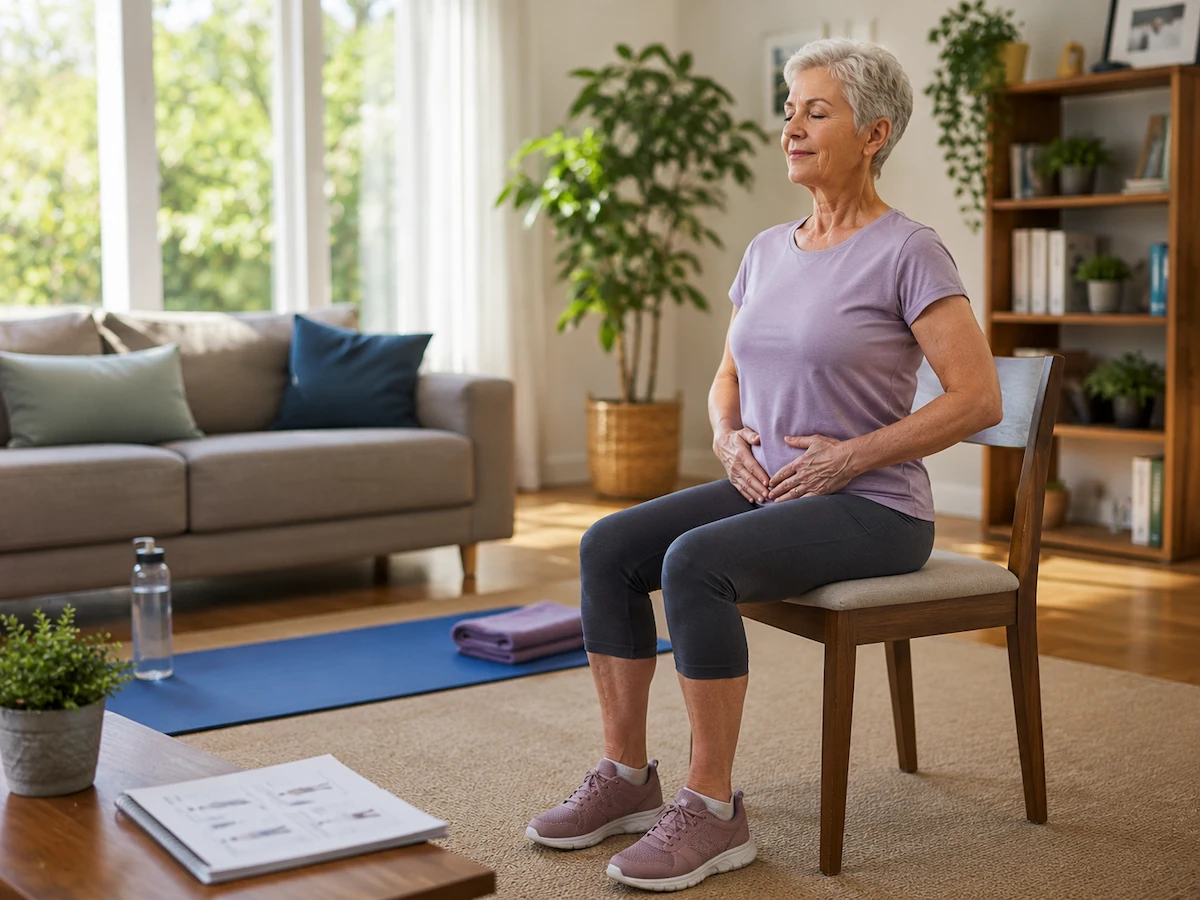
Yes, you can retrain your urinary system through scheduled toilet visits and urge suppression techniques that build control gradually. It takes a few weeks of consistency, but the results are worth it.
Typically, bladder training works by setting your bathroom trips at set intervals during the day, then slowly extending the time between each visit. For example, you start with whatever feels manageable, maybe every hour, then push that window out by 15 minutes every few days. The goal here is to improve how well your system holds urine before sending an urgent signal.
Urge incontinence responds particularly well to this approach. Since it happens due to an overactive bladder muscle that fires too soon, structured training helps calm that response over time.
Now, stress incontinence works differently. This type of incontinence happens when physical compression on your urinary tract forces urine to leak during activities like coughing, lifting, or sneezing. Fortunately, though, it can also improve with consistent bladder and pelvic floor training.
Based on what our continence health professionals consistently recommend, bladder training works best when you start with realistic intervals and build up gradually over several weeks. This isn’t a quick fix, but as a long-term treatment approach, it genuinely changes how your system functions day to day.
Quick Tip: When an urge hits between scheduled visits, stay relaxed and breathe through it. That’s because rushing to the toilet actually reinforces the urgency.
Good Toilet Habits That Make a Real Difference
Believe it or not, a few simple adjustments to how and when you urinate can take a lot of pressure off your bladder and bowel every single day.
Here are four toilet habits worth building into your routine:
- Sit Fully on the Seat: Hovering creates tension in your stomach and pelvic muscles, which stops your bladder from emptying properly. That’s why you should sit fully on the seat, keep your feet flat on the floor, and let your muscles relax before you start.
- Don’t Go Just in Case: Going before you feel the urge trains your bladder to hold less over time. So you can wait until you feel a genuine urge instead of going out of habit or anxiety.
- Take Your Time: Rushed or strained toilet visits put unnecessary pressure on your tract and bowel. Instead, calm, steady breathing helps the muscles relax and lets urine flow naturally.
- Plan for Outings: Before heading out, identify the restroom locations in advance to reduce anxiety. This approach creates good toilet habits away from home. Not to mention, always wear clothing that makes toilet access quick and easy.
Ultimately, good toilet habits help prevent bladder irritation and constipation. But if you don’t address them early, both conditions put extra strain on your pelvic floor and make leakage episodes more frequent.
Drinking Fluids the Smart Way for a Healthy Bladder
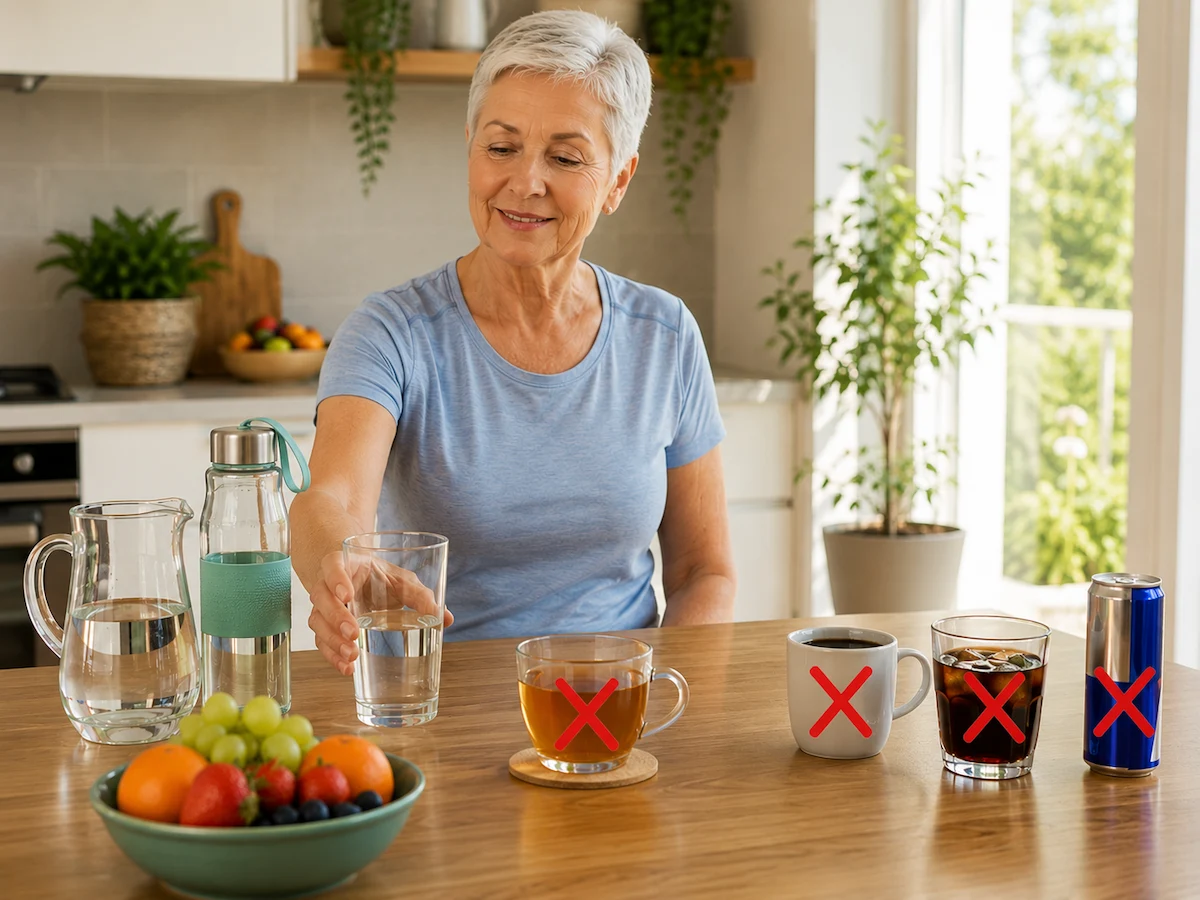
Most people assume drinking less helps to lower frequent urges, but too little fluid actually concentrates urine and irritates the bladder lining even further (dark yellow urine is a bad sign).
That’s why you should aim to drink plenty throughout the day (around 6 to 8 glasses of fluid) to keep your urine pale and your system functioning well. And spreading your intake evenly across the day works better than drinking large amounts at once.
Not all drinks support a healthy bladder, though. Here’s a quick guide to what helps and what doesn’t:
|
Drink |
Effect on Bladder |
|
Water |
Best choice for bladder health |
|
Herbal tea |
Generally gentle, good alternative |
|
Fizzy drinks |
Irritate the bladder lining |
|
Caffeine (coffee, tea) |
Increases urgency and leakage |
|
Alcohol |
Diuretic, increases how often you urinate |
|
Spicy or acidic juices |
Can worsen bladder irritation |
Suggestion: If you notice your symptoms flare after taking fizzy drinks and caffeine, start by cutting back on them before you stop drinking anything altogether. These small swaps in your daily diet can reduce irritation noticeably within a few days.
What’s more, drinking more healthy fluids like water and herbal tea supports better urinary system function when you drink enough throughout the day. Caffeine and alcohol, by comparison, can increase urgency and make symptoms harder to manage.
We’ve sorted the fluid habits discussion. Now let’s talk about keeping your body moving without incontinence getting in the way.
Exercise Regularly Without Letting Incontinence Hold You Back
Incontinence doesn’t have to mean giving up the activities you love. Regular physical activity improves overall health and bladder function, and with the right approach, you too can stay active without making the symptoms worse.
So, here’s what to do more of and what to scale back.
Low- and High-Impact Activities You Should Try
We’ve seen plenty of active seniors swap their morning run for a swim, and they never looked back. That’s because the right exercise improves healthy bladder function without putting extra pressure on your pelvic floor muscles.
A quick breakdown of what works well and what to approach carefully:
|
Activity |
Impact Level |
Effect on Bladder |
|
Swimming |
Low |
Supports pelvic floor muscles without downward stress |
|
Walking |
Low |
Gentle on the bladder, easy to build into daily routine |
|
Cycling |
Low |
Good for healthy weight, minimal pelvic floor strain |
|
Yoga |
Low |
Strengthens core and pelvic floor muscles together |
|
Running |
High |
Increases abdominal force, can worsen stress incontinence |
|
Jumping |
High |
Sharp pressure spikes, risky for older persons with leakage |
|
Heavy lifting |
High |
Strains pelvic floor, worsens symptoms without proper technique |
If high-impact activities are part of your routine, scale them back gradually rather than stopping altogether. Plus, starting with lower-impact options gives your pelvic muscles time to strengthen before you reintroduce anything more demanding.
Manage Excess Weight Through Movement
Carrying excess weight puts more pressure on the bladder and pelvic floor muscles, which worsens urinary incontinence symptoms over time. It’s one of the more direct relationships between body weight and bladder health.
Even modest weight loss produces noticeable improvements for many older persons, often within just a few weeks. You can start following this simple checklist:
- Walk for 30 minutes at least 4 times a week
- Swap high-impact exercise for swimming or cycling
- Eat a high-fibre diet with 2 fruit and 5 vegetable servings daily
- Drink enough fluid to keep urine pale throughout the day
- Limit alcohol and fizzy drinks (both add excess calories and irritate the bladder)
- Track your healthy weight progress weekly (even small drops reduce pelvic floor strain)
If you follow these consistent, low-impact activities several times a week, you’ll get better results without putting extra pressure on your pelvic floor muscles.
Drink Plenty, Eat Well, and Support Your Continence Daily
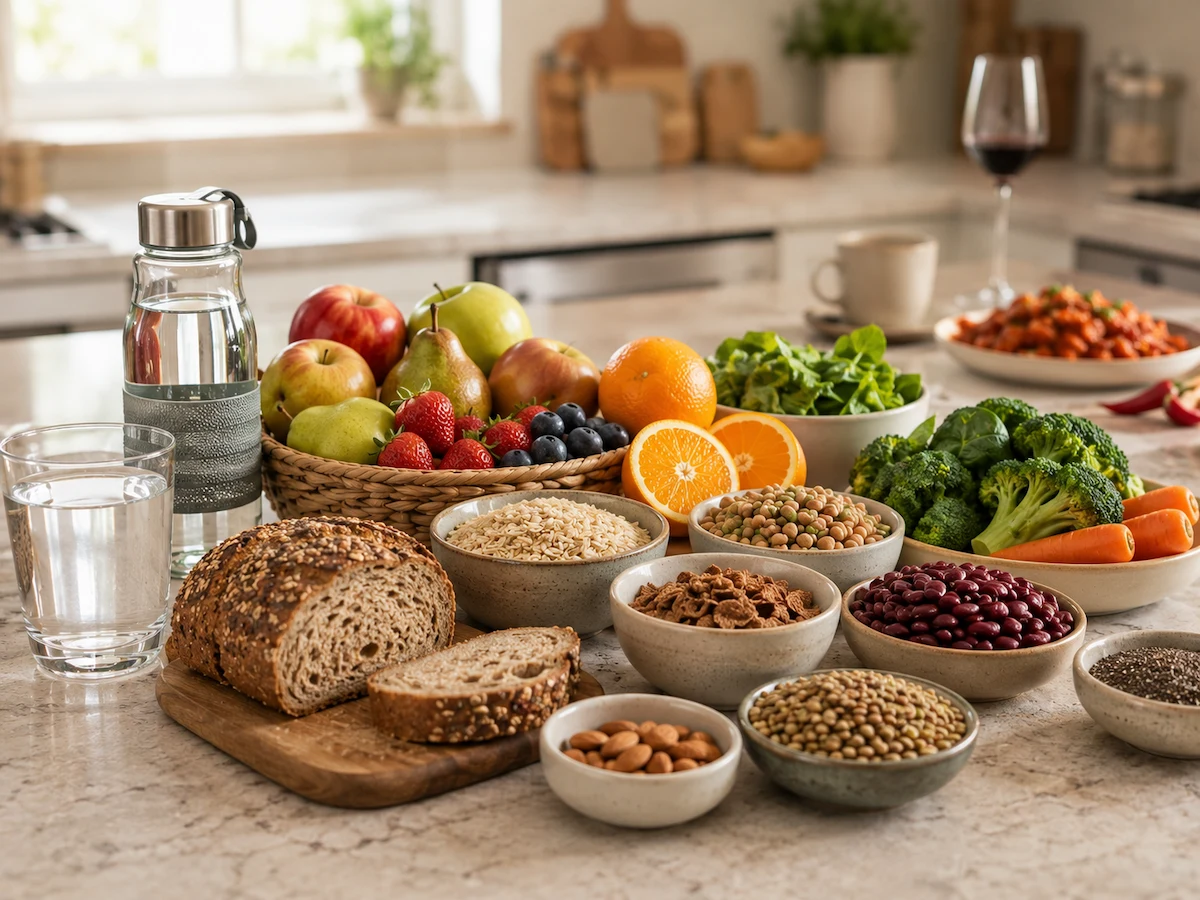
What you eat directly affects both bowel control and bladder function, so they are inherently interconnected. Caffeine, alcohol, and spicy foods, for example, can irritate the bladder and increase leakage.
Generally, chronic constipation is one of the major drivers of bladder and bowel problems in older adults. When your bowel stays full for too long, it pushes against the system and increases compression on the pelvic floor.
So a high-fibre diet can help you avoid that constipation and keep your bowel moving regularly. For convenience, you can aim for 2 servings of fruit and 5 servings of vegetables daily as a practical starting point.
Bowel problems don’t always come from diet alone, though. Smoking worsens incontinence because of the chronic cough it produces. In fact, every coughing episode puts a sharp burst of pressure on the urinary tract, and over time that repeated strain weakens pelvic floor muscles.
To prevent these, you can follow all of these to support better bladder and bowel health together:
- Maintaining good eating habits
- Cutting back on bladder irritants
- Addressing chronic cough where possible
Small lifestyle changes like these can lead to lasting improvements that more intensive interventions often don’t.
You’ve Got This: Taking the Next Step with Confidence
Managing incontinence as an active senior is genuinely possible. Small, consistent changes to daily habits produce real improvements in symptoms over time.
Here’s a quick summary of what to focus on:
- Do pelvic floor exercises three times daily to strengthen bladder control
- Drink 6 to 8 glasses of fluid daily and cut back on caffeine and fizzy drinks
- Practise good toilet habits and avoid visiting the bathroom out of anxiety
- Exercise regularly with low-impact activities that don’t strain your pelvic floor
This way, active management and proactive measures allow you to maintain confidence and keep doing the things you love, regardless of your symptoms.
If you’d like to learn more about managing incontinence with confidence, Oz Continence is here to help. Browse our resources for practical, simple guidance on bladder health and finding the right support for your needs.
FAQs: The Continence Foundation and Where to Find Support
You don’t have to figure everything out alone, and the right help can change how confidently you manage incontinence every day. In our experience supporting people managing continence concerns, the ones who reach out early always report better outcomes than those who wait.
Here are the questions we hear most often from active seniors just like you.
1. Is it normal to feel embarrassed about incontinence?
Completely. Most older people feel the same way, which is exactly why so many people wait too long before talking to a doctor. But incontinence is a health condition, not something to push through secretly. Your GP has these conversations daily, and there’s no judgement involved.
2. What does the Continence Foundation offer?
The Continence Foundation of Australia (now operating as Continence Health Australia) runs a free national helpline at 03 8692 8400. They connect you with continence nurse specialists, local health professionals, and practical resources. And these services cover every type of incontinence, including faecal incontinence and bladder leakage.
3. When should I seek treatment?
If your symptoms are affecting your daily life, including your sleep, your activity levels, or your confidence, that’s your signal to act. Ongoing symptoms carry a risk of getting worse without proper assessment, and early treatment always gives you more options.
4. Can lifestyle changes really make a difference?
Yes. Professional guidance and healthy daily habits work well together. Paying attention to your diet, exercise, fluid intake, and pelvic floor training can help you manage incontinence with greater confidence over time.
