
Dementia affects more than memory. As the condition progresses, many people experience changes in bladder and bowel control, often before carers feel prepared to manage them. Continence problems are driven by brain changes, reduced mobility, medication effects, and communication loss. And they usually get more complex over time.
Among all the complications, Oz Continence is here to give carers clear, reliable information at every stage. This article covers:
- How dementia causes continence issues
- Behavioural strategies for daily support
- Night-time care routines and pelvic floor exercises
- Choosing the right continence products and fit
Each section is practical and grounded in what carers face day to day, so read on.
What Makes Continence Problems So Common in Dementia?
Dementia directly damages the brain signals that control bladder and bowel function. This cognitive decline also affects mobility, awareness, and toileting ability, so the challenges build on each other.
Here are the main reasons continence issues develop so frequently in people living with dementia:
- Brain Signal Disruption: As we were talking about, dementia weakens the brain’s ability to register a full bladder. Seniors don’t feel the urge to use the toilet in time. And it ultimately results in urinary incontinence occurring without warning.
- Reduced Mobility: Poor coordination and physical disabilities slow seniors down. By the time they reach the toilet, leaking urine might already have begun.
- Medication Side Effects: Diuretics, such as water tablets used for high blood pressure, increase how fast the bladder fills. Sedatives also reduce a senior’s awareness of any toileting need. Both are common in older adults with dementia, and they directly worsen continence issues.
- Communication Breakdown: Many older adults with dementia can’t ask for toilet help. Communication challenges mean carers end up reading behaviour instead. This means observation and routine become the real tools for managing incontinence.
- Loss of Toileting Awareness: Finding the toilet, managing clothing, and following each step independently become harder as dementia progresses. What’s more, this is one of the most under-reported risk factors in continence care.
Most people living with dementia experience a combination of these factors. And that’s what makes continence care challenging to manage without the right support.
Does the Type of Dementia Change Continence Issues?
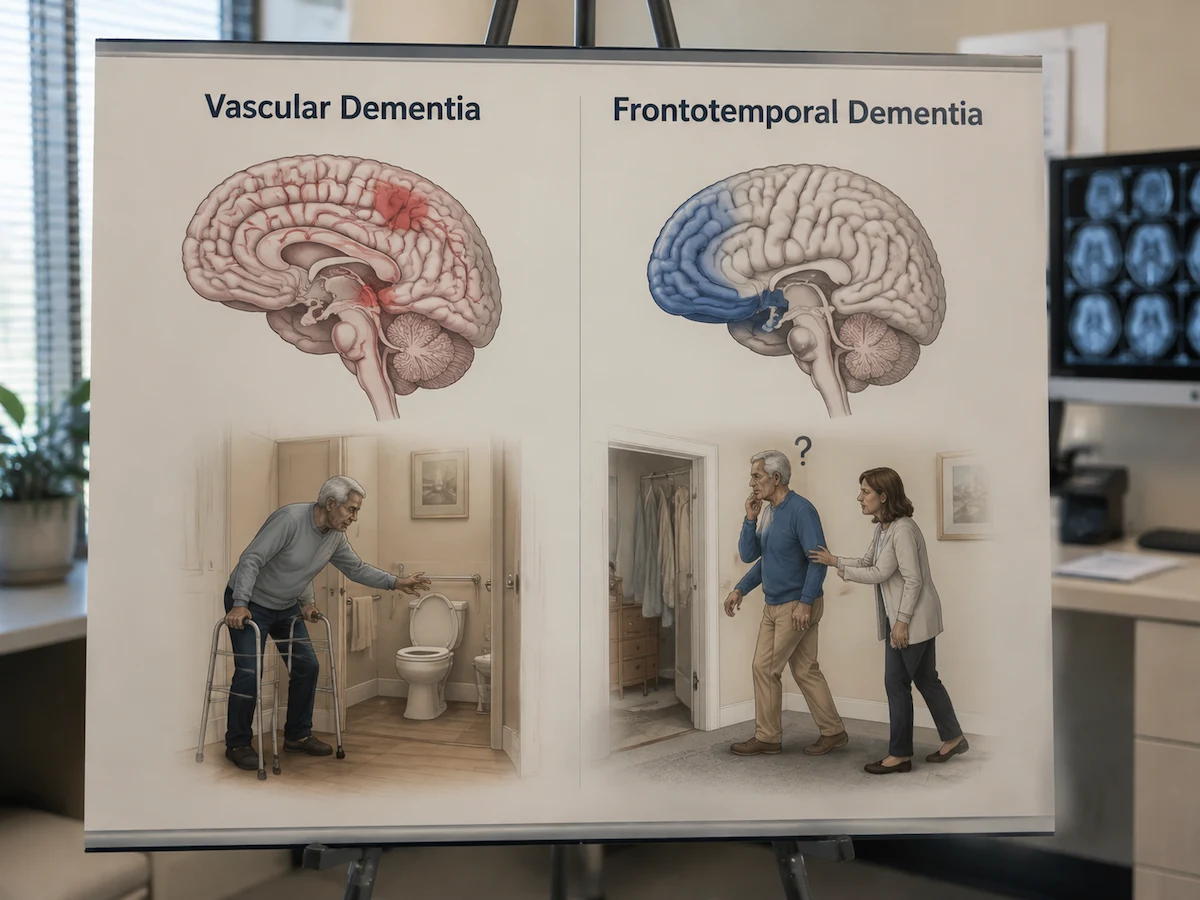
Yes, the type of dementia a senior has directly impacts the nature of their continence problems. This includes bladder urgency in Alzheimer’s and early bowel symptoms in Lewy body dementia (affects thinking, movement, and body functions).
Each dementia type creates its own set of continence challenges. This is what that looks like in practice.
Alzheimer’s Disease and Bladder Control
Alzheimer’s disease disrupts the brain signals that register a full bladder, so urge incontinence often happens without much warning. In this case, seniors frequently forget where the toilet is, even in a home they’ve lived in for years.
When these signals are disrupted alongside memory loss, accidents happen more easily. As Alzheimer’s progresses, starting and completing the toileting process independently becomes harder. Early continence care planning helps prepare for these changes.
Lewy Body Dementia: Bowel and Bladder Impact
Lewy body dementia is one of the more complex neurodegenerative disorders when it comes to continence.
In fact, bowel symptoms affect up to 89% of people living with this condition, and they often appear before memory and thinking problems do. Constipation is the most common bowel symptom, and it worsens bladder urgency when it’s left unmanaged.
The autonomic nervous system damage specific to Lewy bodies also disrupts bladder nerve signals directly, so both the urinary tract and bowel are affected at once.
Vascular and Frontotemporal Dementia
Vascular dementia (a type of dementia caused by reduced blood flow to the brain) produces two very different continence patterns depending on its cause. Particularly, after a stroke, changes to bladder control can appear suddenly and without warning.
In small vessel disease, though, the decline tends to be gradual. Damage to the brain’s small blood vessels builds over time. This slowly affects thinking, movement, and the ability to manage toileting independently.
Frontotemporal dementia, on the other hand, damages the brain’s inhibitory circuits. Seniors may urinate in inappropriate locations, not because they’re unaware of social norms, but because they can no longer act on that awareness.
Either way, incontinence appears earlier in vascular dementia than in Alzheimer’s disease, so prompt assessment is worth pursuing.
How Do You Spot Continence Problems Early in Seniors?
Most carers notice accidents first. But by then, the signs were probably there for a while: restlessness, pulling at clothing, increased agitation, and going unrecognised. The sooner these patterns are identified, the better a continence care plan can be.
The table below maps some common symptoms of continence problems across each stage of dementia:
|
Dementia Stage |
Bladder Signs |
Bowel Signs |
|
Early |
Urgency, night-time frequency, occasional leaks |
Constipation, irregular timing, difficulty initiating |
|
Moderate |
Accidents before reaching toilet, confusion about toilet location, wet clothing |
Difficulty recognising urge, soiling, needing reminders |
|
Late |
Little to no awareness of need, full urinary incontinence |
Faecal incontinence, complete dependence on carer |
Beyond visible leakage, the real signals are behavioural symptoms (and this is where carers have to become detectives). For instance, a senior who’s suddenly restless, pulling at their clothing, or wandering toward familiar areas may be experiencing incontinence-related distress.
Moreover, people living with advanced dementia often show no verbal signs at all, so functional decline and body language become the only reliable guide.
What Behavioural Strategies Help with Continence Care?
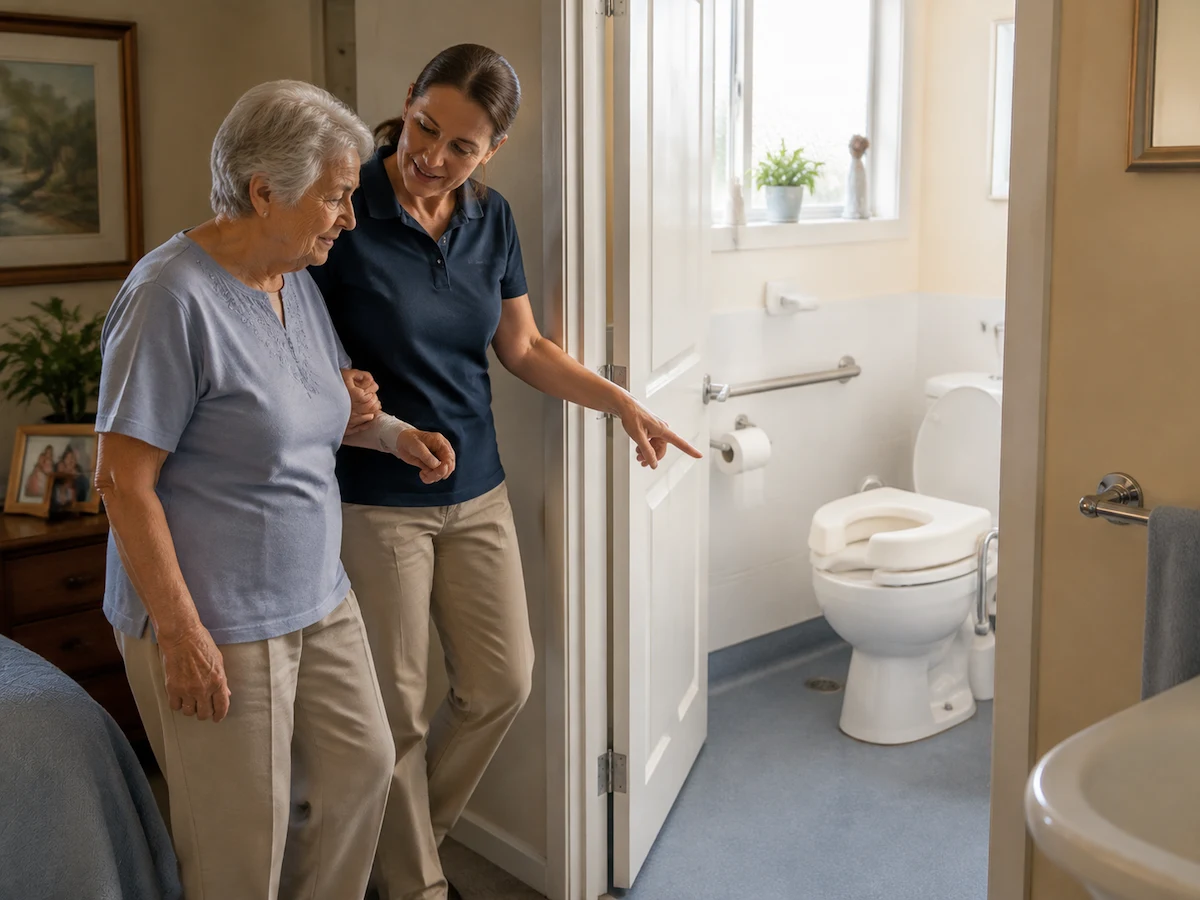
The right behavioural strategies can reduce accidents, lower a senior’s distress during toileting, and give carers a reliable daily structure to work from. They don’t require medical intervention to get started either.
Take a look at these behavioural strategies that help carers support continence.
Timed Toileting and Prompted Voiding
Timed toileting involves taking a senior to the toilet at fixed intervals, typically every two to three hours, regardless of whether they’ve expressed a need. Prompted voiding works differently. It involves asking the elder if they need to go and encouraging them to try.
The first type suits people living with dementia in the moderate to late stages. Meanwhile, the latter works better when an older person can still respond to verbal cues and maintain continence with a little support.
Reading Body Cues When Words Fall Short
Many seniors with dementia lose the ability to ask for toilet help before they lose bladder control. So carers have to read the room instead. Restlessness, pulling at clothing, facial flushing, and agitation are all signs a senior may need the toilet.
We’ve spoken with enough carers to know that behavioural signs are often easier to recognise in hindsight. Tracking these patterns over time helps carers build a clearer routine and cut down avoidable accidents.
Simplifying the Toileting Environment
Keeping pathways to the toilet clear and well-lit reduces both confusion and high falls risk during toileting. It’s also worth removing objects that could be mistaken for a toilet (bins and buckets are common culprits).
Leaving the toilet door open helps too. A visible toilet seat gives a clear, familiar signal without any verbal prompt needed. It sounds small, but for someone with dementia, that one change can shift a whole day.
Clothing Choices That Speed Up Toileting
Elastic waistbands and Velcro fasteners let seniors manage their own clothing faster, and that speed decreases accident risk. Conversely, zips, belts, and buttons create dexterity barriers that slow the whole process down for both the senior and their carer.
Choosing machine-washable clothing also helps carers maintain continence care without adding laundry pressure to an already full routine.
Can Pelvic Floor Exercises Help Seniors with Dementia?
Yes, pelvic floor exercises can help seniors in the early to moderate stages of dementia, provided they can still follow simple instructions and have consistent support from a carer or physiotherapist. They aren’t a cure, but they’re one of the few treatment options that strengthen the muscles controlling bladder function.
Below you’ll see what carers need to know about pelvic floor exercises.
Which Seniors Are Likely to Benefit
Pelvic floor exercises work by repeatedly contracting and relaxing the muscles that support the bladder and bowel. This can reduce the frequency of urinary incontinence and stress incontinence in seniors with early to moderate dementia.
The catch is that results don’t come quickly. You’ll need consistent practice over several weeks before any improvement is noticeable. Carers need to build the exercises into a regular routine rather than treating them as an occasional add-on to continence care.
How Carers Can Support These Exercises at Home
Caregivers don’t need clinical training to help with pelvic floor exercises. Simple verbal prompts and gentle physical demonstration are often enough to guide a senior through each contraction.
That said, a pelvic health physiotherapist can assess the senior properly and put together a personalised program suited to their cognitive level. From what we’ve seen among dementia patients, short but regular sessions work way better than longer infrequent ones (and it’s worth knowing that early progress is bound to be slow).

What Management Strategies Work Best Day-to-Day?
Simple, consistent management strategies, like regular toileting routines and suitable products, can reduce risks and make daily continence care more manageable.
These adjustments cover the most impactful areas of day-to-day continence care:
- Fluid Intake Timing: Adequate fluids during the day keep the bladder healthy and reduce constipation risk. However, tapering fluid intake in the two hours before bed limits overnight accidents without causing dehydration.
- Dietary Fibre for Bowel Regularity: A diet rich in prunes, vegetables, legumes, and wholegrains supports a senior’s usual bowel pattern. Good fibre intake also helps prevent constipation, which can put extra pressure on the bladder. It makes both bladder and bowel symptoms harder to manage.
- Bladder Diary Tracking: Recording toileting times, volumes, and accidents over two days reveals patterns that carers might otherwise miss. A bladder diary is a great tool for identifying patterns and building a more reliable continence routine.
- Safe Toileting Aids: Aids like a raised toilet seat, grab rails, mobility aids, and non-spill urinal bottles all lower risk for falling and support safer toilet access. These appliances help seniors maintain continence and toilet independently for longer.
- Avoiding Bladder Irritants: Caffeine, alcohol, and sugary drinks irritate the bladder lining. Cutting them back (or totally cutting them out) decreases urgency and frequency in elders already dealing with continence issues.
- Government Funding for Continence Aids: Eligible Australian seniors can access the Continence Aids Payment Scheme, which pays $739.40 in 2026-27 toward incontinence products. My Aged Care also covers continence-related support for those receiving aged care services.
These management strategies build a practical structure that makes continence care more consistent and less reactive. Along with them, the right continence products and aids improve both the senior’s comfort and the carer’s workload.
Which Continence Products Suit Seniors with Dementia?
Continence products with easy changes, secure fit, high absorbency, and skin protection are often the most suitable for a person with dementia.
Choosing unsuitable commodities can lead to skin breakdown and increased accidents. Here’s what to look for when selecting continence products for a senior with dementia.
Choosing the Right Absorbency and Fit
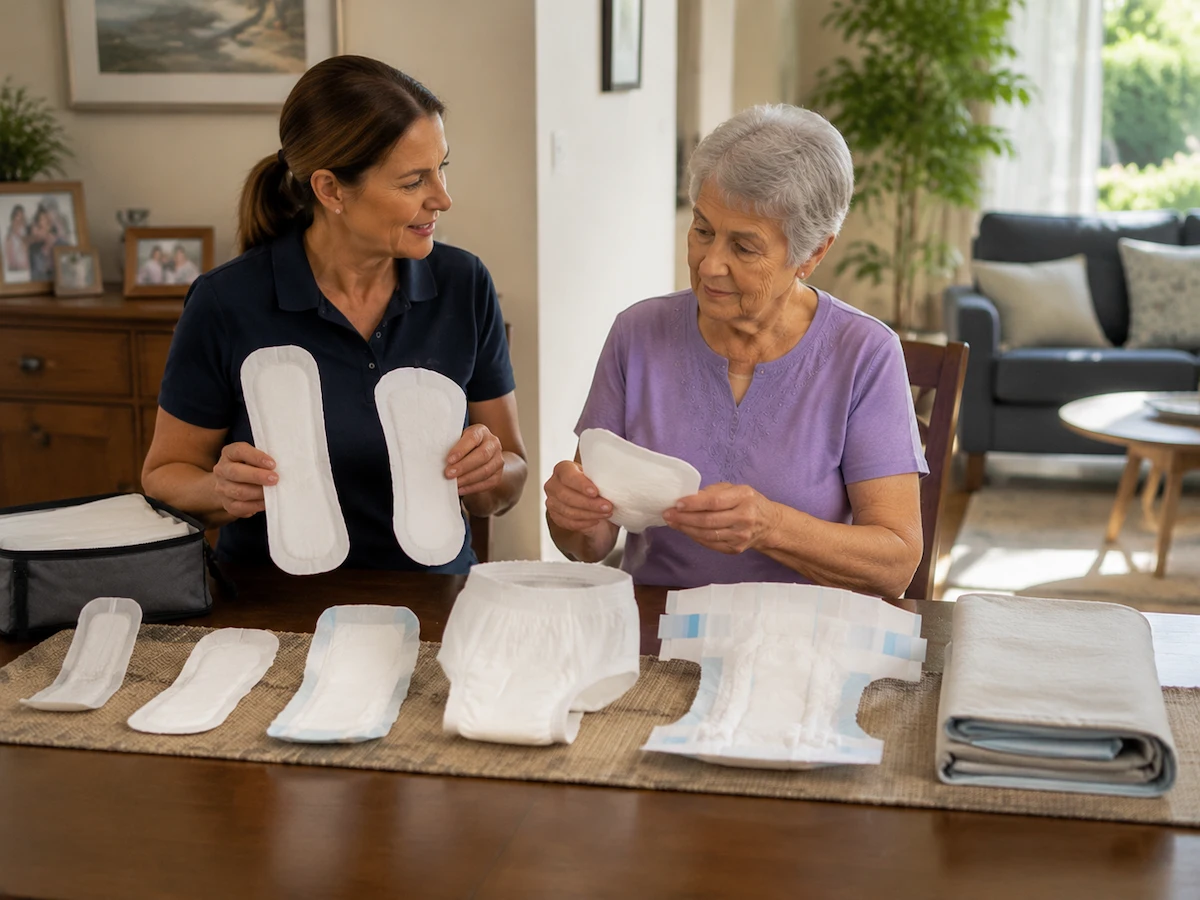
Continence aids include light incontinence pads, liners, pull-up pants, tab-style briefs, and full bed protectors. The appropriate choice depends on how often leakage occurs and how heavy it is. Particularly, matching absorbency to the actual degree of leakage prevents both under-protection and unnecessary bulk.
Disposable pads that are too thick can also restrict movement, which creates its own risks for seniors with limited mobility. You can test a small quantity of any continence product before committing to a larger supply to confirm the right fit.
Skin Care When Using Continence Products Daily
Prolonged skin contact with moisture is the primary cause of incontinence-associated dermatitis (IAD), a painful and preventable skin condition. Once the skin becomes irritated, it has much less tolerance for further friction and can be damaged more easily.
After each continence pad change, cleaning and drying the skin thoroughly and applying a barrier cream significantly lowers that risk. Along with that, regular skin checks around the perineum, inner thighs, and buttocks allow carers to catch early skin breakdown before it becomes a larger problem.
What Role Do Medical Conditions Play in Continence?
Not every change in a senior’s continence is a sign of dementia progressing. Sometimes a UTI, constipation, or an enlarged prostate is driving the problem. And that changes everything about how it’s managed.
Several co-existing health conditions directly affect the urinary tract and bowel, and many of them are treatable once identified.
|
Condition |
How It Affects Continence |
|
Urinary Tract Infection (UTI) |
Worsens urgency and frequency; can provoke sudden confusion and rapid symptom escalation in dementia |
|
Constipation |
Puts pressure on the bladder; directly linked to urinary leakage and bowel accidents |
|
Enlarged Prostate |
Causes difficulty urinating, overflow incontinence, and increased urinary frequency in men |
|
Diabetes |
Increases urine output and urinary tract infection risk; compounds existing bladder control difficulties |
|
Parkinson’s Disease Dementia |
Disrupts bladder nerve signals; commonly co-occurs with Lewy body dementia and worsens urinary symptoms |
It’s worth arranging a physical examination with a GP straight away if you see these signs, because a treatable condition like a UTI often looks like a decline in dementia.
Medication review is also part of that process. For example, muscle relaxants and certain other medications, such as diuretics, sedatives, and some antidepressants, can affect bladder control.
In severe cases, some consider indwelling catheters, but that’s a decision for a specialist. Fortunately, treatment options exist for most of these health conditions, so acting quickly decreases the risk of complications developing further.
Practical Solutions for Overnight Continence Care
A bedside commode is a great tool for managing incontinence overnight. It removes the need for a senior to walk the full distance to the bathroom in the dark.
Optionally, waterproof mattress protectors and protective bedding reduce the physical burden on carers when accidents do occur. It’s also worth reviewing the timing of any diuretic medications with a GP, since moving doses to the morning can lower nocturnal polyuria and overnight accident frequency.
If you’re a caregiver, we suggest services like:
- Shared overnight care arrangements
- Respite services
- Overnight home care support
They all give carers regular uninterrupted sleep. For nursing home residents, overnight staffing handles all these directly. But for those living at home, accessing the right support early prevents carer burnout before it reaches a crisis point.
Protecting Dignity While Supporting Carers
Approaching continence care with dignity reduces resistance, builds trust, and protects the senior’s sense of self. Person-centred care isn’t only a philosophy here. The way you communicate during these moments is just as important as the care you provide.
In continence care, these areas are where dignity and carer support come together:
- Dignity-First Communication: Calm, private, and respectful language during toileting care reduces a senior’s distress and resistance to assistance. It also supports social continence by helping elders feel safe enough to engage with their care plan rather than withdraw from it.
- Recognising Shame as a Barrier: Many families wait too long to seek help because of embarrassment. In this scenario, speaking with a GP early can ease the increased risk of challenging behaviour related to toileting.
- When to Seek Professional Help: A sudden change in continence symptoms, skin breakdown, or strong resistance to toileting all need prompt clinical review. When that happens, a GP, continence nurse, or pelvic health physiotherapist can recommend the right treatment options and written materials to support ongoing care.
- Carer Wellbeing and Respite: When continence needs become too complex for one person to manage alone, it may be time to bring in additional support. Carer Gateway (1800 422 737), Dementia Support Australia (1800 699 799), and the National Continence Helpline (1800 33 00 66) all provide practical and emotional support.
Good continence care protects quality of life for everyone involved, not just the senior. With the right support in place, caregivers avoid burnout, and people living with dementia retain their dignity for longer even in residential care.

Your Next Step Towards Better Continence Care at Home
Continence care for seniors with dementia is manageable with the right support in place. The strategies, products, and professional resources covered in this article give you a solid starting point. But keep in mind that no single approach works for everyone.
Start with what’s most pressing for your loved one right now. That can be building a toileting routine, finding the right continence products, or reaching out to a GP. Each step forward will improve quality of life for both of you.
If you need more guidance, Oz Continence has a full library of articles covering continence solutions for seniors with dementia and beyond. Browse our other guides to find the information that fits your situation best.
Frequently Asked Questions About Continence Solutions for Seniors with Dementia
These are some of the most common questions carers ask about managing continence issues in seniors with dementia. Each answer is kept practical and direct.
Can Incontinence in Dementia Be Reversed or Meaningfully Improved?
Sometimes, yes. Urinary incontinence caused by a treatable health condition like a UTI or constipation can improve significantly once that underlying issue is addressed.
Full reversal isn’t likely for incontinence driven by dementia. However, the right behavioural strategies, continence products, and professional support can improve daily comfort for people living with dementia.
Is a Sudden Worsening of Continence Always a Sign of Dementia Progression?
Not always. A sudden increase in continence symptoms is often a sign of a treatable condition rather than dementia progression. Urinary tract infections, constipation, and medication side effects are common culprits.
It’s worth seeing a GP straight away when symptoms worsen quickly. Many of these causes respond well to treatment options and don’t reflect any change in the dementia itself.
How Often Should a Senior with Dementia Be Taken to the Toilet?
Every two to three hours is a reliable starting point for most seniors with dementia. From there, a bladder diary helps carers identify an individual’s natural pattern and adjust the schedule accordingly. Some seniors need more frequent trips during certain parts of the day. So managing incontinence well means staying flexible rather than sticking rigidly to one fixed interval.
What Is the Difference Between Prompted Voiding and Timed Toileting?
Timed toileting means taking a senior to the toilet at fixed intervals regardless of whether they’ve expressed a need. Meanwhile, prompted voiding involves asking the senior if they need to go and encouraging them to try.
In general, timed toileting suits moderate to late-stage dementia, and prompted voiding works better when a person living with dementia can still respond to verbal cues.
