
Welcome to your complete guide on incontinence products, types, uses, and benefits.
If you’ve ever stood in a pharmacy aisle feeling completely lost about which product to pick, that’s a very common experience. Most people have no idea where to begin, and why would they? After all, there are pads, pants, and bed protection options to choose from, and knowing which one to pick isn’t always obvious.
Don’t worry, though. The team at Oz Continence put this guide together to clear it all up. Here, you’re going to learn:
- What incontinence products are and how they work
- The main types of continence pads, pants, and accessories available
- How absorbency levels affect your choice
- The difference between disposable and reusable pads
- How to get financial support for continence products in Australia
Keep reading to find the right fit for you.
What Are Incontinence Products?
Incontinence products are absorbent aids that collect and contain bladder or bowel leaks. They cover a wide range, including slim continence pads, pull-up pants, full briefs, and bed protection covers.
And honestly, managing leaks is just one part of what these products do. They keep you dry and comfortable, so you can move through your day without constantly second-guessing yourself.
That said, no single option suits everyone. Pads, pants, and other accessories are built around different mobility levels, absorbency needs, and daily routines. Some sit discreetly inside regular underwear, while others wrap around fully for heavier protection.
So, what are the actual options out there? Let’s walk through each product type in detail.
What Types of Incontinence Products Are Available?
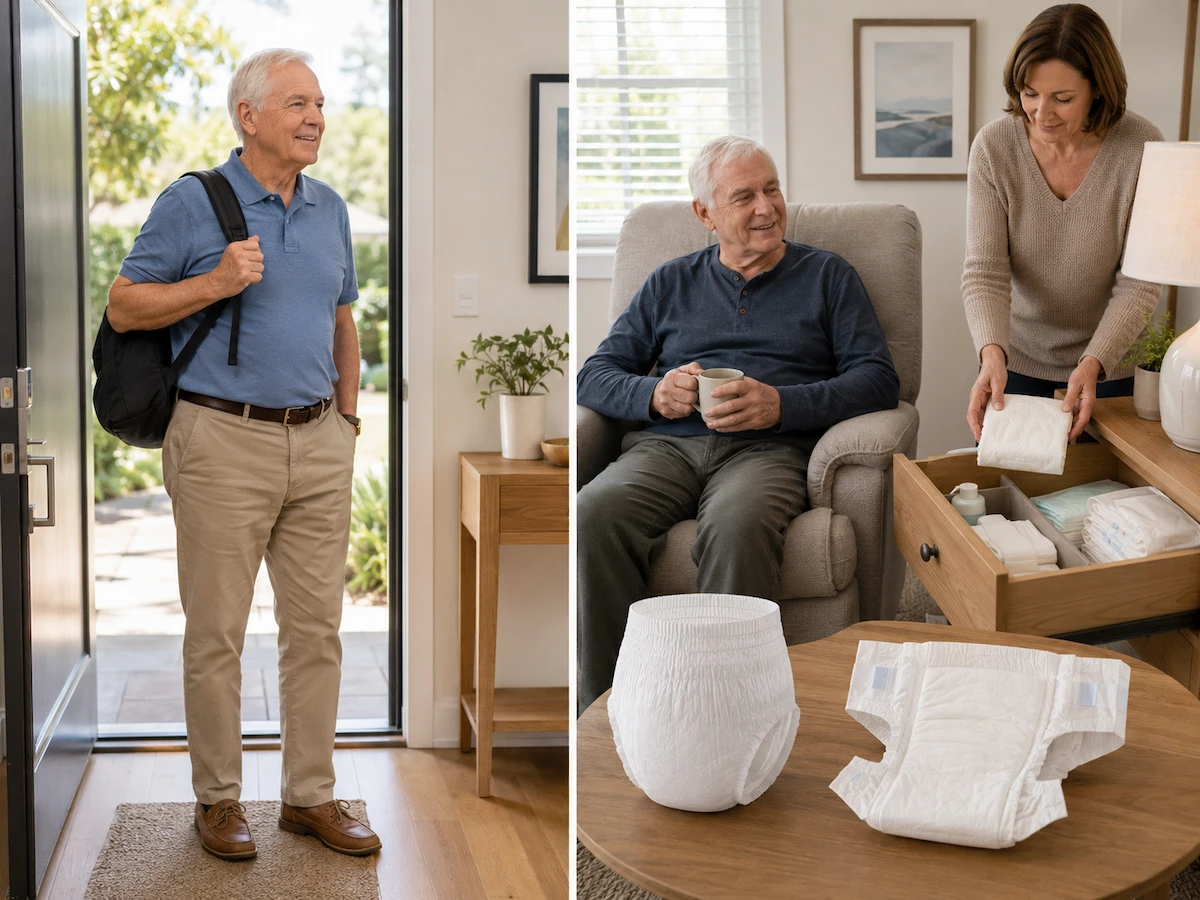
There’s a product type for every level of incontinence, lifestyle, and daily routine. Some are slim and discreet. Others offer full coverage for heavier leaks.
Here’s a breakdown of what’s available.
Continence Pads and Liners
Most people managing bladder leaks reach for continence pads first. These pads sit inside your underwear and absorb urine before it reaches your clothing. They have a moisture-wicking top layer that pulls liquid away from your skin, so you stay comfortable between changes.
By contrast, liners are a step down in thickness and target those small, occasional drips that happen during sneezing, laughing, or exercise (think stress incontinence, where leaks are light but frequent). In our experience at Oz Continence, many people find liners as the easiest starting point when they’re first figuring out what works for them.
Pull-Up Pants and Protective Underwear
Want something that feels nothing like a medical product? Pull-up pants are your best bet.
You can wear them under any clothing without anyone noticing. Because of that, pull-ups are a popular choice for people who want to stay active and independent. However, they do have an absorbency limit, so heavier day-long leaks will need a more substantial product.
Protective underwear fits that exact need. It’s more structured and holds up through longer wear periods, which makes it a better match for moderate to heavy leaks.
All-in-One Briefs with Tabs
Here’s where it gets a little different. All-in-one briefs suit people whose carers manage changes throughout the day or night.
Typically, four things make them stand out:
- Adjustable Tab Closure: Tab fastenings on both sides let carers change briefs quickly and cleanly. They don’t have to stand the wearer up or reposition them significantly during the process.
- Heavy-Duty Coverage: If you’re managing heavy bladder and bowel incontinence, no worries. All-in-ones handle high absorbency needs around the clock, day and night.
- Breathable Inner Lining: Softer inner linings allow airflow during extended wear, so moisture doesn’t sit against the skin for long periods.
- Plastic-Backed Styles: These offer stronger containment for bowel incontinence specifically, where a higher level of leak security is needed.
All-in-ones come in a range of sizes to suit different body types. If you’re not sure where to begin, a continence nurse can assess your requirements and match you to the right style.
Bed and Chair Protection
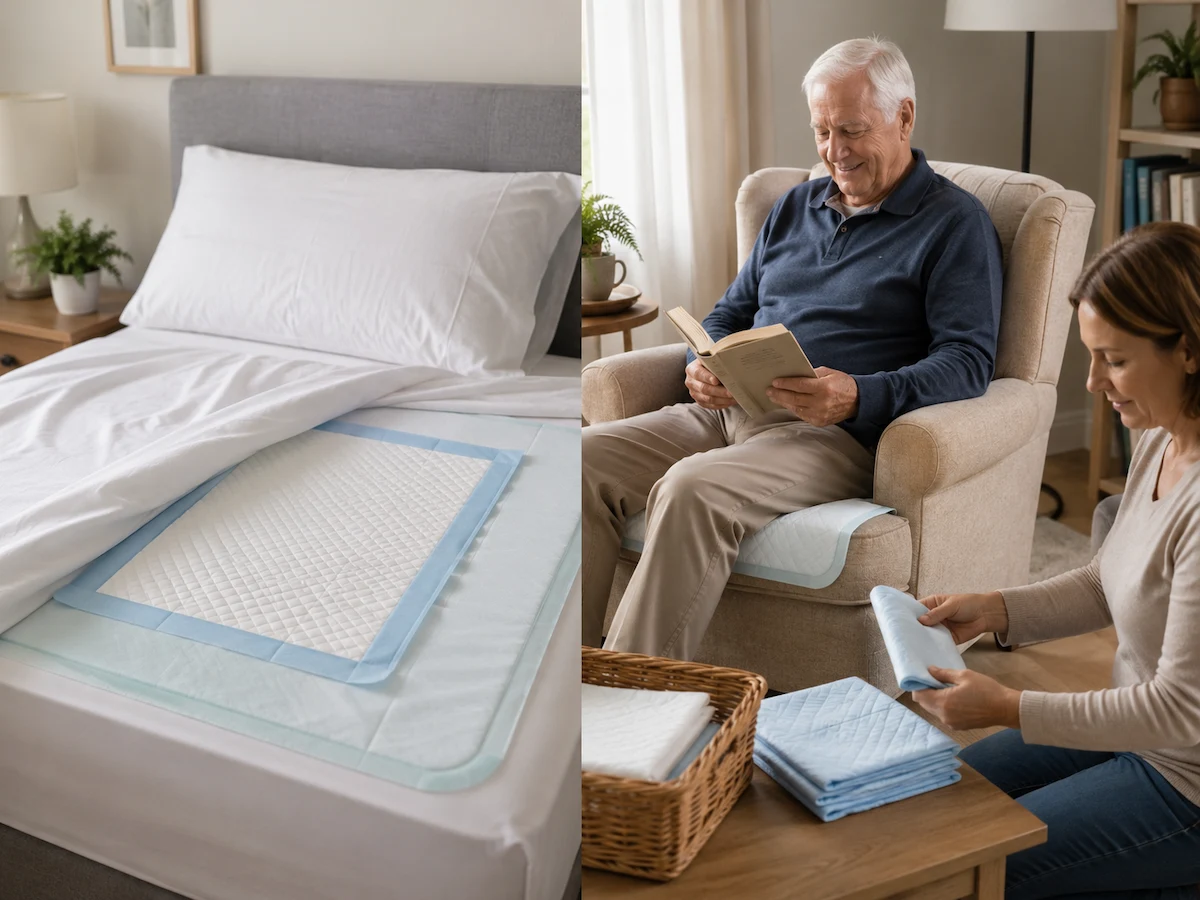
Picture waking up at 3 am to a soaked mattress. Bed protection products prevent exactly that.
For starters, absorbent bed pads lock moisture away before it soaks through. Waterproof mattress covers work alongside them and add a second barrier directly under the sheet (no more emergency linen changes in the middle of the night).
The same absorbent underpads work just as well on armchairs, sofas, and wheelchairs. This means one product type covers both sleeping and sitting, which keeps things simple for carers and family members managing daily routines.
Knowing what’s available is the first part of management. The second is understanding how absorbency levels actually work.
How Do Absorbency Levels Work in Continence Products?
Ever bought a pad that leaked within an hour? Absorbency level is usually why.
Think about it this way: absorbency tells you how much liquid a product can hold before it stops doing its job. So if you get it right, you’ll barely notice your pad all day. Get it wrong, and leaks will become a problem well before your next scheduled change.
Take a look at the three main levels so you can find the best place to begin:
- Light: Light absorbency products target small leaks, like a few drops after coughing or during a short jog. They’re thin, sit flat, and stay comfortable across a full day.
- Moderate: For leaks that happen several times across the day, moderate products step in. They hold considerably more liquid and give you a realistic three to four hour window between changes.
- Heavy: Overnight use is a completely separate challenge. Heavy absorbency products have a reinforced core that captures full bladder voids and bowel leaks, so you sleep through the night undisturbed.
Worth Knowing: Manufacturers measure absorbency differently, so two products at the same level can perform quite differently in practice. That’s why you should check the millilitre rating on the pack rather than relying on the label description alone.
How Do You Choose the Right Incontinence Product?
The right product depends on your incontinence type, mobility, and daily routine. Believe it or not, figuring out where to start is something the team at Oz Continence gets asked about every single day. People know they need something, but narrowing it down feels overwhelming at first.
These four factors make that process a lot more manageable.
1. Type of Incontinence
Your incontinence type is the clearest indicator of which product suits you best. Here’s how each type generally maps to a product:
- Bladder Leaks: Pads, pull-up pants, and continence underwear cover the majority of bladder incontinence cases, from light stress leaks to heavier urge incontinence.
- Bowel Incontinence: Higher absorbency with stronger containment is non-negotiable here. All-in-one briefs with tabs handle this level of need better than any other format.
- Mixed Incontinence: Both bladder and bowel symptoms together call for a product that handles volume and containment simultaneously. Your GP is the best person to guide you toward a specific product for this.
These categories overlap more than they might seem, so don’t be surprised if your needs shift over time.
2. Lifestyle and Mobility
Your daily routine guides your product choice just as much as your incontinence type does.
Something that holds up at home may not perform as well through a full workday or a gym session. Someone who exercises, travels, or works long hours needs something discreet and secure. Pull-up pants suit this group well because they move freely and sit close to the body.
On the flip side, people who spend most of their time sitting or lying down require a more secure wraparound fit. All-in-one briefs hold firmly in place even with limited movement, so leaks stay contained regardless of position.
3. How Often to Change Your Pad
For most people, every three to four hours during the day is a reasonable guide. Overnight products are built for longer wear, so one change at night and one in the morning is generally enough.
Our experience at Oz Continence shows that trialling a few sample products first saves both time and money. What looks promising on paper doesn’t always perform the way you need it to. So test it and then buy in bulk once you’ve found what fits.
4. Skin Care and Irritation
When you use incontinence products regularly, skin health becomes a pressing concern. Many people develop symptoms like redness, itching, and soreness around the groin and inner thighs. This condition is called incontinence-associated dermatitis, or IAD.
Prolonged moisture contact drives IAD by breaking down the skin’s protective barrier. The longer this goes unaddressed, the more vulnerable the skin becomes.
Pro Tip: Keep an eye on your skin at every pad change. Clean the area gently, dry it thoroughly, and apply a barrier cream directly to the skin after drying. If redness or soreness persists, speak to your GP or a continence nurse early rather than waiting for symptoms to worsen.
Now you’ve got the product type and the practical side covered. The next question people often ask is whether continence pads and period pads are actually the same thing.
What Is the Difference Between Disposable and Reusable Pads?
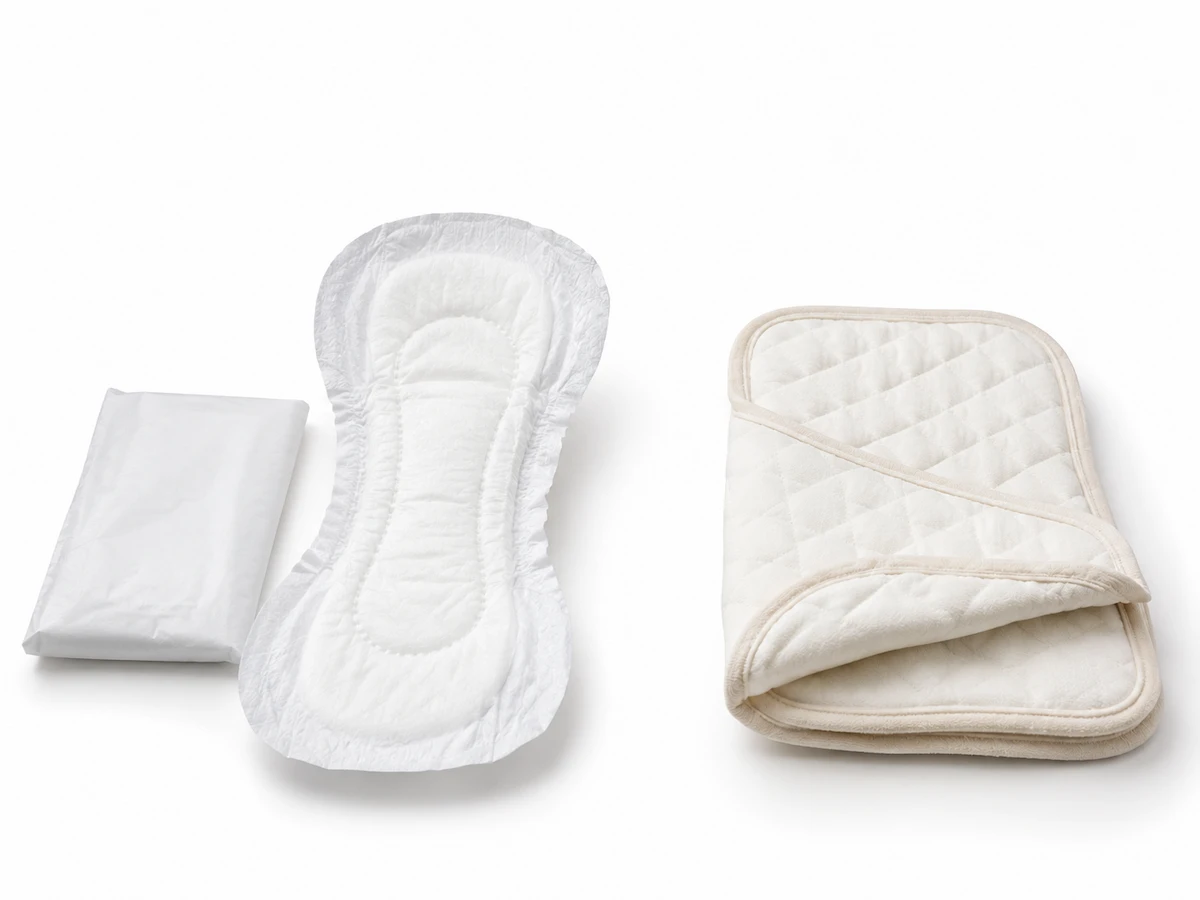
Both work well, but the better choice depends on your budget and situation. You might be thinking disposable is the obvious answer because they’re easy to use and require no laundering. In reality, washable pads bring their own set of practical advantages.
The table below breaks down how these two options compare:
| Disposable Pads |
Reusable Pads |
|
|
Cost |
Lower upfront cost |
Higher upfront, lower in the long run |
|
Absorbency |
Light to heavy options |
Light to moderate options |
|
Convenience |
Change and discard |
Launder and reuse |
|
Skin comfort |
Varies by brand |
Softer fabrics, gentler on skin |
|
Environmental impact |
Higher waste |
Far lower waste |
|
Best for |
Travel, overnight, heavy leaks |
Home use, moderate leaks |
Many people begin with disposables after a diagnosis or surgery, then move toward washable options once their symptoms stabilise. Others stick with one type from the start and never look back.
Ultimately, what you use long term is entirely personal, and both are perfectly valid choices.
Before moving on, there’s one more comparison that catches many women off guard.
Are Incontinence Pads the Same as Period Pads?
No. These two products are built for completely different jobs (it’s an easy mistake, and a common one).
Period pads handle menstrual blood, a thick fluid that moves gradually. Urine behaves nothing like that. It arrives suddenly and in much larger volumes, so continence pads have a faster-absorbing core that captures liquid almost the moment it lands.
Beyond absorbency, the fit is different too. Period pads follow the shape of menstrual flow, which means the coverage area sits in the wrong position for bladder leaks. That gap is usually where the problem starts, and most people only realise it after ending up with wet clothing.
Simply put, purpose-built continence pads lock away urine faster, cover the right area, and hold considerably more liquid. If period pads have been letting you down, the product was the problem, not you.
Do Men and Women Need Different Incontinence Products?
In one word, yes. Body shape determines how a product sits, and men and women are built differently enough that a one-size approach simply doesn’t work. Getting the fit wrong affects how well the product performs, regardless of absorbency level.
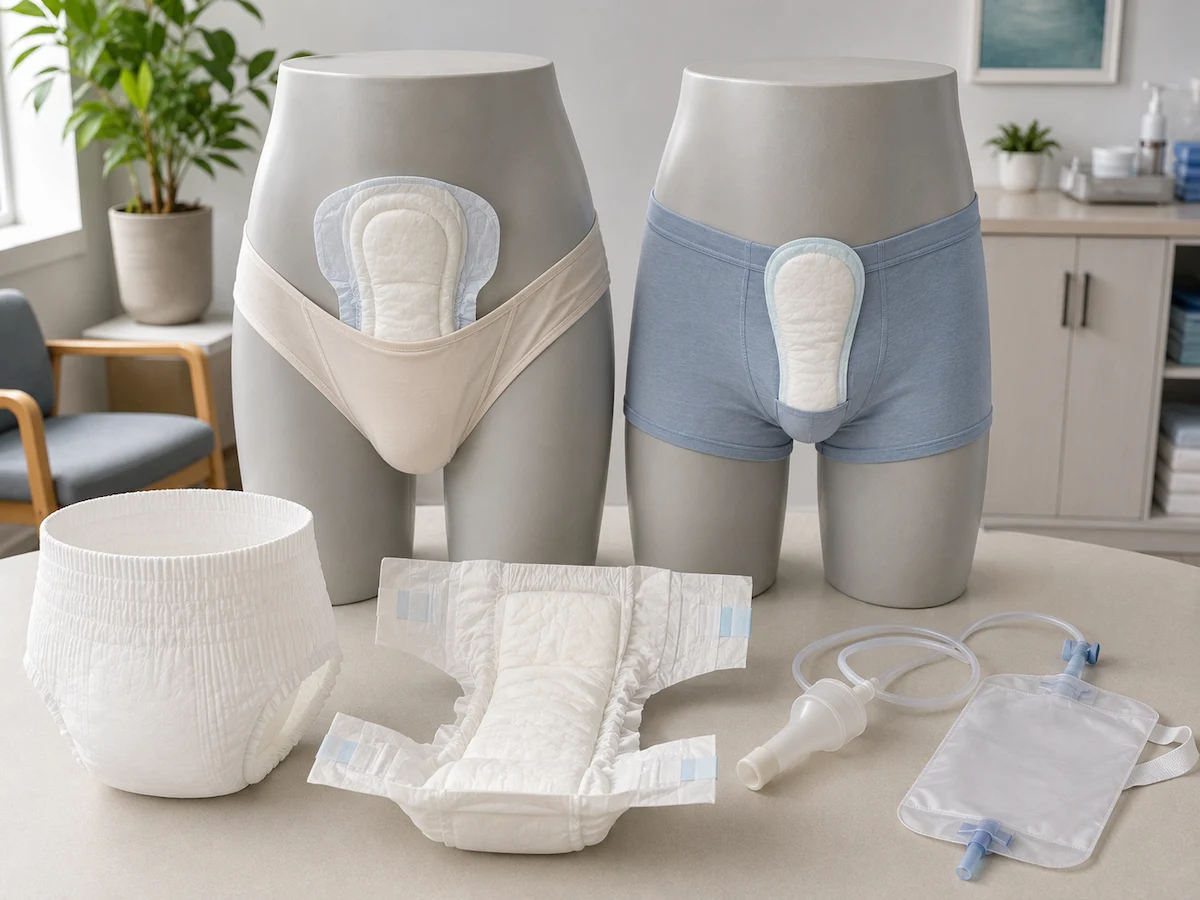
Women’s products follow a wider, curved cut that aligns with female anatomy. This covers the full area where leaks typically occur and keeps the product stable during movement (especially during busier or more active parts of the day). Most styles come in pull-up or pad format.
Men experience leaks differently. Urine escapes from a more concentrated point, so male-specific guards funnel liquid directly into the core rather than spreading it across a wider surface. These guards stay closer to the body and channel liquid far more precisely than a standard pad.
Sheath drainage is another option specifically for men with heavier or less predictable leaks. A soft sheath fits over the penis and channels urine into a leg bag that presses against the thigh (plus it stays out of sight under trousers).
For many people new to this option, the leg bag setup takes some getting used to. But nine times out of ten, once they find a format that genuinely fits, they wonder why they waited so long.
Can You Get Financial Help for Continence Products in Australia?
Several Australian government schemes help cover continence product costs, and many people managing incontinence long-term qualify for at least one of them. The two main pathways are CAPS and the NDIS.
Continence Aids Payment Scheme (CAPS)
CAPS provides eligible people with an annual payment toward their continence costs. You pick your own supplier and buy what is suitable for your needs. In the 2026 to 2027 financial year, that payment sits at $739.40, and it adjusts each year slightly.
Two things most people want to know before applying:
1. Who Is Eligible for CAPS?
To qualify, you need permanent and severe bladder or bowel incontinence caused by a listed condition. You must also be an Australian citizen aged five or older.
From there, the type of condition determines how you qualify. Neurological conditions like multiple sclerosis and spinal cord injury meet the criteria directly. Non-neurological conditions, on the other hand, require a Pensioner Concession Card alongside the diagnosis.
2. How to Apply for CAPS
The application takes just a few steps. Apply online through your Medicare account via MyGov. Your GP or a registered health professional completes their section first, then you submit it. Once the application clears, the payment goes straight into your bank account.
NDIS and Other Funding Options
If you’re under 65 and your incontinence is connected to a permanent disability, the NDIS may cover your continence products as part of your support plan. Your support coordinator (or NDIA contact, depending on how your plan is set up) handles that process with you.
That said, CAPS and the NDIS aren’t the only options. My Aged Care‘s Support at Home program assists older Australians with continence care as part of home-based support. Veterans can access the same type of assistance through the Department of Veterans’ Affairs Rehabilitation Appliances Program.
Note: The National Continence Helpline on 1800 33 00 66 is a good starting point if you’re not sure which scheme applies to you.
Where Can You Buy Incontinence Products in Australia?
If you’re ready to buy, continence products are widely available across Australia.
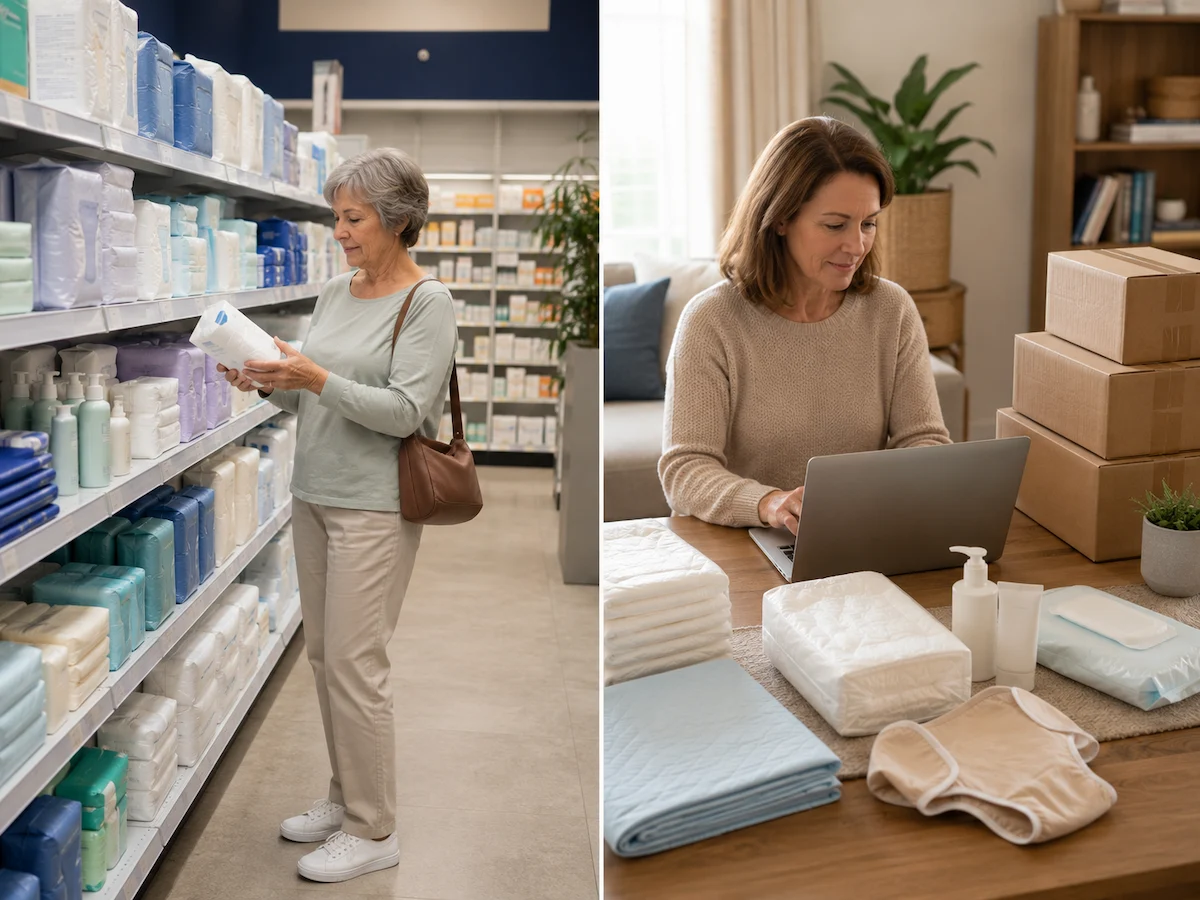
Everyday pads and pull-up pants are available at pharmacies and supermarkets, which makes them the most convenient place to begin. Medical suppliers carry a wider selection though, covering tab briefs, bed protection, and specialist accessories that standard retail stores don’t tend to carry.
Online ordering works particularly well for carers buying on behalf of a family member. Most suppliers ship directly to your door, and larger orders save repeated trips to the shops.
Ready to Find the Right Fit?
Incontinence management gets easier once you know what to look for. The incontinence type, the absorbency level, and how the day typically runs all point you toward the right answer fairly quickly.
Finding a product that fits changes things. You’ll see how the constant low-level worry fades, sleep improves, and daily plans stop revolving around leaks. Little by little, confidence follows.
Oz Continence is here whenever you want clear, reliable information to take that next step. Browse our guides, check your funding options, and reach out if you need a hand.
FAQs
Here are some of the most common questions we hear about incontinence products at Oz Continence:
Is Washable Continence Underwear as Effective as Disposable Pads?
Yes, washable continence underwear works well for light to moderate leaks. Most styles use a three-layer construction that draws moisture away from the skin and locks it inside. They’re also a practical option for people who find disposable products irritating to sensitive skin.
Can Incontinence Products Handle Both Urine and Faeces?
Some can, but not all. Plastic-backed all-in-one briefs are specifically built for faecal containment, offering deeper cores and stronger leak barriers for this purpose. However, always check the product description to ensure the item is rated for bowel use, as not every pad or pants style is built for that level of need.
How Do I Protect My Bedding and Furniture from Leaks?
Absorbent bed pads and waterproof mattress covers are your first line of defence against overnight leaks. Waterproof quilt protectors and chair covers do the same for armchairs and sofas. Reusable versions last well after repeated washing and are a cost-effective long-term choice.
What Types of Incontinence Pads, Pants, and Underwear Work for Active People?
Pull-up pants and fitted incontinence pads move with the body, making them a practical choice for walking, exercise, and travel. They manage leaks reliably whether you pass urine during activity or at rest. Reusable styles stay secure and discreet without restricting movement.
Where Can I Find More Information on the Right Products for Me?
The Oz Continence page has detailed guidance on product types, absorbency levels, and funding options. And if you’d prefer to speak with someone directly, the National Continence Helpline on 1800 33 00 66 connects you with a continence nurse who can answer questions specific to your situation.
