
Are you dealing with incontinence and looking for the best pads to keep you comfortable, dry, and confident every day? Then Oz Continence can help.
We guide Australians living with bladder and bowel leakage toward practical, reliable information that makes managing incontinence less overwhelming. And you’ll find exactly that here.
Based on our research and hands-on understanding of continence care, we’ll share honest, practical insights on incontinence pads. You’ll learn about:
- The different types available for adults, the elderly, and seniors
- What comfort features to look for in a pad
- How absorbency levels match different needs
- Skin care, overnight protection, and government funding options
No more confusion about which pad is right for you after reading this article. Let’s walk through it.
What Are Incontinence Pads and How Do They Work?
Incontinence pads are absorbent products you wear inside your underwear to catch and contain urinary or faecal leakage before it reaches your clothing. They sit flat against your body. A multi-layer core then locks urine or faeces away, so the surface stays dry on your skin. This core construction sets continence pads apart from other absorbent products on the market.
Simply put, the inner layer pulls moisture away from your skin the moment leakage occurs, while the core holds it locked in place. So even after a leak, that uncomfortable wet feeling doesn’t linger. If you manage this day to day, that relief is bigger than it might sound.
And millions of individuals face the same challenge. According to a Deloitte Australia report, 2.4 million men and 4.8 million women experienced some degree of urinary or faecal incontinence. That’s a wake-up call for how widespread this condition is, and it’s exactly why the right choice changes how comfortable and confident you feel.
What Kinds of Incontinence Pads Are Available for Adults?
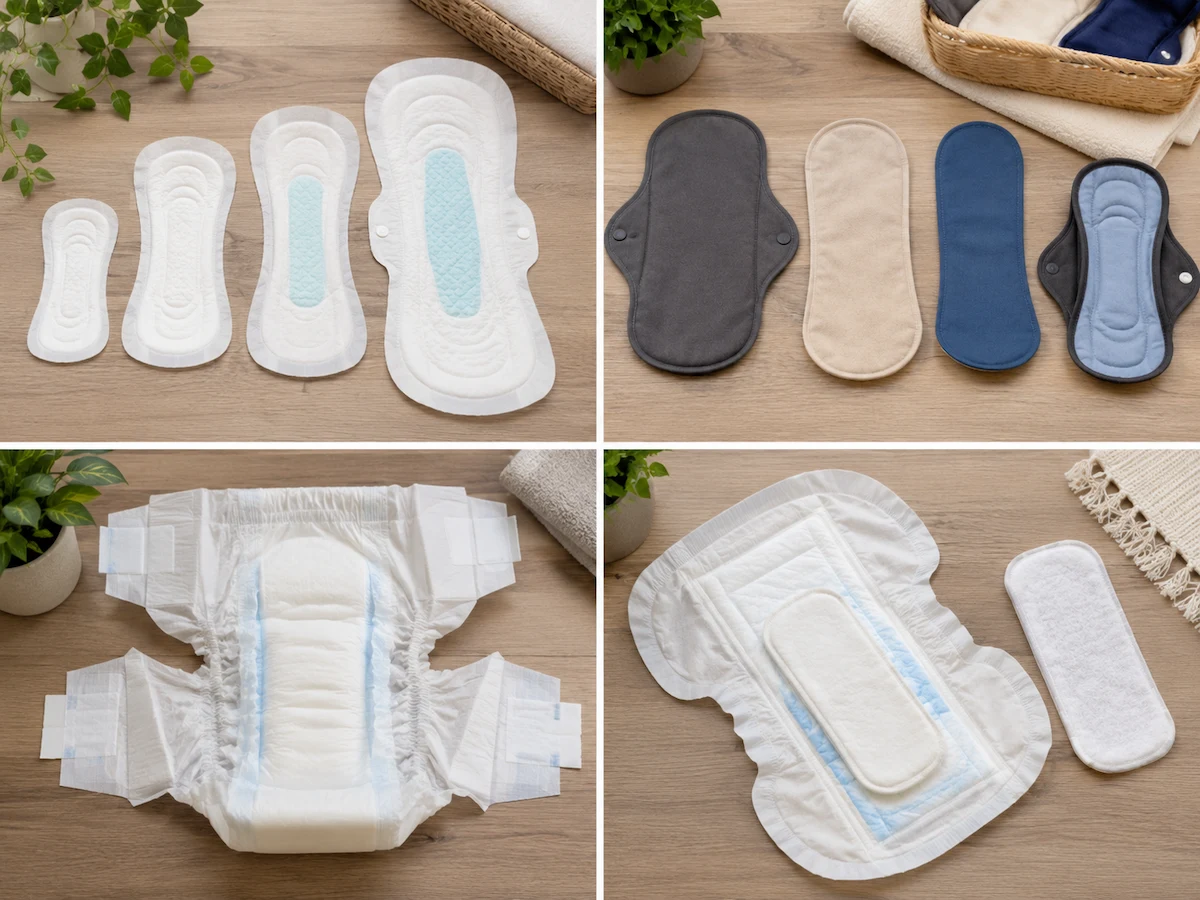
There’s a wide variety of pads on the market, including disposable, reusable, all-in-one, and booster styles. Every option suits a different need, body type, and routine. Here’s a breakdown of all four.
1. Disposable Pads
Disposable pads are single-use absorbent products you wear inside your regular underwear. They’re widely available at supermarkets, pharmacies, and online suppliers across Australia.
Most come in a range of protection levels, from light coverage for occasional drips through to heavy absorption for more frequent leakage. And because you toss them after use, laundering isn’t part of the equation (an easy option for busy schedules or limited laundry access).
2. Reusable Pads
Want something washable and cost-effective? Then you can choose reusable pads. They function the same way as disposable options but go through the wash after each use instead of the bin. The long-term savings make reusable pads a practical choice for budget-conscious users.
Pro Tip: Look for moisture-wicking inner layers and a waterproof backing when selecting one. These two qualities keep you dry on the inside and stop leakage from reaching your clothing.
3. All-in-One Style Pads
All-in-one pads combine absorbency and full coverage in a single garment. They suit people with limited mobility particularly well. They come with wrap-around coverage and resealable tabs, so you don’t need separate underwear.
Caregivers find these particularly helpful during assisted changes, as the tabs allow quicker, more comfortable pad removal without fully undressing the person.
4. Booster Pads
Sometimes one pad isn’t enough, and booster pads solve exactly that problem.
These thin absorbent inserts sit inside another pad or garment and extend protection time without adding noticeable bulk. Nine times out of ten, they suit people managing heavier leakage or facing long stretches without bathroom access.
Beyond body-worn options, products like bed pads and chair protectors provide an additional layer of coverage during rest or extended sitting. Each style serves a different purpose, and in most cases a combination of two options outperforms either one on its own.
Now that you know what’s available, the next question worth asking is whether the pad you choose is actually designed for your body.
How Do Incontinence Pads Differ for Men and Women?
Men and women have different body shapes, so the same option simply won’t work for both. A pad cut for a woman worn by a man will gap, shift, and fail to contain leaks at the front.
Men’s pads, often called guards, concentrate absorbency toward the front to match male anatomy. This placement addresses where leakage most commonly occurs, particularly for men dealing with post-prostatectomy dribble or age-related bladder control changes. A well-fitted guard sits flat and stays in place through a full day of activity.
Women need a different approach altogether. Female pads are wider at the hips and longer from front to back. The shape follows how bladder leakage typically presents in women. This gives women the ability to move freely, whether sitting, standing, or walking, without gaps at the edges.
At the end of the day, both styles aim for the same outcome: reliable protection through every hour. But how well a pad delivers on that promise depends on what it’s made of and how its layers are constructed. That’s what we’ll unpack next.
What Makes an Incontinence Pad Truly Comfortable to Wear?
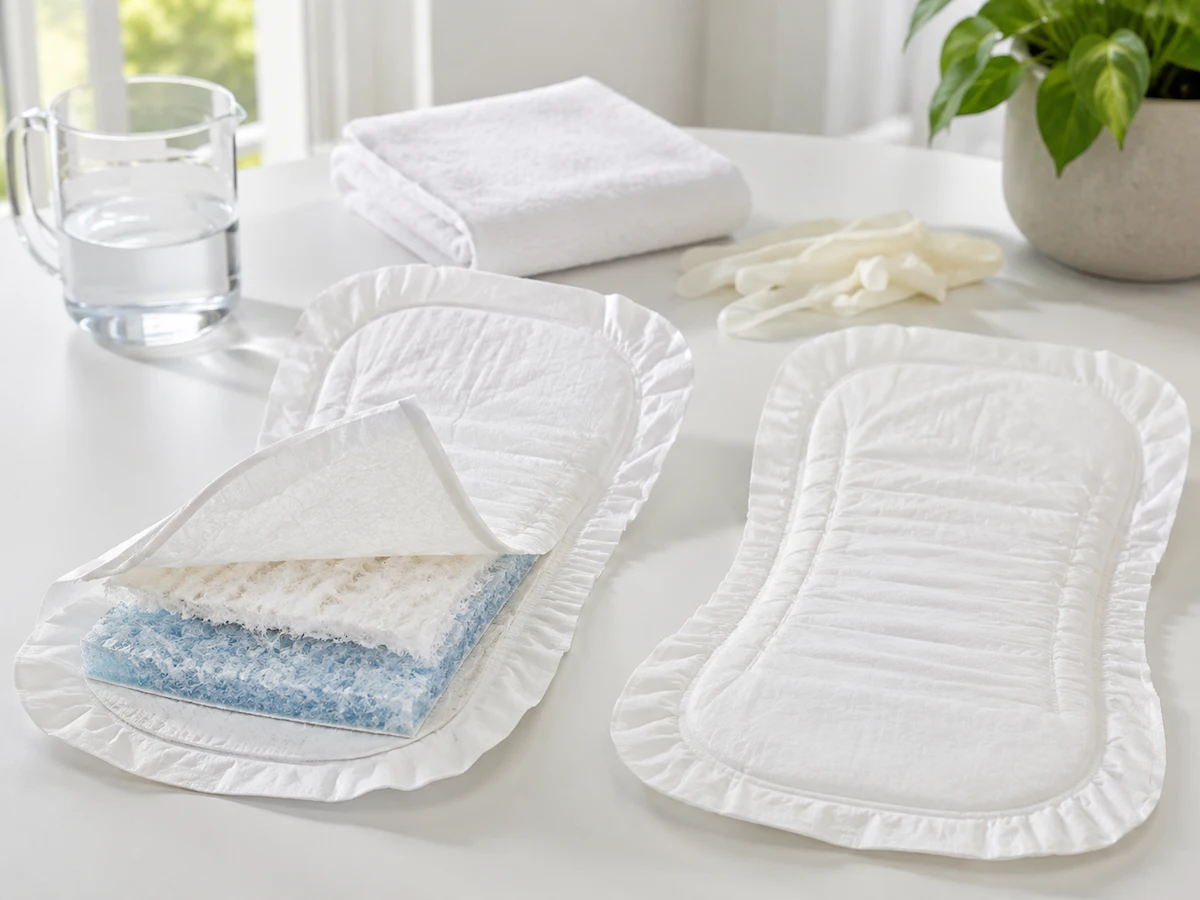
If you’ve ever worn a pad that shifted, leaked, or chafed, you already know what a poor fit feels like.
Real comfort comes down to four specific qualities: how fast it absorbs, what it’s made of, how well it manages odour, and how securely it stays in place. Let’s break down what each of those actually involves.
Absorbency and Quick-Dry Layers
Quick-dry layers pull moisture away from your body the moment leakage occurs. The surface stays comfortable even after a leak, and that dryness directly protects skin health through long hours of wear. The faster that transfer happens, the less chance moisture has to break down the skin’s surface layer.
Breathable and Skin-Friendly Fabric
Wearing an incontinence pad for hours means fabric quality affects how your skin feels by the end of the day.
Pads made with breathable, non-woven materials allow air to circulate freely, which reduces heat build-up that leads to rashes and general discomfort (especially during warmer months, when that heat has nowhere to go). Non-breathable fabrics, by contrast, trap warmth close to the skin and create conditions where irritation develops quickly.
And those with sensitive or ageing skin feel that difference most acutely, so a quick fabric check before buying saves discomfort later.
Odour Management
Odour is a pressing concern for most people using incontinence pads, and it’s completely understandable. Those who visit Oz Continence often describe odour anxiety as their primary daily worry, well above the leakage concern itself.
A well-constructed one tackles this through odour-neutralising layers that trap and contain smells at the source. On the flip side, pads built around added fragrance only mask the smell temporarily. So if odour control is your priority, focus on how the pad is built, rather than how it smells straight out of the box.
Secure Fit Without Bulk
A pad that moves is the one that fails. Adhesive strips anchor it firmly inside underwear, while a slim contoured profile keeps it flat under clothing without visible lines or noise. That combination of discretion and security directly affects how freely you go about your day, whether at work, social events, or simply running errands.
These four qualities separate a pad that works from one that doesn’t. But even the best-constructed product won’t perform well if the absorbency level doesn’t match your needs.
What Absorbency Level Do You Actually Need?
Most people guess their absorbency level and get it wrong, and that’s exactly where leaks begin. Absorbency goes beyond a number on the packet. It reflects a direct match between how much liquid your body releases and how much the pad holds before it gives out
Frankly, using a pad with too little absorbency leads to leaks, but using one with far too much means unnecessary bulk and heat build-up. Finding the right level starts with understanding what each option is actually built for.
|
Absorbency Level |
Best Suited For |
What It Handles |
|
Light |
Occasional small drips |
Stress incontinence from coughing, sneezing, or exercise |
|
Moderate |
Regular, unpredictable accidents |
Urge incontinence and overactive bladder |
|
Heavy |
Frequent or large volume leakage | Mixed incontinence, bowel leakage, or limited bathroom access |
Note: These are broad examples, and real-world needs don’t always fall neatly into one category.
Someone with mixed incontinence, where bladder and bowel control both present challenges, may need to layer a booster for added coverage during particularly demanding days. Others find their needs shift depending on activity level or time of day. And if you’ve been experiencing regular leakage despite wearing a pad, absorption capacity is the first thing to review.
How Do You Choose the Right Incontinence Pad for You?

Start with three things: leakage type, daily routine, and how your skin responds to materials.
Choosing the right pad gets easier one step at a time, and breaking it down this way stops the decision from feeling overwhelming. Each factor points you toward a different set of qualities, so it pays to work through them in order.
Your Type and Level of Leakage
If you’re someone who experiences sudden small leaks during physical activity, a light to moderate absorbency pad with a fast-wicking top layer will serve you well.
Those dealing with urge incontinence, where leakage arrives with little warning and in larger volumes, need a moderate to heavy option with a higher liquid capacity. That unpredictability is physically demanding, and it takes up a surprising amount of mental energy throughout the day too.
Mixed incontinence, where both patterns occur together, tends to demand the highest absorbency level available. That capacity becomes especially important during long stretches away from home.
Your Mobility and Daily Routine
Someone working long office hours does best with a slim option that performs quietly without drawing attention. By contrast, a person with limited mobility may benefit from a style that allows position changes without full undressing.
And someone with an active lifestyle requires a pad that holds its position under physical pressure. Exercise increases intra-abdominal pressure, which can worsen leakage if the absorbency level isn’t high enough.
Skin Sensitivity and Comfort Needs
People with incontinence often deal with sensitive skin alongside their bladder or bowel concerns. Hypoallergenic, fragrance-free options reduce reaction risk. Skin in this area reacts easily to synthetic chemicals, and switching to fragrance-free materials often clears up persistent reactions.
We recommend trying a sample pack before committing to a full box (a small step that saves a lot of grief down the line). If reactions persist despite switching materials, talk to a doctor or continence nurse. They can point you toward suitable options and additional resources that aren’t always easy to find independently.
Remember, pad choice takes some trial and error, and that’s completely normal. Once you’ve found a style that works for your days, the next consideration is whether it holds up through your nights.
How Do Incontinence Pads Work for Overnight Protection?
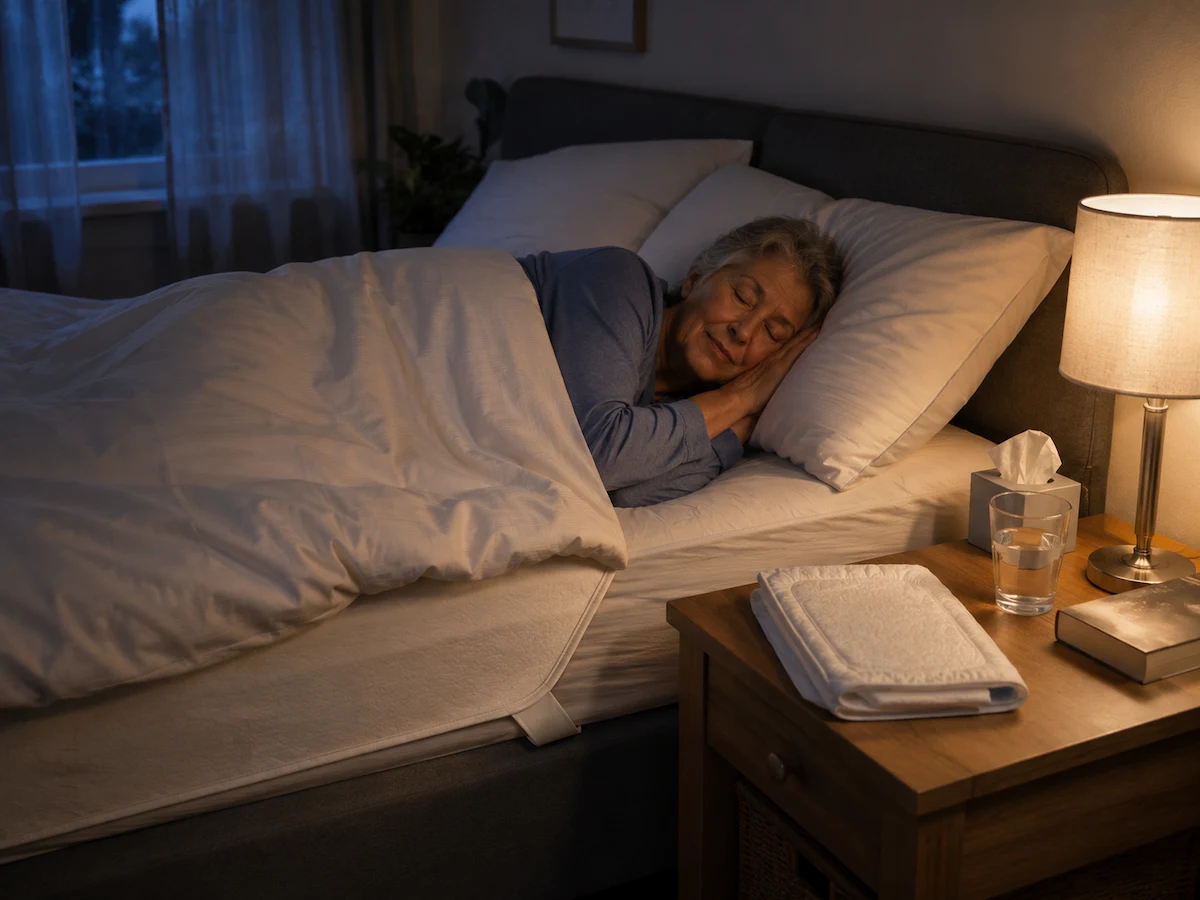
Overnight incontinence pads offer higher absorbency and longer coverage than daytime options, and that difference exists for one reason: uninterrupted sleep.
Daytime pads simply aren’t built for the demands of a full night. They run shorter, absorb less, and don’t account for how your body moves during sleep. This is among the most common reasons people wake up to soiled bedding, and it’s entirely avoidable.
Simply put, the body behaves differently at night. You stay horizontal for hours, shift positions naturally, and your bladder continues producing urine whether you’re awake or not. A well-designed overnight pad accounts for all of this.
The design does specific work here. A longer profile extends coverage front to back, while the high-capacity core holds larger volumes through the night without leaking. The contoured shape then stays in position through natural sleep movement (because nobody wants to be troubleshooting a leak at 2 am).
Bed protectors add a practical second layer of protection for those with heavy overnight leakage or for anyone caring for an older person at home. They sit beneath the body during rest, and the waterproof backing protects the mattress from accidents, so clean-ups stay minimal.
So if you experience heavier leakage at night, pairing an overnight pad with a bed protector addresses both the body and the mattress at once. One handles what your body needs, the other protects what’s underneath.
Overnight protection handles one part of the challenge. Skin health during those same hours is something most people don’t think about until soreness or irritation forces the conversation.
How Do You Protect Your Skin When Using Incontinence Pads?
Wondering if you can keep your skin healthy while using pads daily? That’s completely possible, and the steps are easy to build into any routine.
From what we’ve seen, the most common skin issues don’t come from the pad itself. They come from leaving a pad on too long or skipping basic hygiene steps between changes. To stay on top of it consistently, follow these six steps:
- Change Pads Every 4–6 Hours: Urine breaks down quickly in open air, and prolonged contact irritates little by little. That’s why changing regularly, or immediately when soiled, is the single most effective step in any skin care routine.
- Clean Gently After Each Change: Warm water and a mild, fragrance-free soap remove residue without stripping the skin’s natural barrier. You should avoid perfumed wipes or alcohol-based products too, as both pull moisture from the surface and leave it more vulnerable.
- Pat Dry, Never Rub: When drying the area, use a soft pat motion rather than rubbing. Friction against delicate skin adds trauma that compounds over time, and a gentle pat takes no longer than a rough rub anyway.
- Apply Barrier Cream Sparingly: A thin layer of barrier cream after changing seals the surface and gives skin time to recover. A pea-sized amount covers the area adequately. Anything more sits on top without absorbing.
- Choose Breathable Pad Materials: Even with a consistent hygiene routine, a non-breathable pad traps heat and undoes that effort. Meanwhile, breathable materials keep air circulating and reduce the conditions where chafing and soreness develop.
- Keep an Eye on Early Warning Signs: Redness, persistent soreness, or a developing rash need prompt attention. Speak to a doctor or continence nurse early. Treating a minor reaction takes days, but ignoring it can mean weeks of recovery.
Skin care during pad use isn’t complicated, but consistency makes it work. And if the ongoing cost of continence products is a concern, government funding may cover much of it. The next section breaks down who qualifies.
What Government Funding Is Available for Incontinence Pads in Australia?
Several government schemes, including CAPS, NDIS, and Support at Home, help eligible people cover the cost of continence aids.
You might be thinking this kind of support is hard to access or buried in paperwork. In reality, the process is more direct than most people assume, and the financial relief it provides is real.
These schemes stand out as the most relevant for Australian adults:
The Continence Aids Payment Scheme
The Continence Aids Payment Scheme, or CAPS, is a federal government payment scheme that helps eligible Australians take some of the financial pressure off buying continence products.
The current payment rate for 2026–27 sits at $739.40 per financial year, paid directly into a nominated local bank account as a non-taxable amount. That figure adjusts each year slightly following the federal budget process, so it’s worth checking the Services Australia website for the most up-to-date rate.
Two things determine whether CAPS applies to your situation: who you are and what’s causing your incontinence.
1. Who Is Eligible for CAPS?
To qualify, you need to be aged five or older and an Australian citizen with permanent and severe incontinence. Eligibility then follows one of two routes:
- The first covers people whose incontinence stems directly from an eligible neurological condition.
- The second covers those with another approved medical condition, provided they also hold a current Pensioner Concession Card from Centrelink or the Department of Veterans’ Affairs.
There’s no need to determine this on your own. Your GP or continence nurse can confirm which route applies to your situation and complete the necessary sections of the application form.
2. How to Apply for CAPS
Start by getting the application form through your myGov account, the Express Plus Medicare app, the Continence Helpline, or by requesting a paper copy. Your GP or treating health professional then completes their section, confirming your condition and management plan.
Once your health professional finalises their section, send everything to Services Australia and allow time for the outcome. This Services Australia website also carries the most current guidelines, so check there before you start.
NDIS and Support at Home Funding
National Disability Insurance Scheme (NDIS) participants can use their plan funding to purchase continence aids, as long as their plan covers the relevant support category. That said, CAPS and NDIS funding don’t generally run at the same time. If continence products are already covered in your NDIS plan, you won’t typically qualify for CAPS alongside it.
Older people have a separate route through the Support at Home program. It replaced the Home Care Packages program and covers continence consumables, including pads and catheters, under its nursing care consumables service.
Important Note: From February 2026, CAPS no longer applies to Support at Home participants. Those who previously accessed CAPS under a Home Care Package now receive continence product funding through their Support at Home budget instead.
If you’re not sure which option fits your situation, the team at Oz Continence can point you toward the right resources. Sorting that out early saves time and cuts down on a cost that can otherwise build steadily week after week.

Managing Incontinence Gets Easier From Here
The right pad for your body and leakage level changes how you move through each day. Finding it doesn’t have to mean months of guesswork and discomfort.
You’ve got the facts now. Pad types, comfort features, absorbency, skin care, and government funding. This guide covers what many people take a long time to piece together independently.
At Oz Continence, our goal is clear: give Australians reliable, honest health advice about bladder and bowel concerns without the overwhelm. If anything in this article sparked a question, our website has a full range of resources to help you move forward.
Get started at ozcontinence.com.au today.
FAQs
Here are answers to some of the most common questions we hear about incontinence pads.
1. Can Incontinence Pads Prevent Leaks During Exercise?
A well-fitted pad with the right absorbency level does prevent leaks during physical activity. We recommend looking for a contoured style with adhesive strips that hold firm under movement.
Plus, ensure the absorbency matches your activity level, as light exercise and high-intensity training place different demands on pad performance.
2. Are Incontinence Pads Different from Other Products Like Period Pads?
Yes, and the difference is essential to understand. Incontinence pads absorb urine, which flows faster and in larger volumes than menstrual fluid.
On the flip side, period pads lack the rapid-absorption layers and odour-neutralising content that make incontinence pads effective. If you use a period pad for incontinence past a minor drip stage, skin irritation risk climbs quickly.
3. Does It Matter Which Brand of Incontinence Pad I Choose?
Brand matters less than the pad’s individual features. You should focus on absorbency level, breathable materials, adhesive quality, and odour control rather than the name on the packet. Many people find store-label options perform just as well as recognised names.
That said, keep an eye on how your skin responds and switch if irritation develops.
4. Where Can Aboriginal and Torres Strait Islander Peoples Find Continence Support?
Continence Health Australia pays respect to Aboriginal and Torres Strait Islander peoples and maintains a dedicated page of cultural and spiritual resources for the community.
These cover bladder health, incontinence guidance, and educational practices for both men and women. Their website ensures the continuation of these conversations across the nation, past and present.
5. How Do I Know If My Incontinence Pad Is Working Properly?
A well-performing pad keeps you dry, controls odour, and stays in position through your daily routine. If leaks occur despite regular changes, the absorbency level likely needs reviewing.
Confidence in daily life grows when the pad fits well, and that comes from matching size, material, and absorbency to your specific needs.
