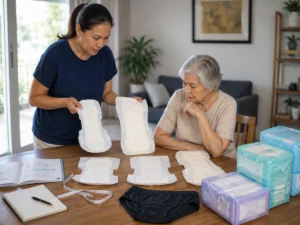
Are you dealing with skin irritation from incontinence products? All you need to focus on is finding the right fit for your skin. Honestly, so many Australians deal with this daily, and it’s nothing to be embarrassed about.
Most often, we see Australian women reaching for whatever is cheapest or most available. But you should keep your skin’s sensitivity in mind before picking any product. Because the right continence product leads to a far more comfortable, irritation-free routine.
Here, we cover topics such as product types, label terms, skin care tips, and pad comparisons. After following our guidance, finding the right product will feel much simpler.
What Are Incontinence Products for Sensitive Skin Care?
Incontinence products for sensitive skin are pads, liners, underwear, and briefs made with gentle, skin-safe materials. They’re built to manage bladder leaks and bowel incontinence without causing redness, itching, or irritation. For anyone with reactive skin, the materials inside a product mean just as much as how well it absorbs.
According to Continence Health Australia, 1 in 3 people in Australia over 15 years old experience incontinence. That’s a huge number of adults across Australia living with this daily. With that many people affected, the range of skin-friendly options available has grown a lot in recent years.
Urinary incontinence and bowel incontinence each produce different types of leakage, so the products designed for them vary too. That’s why knowing what you’re dealing with helps you pick the most suitable protection for your skin type.
Why Sensitive Skin Needs Special Incontinence Products for Personal Care
Not all incontinence pads are made with your skin in mind. The worst part is, regular products often contain fragrances, dyes, and synthetic coatings that quickly irritate reactive skin. Even a few hours of wear can show up as redness or a rash on reactive skin.
We’ve listed below what tends to cause the most trouble:
- Fragrances and dyes irritate delicate, reactive skin
- Prolonged urine contact breaks down your skin’s natural barrier (this is one of the most overlooked personal care issues we see)
- Synthetic materials trap heat and moisture against the skin
- Rough textures cause friction, leading to soreness
- Soft, breathable materials pull moisture away from skin
Once you switch to skin-friendly protection, your daily health and comfort can improve noticeably.
Disposable Pads vs. Reusable Pads: Which One Suits Your Skin
Well, we don’t have one certain answer here because both disposable and reusable pads have real benefits depending on your skin type. Your leakage level, lifestyle, and how reactive your skin is will all play a role.
Let’s break each one down.
What Makes Disposable Pads Different?
Disposable incontinence pads differ from regular pads in their absorbent core design, which locks moisture away fast. They use absorbent polymer cores that pull urine away quickly, so you stay dry between changes.
That said, some brands add fragrance or lotion coatings that aren’t ideal for reactive skin. These extra ingredients are often unnecessary and can cause more harm than good.
So if you’re going disposable, always look for fragrance-free, dermatologically tested options on the packaging. Your skin will thank you for it.
Are Reusable Pads Better for Sensitive Skin?
Reusable pads are often the gentler option for sensitive skin because they’re made from natural fibres with no chemical coatings. Cotton-based options are especially popular among Australian women with reactive skin.
On top of that, they allow better airflow, which keeps skin drier and cooler throughout the day. That alone can reduce irritation quite a bit. Washing them with a gentle detergent keeps them soft and safe against your skin, wear after wear. It’s a small habit that goes a long way.
How to Pick the Right Product for You
Now that you know the difference between disposable and reusable pads, here’s how to decide which suits your skin best. Think about your absorbency level needs first, then factor in your lifestyle.
Many brands offer trial packs, so you can test comfort before fully committing. This is honestly one of the easiest ways to find what works without wasting money.
And always check for dermatologist-tested or hypoallergenic labels on the packaging. If you’re still not sure, health professionals can point you in the right direction.
Continence Pads: What the Label Is Actually Telling You
Most people scan the label and move on. But those few words on the packaging can tell you a lot about whether a pad is safe for your skin. It’s really important to understand these terms because choosing the wrong product can lead to ongoing skin irritation.
Now, we’ll walk you through the most common label terms you’ll spot on continence pads:
| Label Term | What It Means |
| Dermatologically tested | Tested on skin by a dermatologist for safety |
| pH-balanced | Matched to your skin’s natural pH to reduce irritation |
| Fragrance-free | No added scents that could irritate sensitive skin |
| Absorbency level | Indicates light, moderate, or heavy urine leakage protection |
| Hypoallergenic | Formulated to lower the risk of allergic reactions |
| Suitable for sensitive skin | Tested and approved for reactive or delicate skin |
That said, not every brand uses the same wording. Some use “gentle” or “soft” instead of hypoallergenic, and they can mean similar things. When in doubt, check the full ingredients list or ask health professionals for guidance.
Simple Daily Habits That Keep Sensitive Skin Happy
A few small daily habits can keep sensitive skin calm, even with regular incontinence product use. These don’t have to be complicated or expensive. In fact, most of them slot easily into your existing personal care routine.
Keep these in mind for a more comfortable, irritation-free day:
- Change incontinence pads regularly to avoid moisture build-up
- Cleanse skin with fragrance-free wipes or warm water
- Pat skin dry gently, never rub (rubbing causes friction and worsens irritation)
- Apply a skin barrier cream to protect against moisture-related irritation
- Wear breathable, well-fitting pants or underwear alongside your pad
- Avoid heavily scented soaps or washes in that area
These habits work together to keep your skin dry, calm, and protected throughout the day. They’re especially helpful if you’ve been struggling with redness or soreness that won’t seem to go away.
Redness, Rashes, and How to Stop Them
If your skin is red, itchy, or rashy after wearing an incontinence pad, the product is most likely the problem. Skin reactions like these are usually caused by prolonged moisture contact, friction, or harsh materials sitting against your skin for too long.
This is a recognised medical condition called incontinence-associated dermatitis. It affects a lot of people every day across Australia. Unfortunately, a large portion of them keep it untreated. As a result, it becomes worse over time and makes managing incontinence much harder day to day.
The good news is that it’s easily manageable with some straightforward changes to your routine. Start by switching to breathable, skin-friendly continence products. Then, you need to pair that with a gentle cleansing habit after each pad change.
A simple cleanse with warm water or fragrance-free wipes after every change can make a word of difference. Just avoid soaps with added fragrance, as they strip your skin’s natural protective layer.
Keeping leakage contained quickly also reduces how long urine stays in contact with your skin.
Not Just Pads: Other Continence Products Worth Knowing
Continence products go well beyond pads and liners, and some of them work better for sensitive skin than standard options.
If you’ve been dealing with continence problems for a while, it’s worth knowing what else is out there. You might find something that fits your lifestyle a lot better.
Here’s a look at other incontinence products worth adding to your routine:
- Continence underwear offers discreet, all-around protection
- Briefs and pants suit heavier leakage with added coverage
- Liners work well for light bladder leaks daily
- Mattress protectors and bedding covers keep you dry overnight
- Nappies and disposable nappies suit higher absorbency needs
- Odour-neutralising sprays keep things fresh between changes
- Skin barrier creams protect against moisture and irritation
There’s a solid range of incontinence products across Australia suited to different needs and skin types. And having a few of these on hand means you’re covered in most circumstances.
How to Choose the Right Incontinence Product for You
Choosing the right incontinence product for sensitive skin gets a lot easier once you know exactly what to compare.
Since different products suit different needs, a quick side-by-side look saves you a lot of guesswork. For more detailed guidance, our incontinence tips and advice page covers a wide range of helpful topics.
The table below shows the most common product types and their key differences. Have a look at it to know which one lines up best with your needs:
| Product Type | Best For | Absorbency | Skin Suitability |
| Disposable pads | Daily use, convenience | Light to heavy | Look for fragrance-free options |
| Reusable pads | Sensitive skin, eco-friendly | Light to moderate | Cotton-based, gentle on skin |
| Continence underwear | Discreet, active lifestyle | Moderate to heavy | Soft, breathable materials |
| Briefs/pants | Heavy leakage, overnight | Heavy | Check for a dermatologically tested label |
| Liners | Very light leakage | Light | Fragrance-free, thin options are best |
| Mattress protectors | Overnight bedding protection | Heavy | Soft, skin-safe surface materials |
You can also ask your doctor to help assess your needs before committing to a product. Many brands across Australia offer a free sample, so you can try before you buy.
Pro Tip: Check your local store or look into online delivery options first to get those free samples.
Your Skin Deserves Better. So, Where to Start?
Now is the time to put it into practice and find the product that truly works for your skin. Here’s a quick recap of what to keep in mind:
- Pick fragrance-free, dermatologically tested incontinence pads
- Build a simple daily skin care routine
- Check labels carefully before trying new continence products
- Ask health professionals for advice when you’re unsure
At Oz Continence, we care deeply about your skin health and overall well-being. That’s why we share these insights, so you can make informed choices that actually provide the right security for you.
Ready to find the right fit for your skin? Feel free to contact us and our team will point you in the right direction.