
Choosing the right incontinence pants is one of those decisions that feels far more complicated than it should be. You’re scrolling through products online, or standing in a chemist aisle, staring at pull-ups, tab-style briefs, washable pants, and disposable briefs. None of it comes with an easy explanation, and knowing where to start isn’t always obvious.
But it doesn’t have to stay that way. You can work through your body’s needs, your daily routine, and the right protection level at your own pace. And honestly, that’s what thousands of Australians do every day. They find what works and get on with their lives.
If you’re not sure where to begin, this guide covers everything you need: types, absorbency levels, fabric, fit, and funding options. By the end, you’ll know exactly what to look for.
Ready? Let’s start with the basics.
What Are Adult Incontinence Pants?
Adult incontinence pants are absorbent undergarments designed to contain bladder or bowel leakage. They pull on and off just like regular underwear, so most wearers don’t need any help getting dressed (that independence alone is worth a lot).
Unlike a pad, which only covers a small area inside your briefs, these pants wrap fully around the body. The absorbent core sits across the front, back, and sides (something most first-time buyers don’t realise until they’ve tried both). That full wraparound coverage always sets them apart.
In fact, modern incontinence pants look and feel nothing like they used to. They’re slim, soft, and sit discreetly under clothing with no visible outline. So you get reliable protection, and nobody around you will ever know.
Before choosing one, though, it helps to know what types are actually out there.
What Types of Incontinence Pants Are Available?
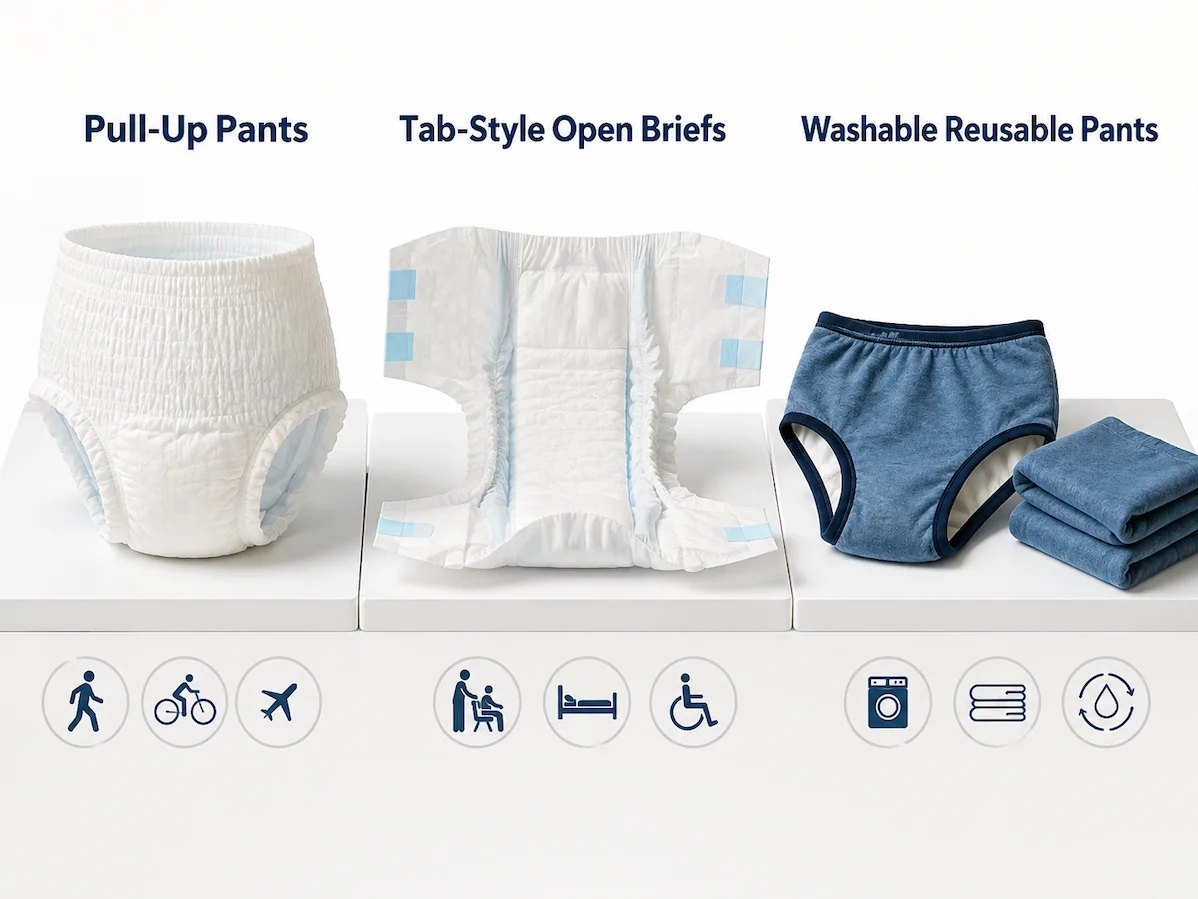
Not all incontinence pants work the same way. The right one for you depends on your activity level, how much daily support you need, and the volume of leakage you’re managing.
These three main options cover most situations.
1. Pull-Up Pants
Want to manage leakage without changing your routine? Pull-up pants are usually where most people start (it’s especially useful for adults who are still active and independent).
They fit snugly around the waist and legs and hold their position during movement without adding bulk under clothing. Most styles also feature tearable side seams, so taking them off feels clean and quick even when you’re on the go.
For anyone who values discretion and a natural feel, pull-ups are a safe bet.
2. Tab-Style Open Briefs
Pull-ups work well when you can dress independently. When carer assistance is part of the picture, though, tab-style briefs make more sense.
Unlike pull-ups, these fasten at the sides with resealable tabs, so the whole change happens smoothly and cleanly. The wearer can stay lying down throughout, which makes the process far easier for people with very limited mobility.
That also helps anyone managing bowel incontinence alongside bladder leakage, since cleaner changes protect skin health as well as dignity.
3. Washable Reusable Pants
As you can guess from the name, these are pants you wash, dry, and reuse every day.
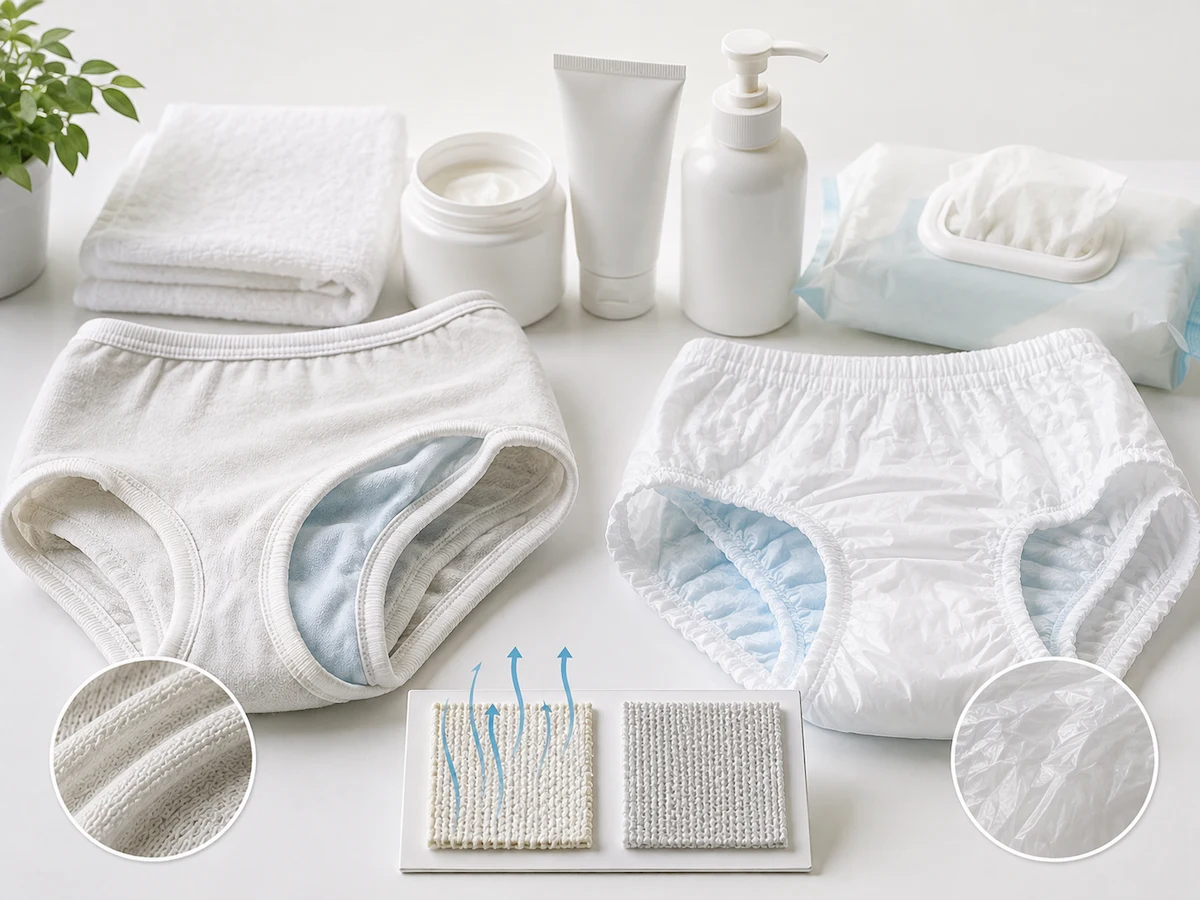
Washable pants use multiple layers of soft, breathable fabric to absorb leakage, and most wearers find them far more comfortable against the skin than single-use alternatives.
Comfort aside, these options also last hundreds of washes. So the overall spend drops considerably in the long run.
That said, washable pants do have a usability limit regardless of leakage volume. Most last between 200 and 300 washes before the absorbent layers start to break down, so they’re not a permanent purchase. You’ll need to replace them every year or two depending on how regularly you use them.
How Are Incontinence Pants Different from Incontinence Pads?
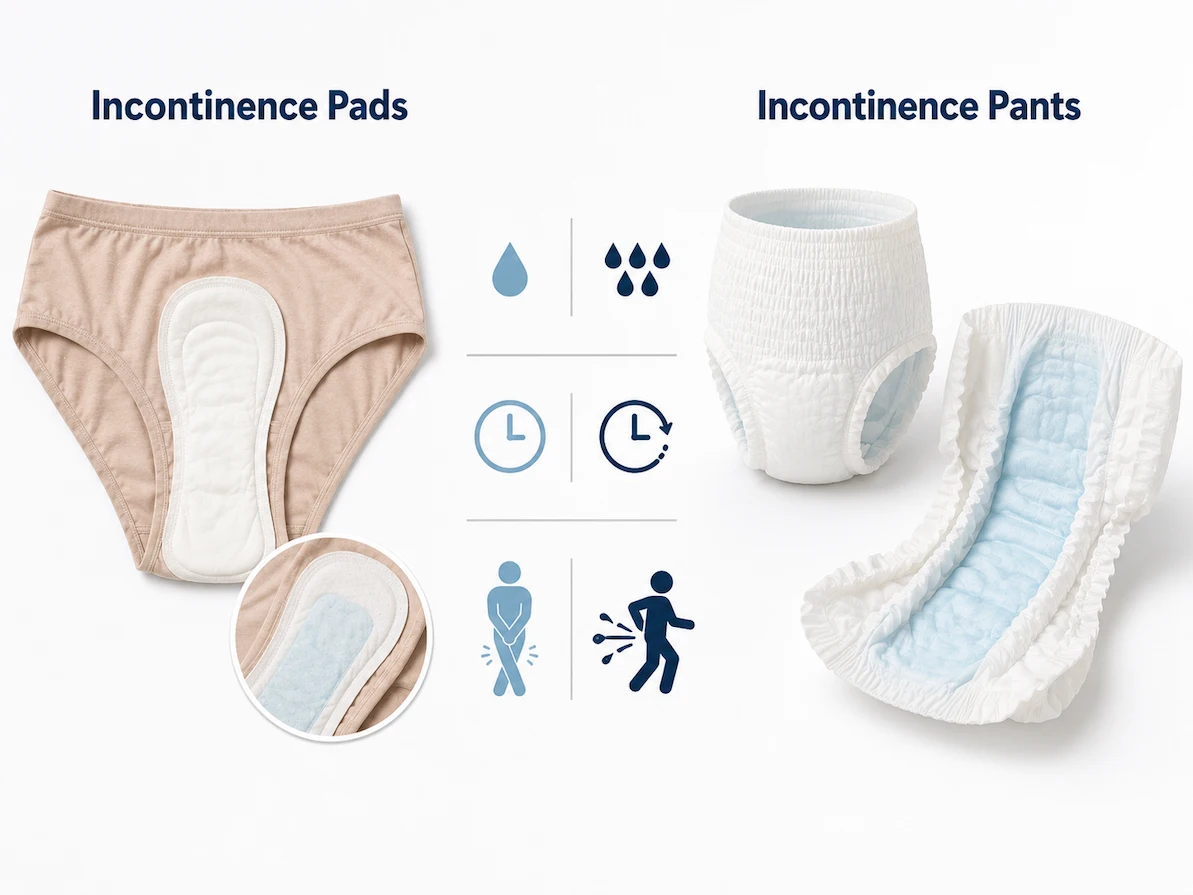
A pad sits inside your briefs and absorbs leakage over a small targeted area. An incontinence pant, on the other hand, works as a standalone product. It takes the place of your underwear entirely and handles leakage across the full body.
Both fall under the same category of continence products, but they serve very different purposes.
Incontinence pads typically work well for light, predictable leakage, like the small leaks that come with sneezing, coughing, or sudden movement. People with stress incontinence rely on them for exactly that reason.
Because pads are thin, they sit flat and swap out easily through the day. The catch, though, is that they require your existing briefs to stay in position. Once leakage becomes heavier or harder to predict, that structural dependency becomes a real problem.
On the other hand, incontinence pants operate on a completely separate principle. The pant itself handles everything independently. You don’t need a separate garment underneath.
This makes them the more dependable option for frequent, heavy, or unpredictable loss of control. People managing urge incontinence, where leaks arrive suddenly, tend to find them particularly reliable.
Not sure which one suits your needs? How much you’re losing and how often will point you in the right direction.
How Do You Choose the Right Absorbency Level?
Absorbency is one of those details that’s easy to get wrong on the first purchase. If you choose too little, you’ll deal with leaks. And too much absorbency means wearing unnecessary bulk all day.
Now, getting it right isn’t rocket science. You just have to take an honest look at your own leakage patterns. Then match yourself to one of the three levels below:
1. Light Absorbency
People with light leakage don’t need heavy-duty protection. A slim, discreet pant does the job comfortably (most people are surprised by how normal they feel). These products typically hold up to 300–500mL and sit flat under clothing with nothing visible beneath.
That capacity works well for occasional leaks triggered by coughing, sneezing, or exercise. Most active adults find them easy to wear through a full day out.
2. Moderate Absorbency
Moderate absorbency suits adults whose leakage is regular but not a complete loss of bladder control.
Products at this level hold roughly 500–1,500mL, covering a broad range of bladder leakage volumes with reasonable everyday discretion. They work well for people managing urge incontinence, as well as those recovering from surgery or childbirth where leakage is frequent but gradually settling.
3. Heavy Absorbency
Sometimes incontinence is severe enough that light or moderate products simply won’t cut it. Heavy absorbency products hold 1,500mL and above. Some overnight use options reach up to 4,000mL and handle extended wear through the night.
Without question, this level suits adults with little or no bladder control through the day. These are highly absorbent by design, using gel-based technology to lock fluid away fast and keep skin dry. They carry more bulk than lighter alternatives, but that’s the trade-off for reliable, around-the-clock protection.
Note: All capacity figures mentioned here are general estimates. Actual absorption levels vary depending on the product and brand. Always check the packaging before you buy.
Why Does Fabric Matter for Skin Health?
Most people focus on absorbency when choosing incontinence pants. But fabric deserves just as much attention. You might be thinking: why does material choice matter that much? The answer lies in what happens when the wrong fabric sits against your skin for hours at a time.
Prolonged moisture contact is a serious issue for anyone wearing incontinence products regularly. Over time, it can lead to Incontinence-Associated Dermatitis, or IAD. That risk increases significantly with synthetic, non-breathable fabrics that trap heat and hold moisture close to the body.
At Oz Continence, we hear from readers regularly who switched products purely because of skin irritation. Fabric was almost always the culprit.
So if you’ve been experiencing redness or discomfort, the material is the first thing you should check. Breathable, cotton-blend fabrics draw moisture away from the skin surface and reduce heat build-up during extended wear. The combination actively protects skin health and keeps wearers comfortable through the day.
Fragrance-free and hypoallergenic options should be high on your list too, especially for older adults with sensitive or ageing skin. Some options also include odour control technology, which neutralises ammonia in urine before it breaks down and causes smell. That’s particularly useful for anyone wearing a product for several hours at a stretch.
While fabric affects how a product feels, fit determines whether it does its job well.
What Should You Look for in Incontinence Pants for Seniors?
Choosing incontinence pants for an older adult involves a few extra considerations beyond absorbency and fabric. For example, mobility, independence, and daily routine all play a role in landing on the right product.
Two things tend to trip people up most: how the pant goes on and off, and whether the sizing actually fits.
Ease of Putting On and Taking Off
The simplicity of putting on and taking off a pant depends almost entirely on the wearer’s mobility level.
Pull-ups work well for seniors who can still dress independently and move around with reasonable ease. They pull on like regular underwear and help maintain dignity through the process.
For older adults who need carer support, tab-style pants are the more practical option. The tabs open fully at the sides, so the change happens with the wearer lying down. That keeps the process controlled and comfortable for both the person receiving care and the one providing it.
Fit and Sizing
Poor sizing is the number one reason incontinence pants fail (even when the absorbency level is right and the fabric is gentle on skin).
Before buying, measure the waist in centimetres at the narrowest point and match that figure to the brand’s size guide. Both men and women will find that sizing varies between brands, so always check the specific chart rather than assuming.
And that’s worth doing carefully. Most Australian options cover waist measurements from around 60–160cm across small to extra-extra-large. So there’s rarely a reason to settle for an approximate fit.
Quick Tip: Keep an eye on sizing as body shape shifts too. A pant that fit well six months ago may no longer sit securely at the legs or waist.
Are Daytime and Overnight Incontinence Pants Different?
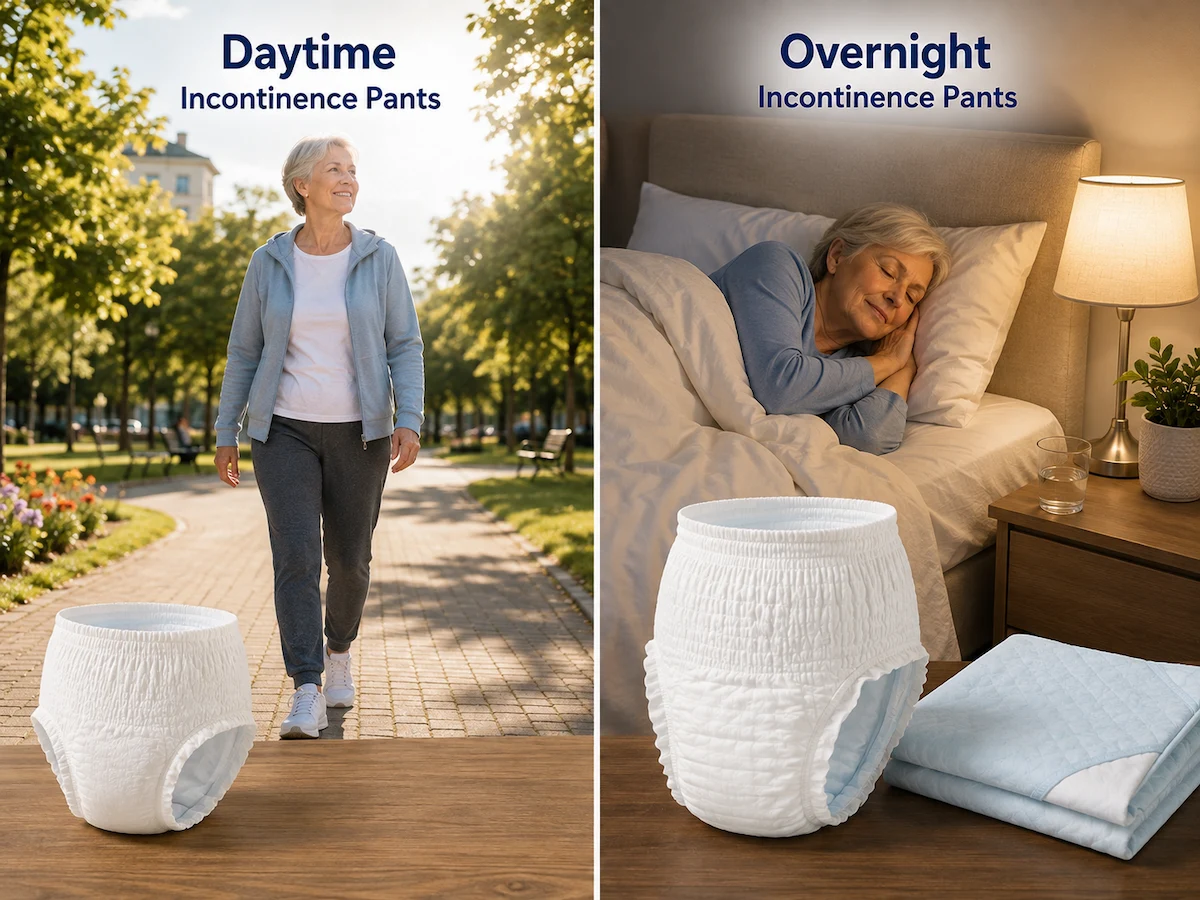
Yes, daytime and overnight incontinence pants serve distinct purposes and aren’t always interchangeable.
Daytime pants keep you comfortable and discreet through normal waking hours. Overnight pants prioritise capacity over everything else, because the goal is staying dry through a full night of sleep.
Most overnight options hold between 2,000 and 4,000mL. Daytime products rarely come close to that range. So when people wake up to leaks at night, the product is rarely faulty. It just wasn’t rated for that many hours of continuous use. A pant built specifically for nighttime wear handles that without issue.
One habit worth building: change overnight pants as soon as you wake up, and do it while you’re still in bed. It keeps the morning routine clean and reduces the chance of any residual leakage transferring to clothing or bedding.
The right absorbency and style for day and night gives you a solid foundation. The next piece is figuring out which format, disposable or washable, suits your routine best.
How Do Disposable and Washable Incontinence Pants Compare?
Both disposable and washable pants have a clear role. The one that fits your life depends on leakage volume, budget, and how you prefer to manage your routine.
Take a look at how they sit side by side.
| Disposable Pants |
Washable Pants |
|
|
Best for |
Moderate to heavy leakage |
Light to moderate leakage |
|
Absorbency |
Up to 4,000mL |
Up to 1,000–1,600mL |
|
Cost |
Higher ongoing spend |
Higher upfront, lower long-term |
|
Convenience |
Single use, no washing needed |
Requires regular laundering |
|
Skin comfort |
Varies by brand |
Soft, breathable fabrics |
|
Environmental impact |
Landfill waste per use |
Reusable, lower waste overall |
Neither option is universally better. Disposable pants offer convenience and greater capacity. You just use them and throw them away, so they’re ideal for heavy leakage, travel, or days when frequent changes are likely.
Washable pants suit a different kind of lifestyle altogether. They work best when leakage is manageable, the routine is predictable, and long-term comfort takes priority.
Both categories cover a wide range of sizes and styles to suit varying mobility levels and body shapes. You can check reviews on brand websites or Australian continence retailer pages to get a real-world picture of how each option actually holds up.
Can You Get Incontinence Products Through NDIS or Government Funding?
In one word, yes. And in this section, we’ll talk about two funding pathways that could genuinely take the cost of managing incontinence off your plate.
The first is the Continence Aids Payment Scheme, or CAPS. Think of it as an annual government contribution toward the continence products you’re already buying. The 2026–27 rate sits at $739.40, deposited straight into your bank account (it nudges up or down slightly each year with the federal budget). To be eligible, you’ll need to tick all three of these:
- Permanent and severe incontinence
- Australian citizenship, with the applicant aged five or older
- A formal diagnosis from a registered medical professional
Once Services Australia gives you the green light, you can spend those funds at your local pharmacy, supermarket, or online. Your GP or continence nurse can help steer you toward the products that actually suit your needs.
The second pathway is the National Disability Insurance Scheme, or NDIS. This federal program funds supports for locals living with significant and lasting disabilities. Continence items sit under consumables in your plan, but only when your incontinence connects directly to your condition.
Applying involves an eligibility check, a local area coordinator, and an assessment from a nurse continence specialist. If you require help finding a specialist, the National Continence Helpline on 1800 33 00 66 is a good starting point. For general plan questions, call the NDIS contact centre on 1800 800 110.

Where Can You Get Free Samples of Incontinence Pants?
Buying a full pack of incontinence pants without trying them first is a gamble most people regret. Across the conversations we have at Oz Continence, fit and feel are the two things people say they wished they’d tested before spending money on a full pack.
Fortunately, you can try before you buy. Most Australian continence product suppliers offer samples of disposable pants at no cost.
Follow these steps to get the most out of your trial:
- Request Directly from the Brand: Most major brands allow you to request samples through their website. You’ll typically need to provide your name, delivery address, and waist measurement in centimetres so the right size arrives.
- Check with Your Healthcare Provider: Your nurse or healthcare provider can often supply samples directly or connect you with a local supplier. They can also recommend brands that suit your leakage type and absorbency needs.
- Disposable Pants Only: Samples cover disposable incontinence pants only. Washable options aren’t available for hygiene reasons, but most suppliers offer detailed sizing guides and product finders to help narrow things down.
- What to Assess During the Trial: When you try a product, check how it sits around the waist and legs first. Then assess absorbency through normal daily activity. Comfort against the skin through a full day of wear tells you more than any product description will.
- Pair Sampling with Reviews: Your trial experience paired with feedback from other buyers gives you a much clearer picture before you commit. Look for comments on brand websites, retailer pages, and incontinence forums. People who’ve dealt with the same leakage challenges tend to be very specific about what worked and what didn’t.
Don’t rush the trial process. Some people need to test two or three products to find the one that genuinely works for their body and routine. That time upfront saves a lot of wasted spending down the track.
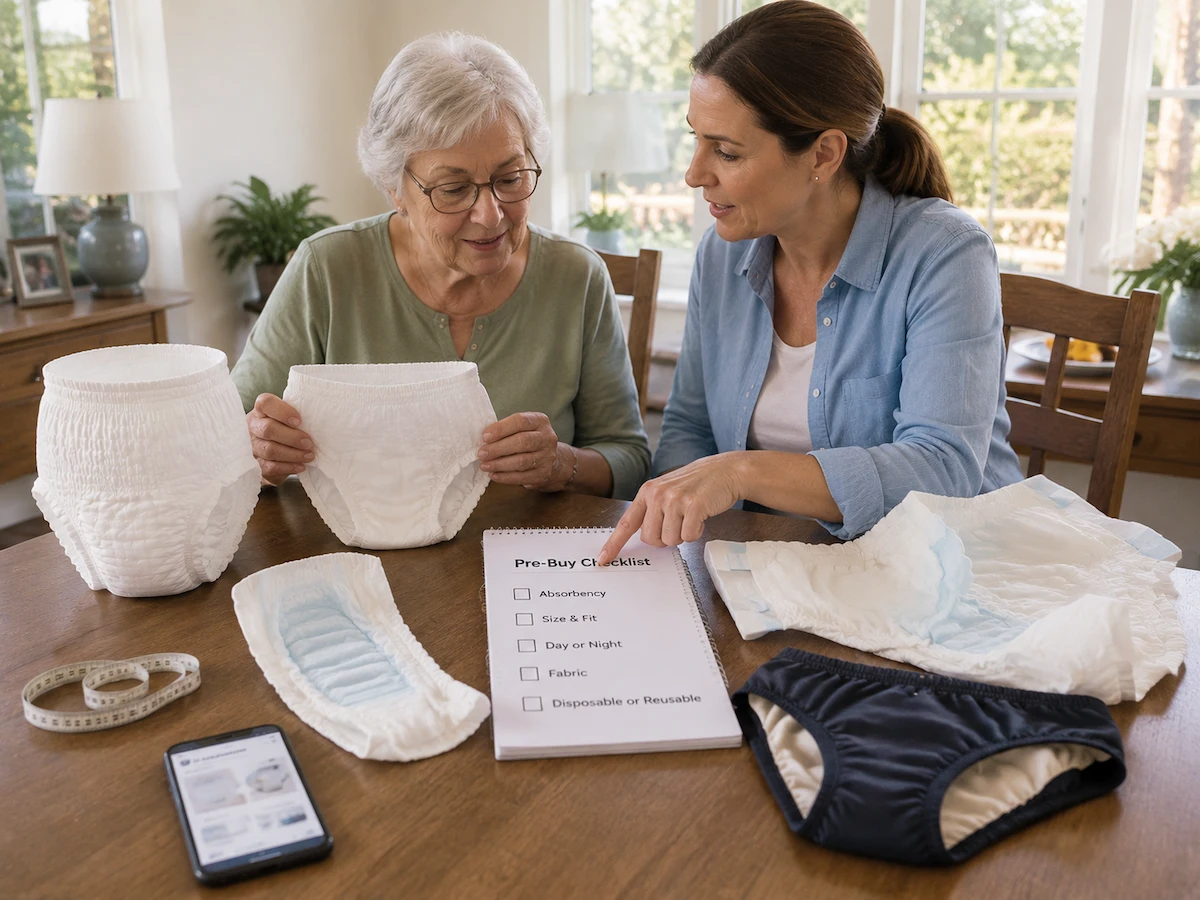
Your Pre-Buy Checklist for Incontinence Pants
We know that keeping every detail in your head isn’t realistic. Don’t worry, though. We’ve got your back. Whenever you’re ready to shop, pull up this checklist so nothing gets overlooked.
|
What to Check |
Done? |
|
Know whether you need protection for urinary leakage, bowel leakage, or both |
☐ |
|
Identify your leakage volume (light, moderate, or heavy) |
☐ |
|
Choose between pull-up pants or tab-style briefs based on your mobility level |
☐ |
|
Check the absorbency capacity in mL matches your needs |
☐ |
|
Confirm whether you require daytime protection, overnight use, or both |
☐ |
|
Check the fabric is breathable and helps prevent leaks and skin irritation |
☐ |
|
Measure your waist in centimetres and match it to the size guide |
☐ |
|
Decide between disposable and washable pants based on your lifestyle and budget |
☐ |
|
Check whether odour control technology is included if extended wear is likely |
☐ |
|
Confirm your eligibility for NDIS or CAPS funding early in the process |
☐ |
|
Request free samples of single-use products to trial fit and absorbency first |
☐ |
Download it, print it, or keep it open on your phone. Tick each box as you go, and you’ll head into your purchase with a clear head and a much shorter list of products to compare.
Finding the Right Pair Takes One Good Starting Point
When you’re choosing incontinence pants for the first time, it can feel like a lot. But it clicks into place quickly once leakage type, absorbency needs, and mobility level are clear.
Focus on those three to start. Once the basics are settled, fabric, fit, and format all follow naturally. Most people find their ideal product after one or two tries. Each attempt teaches you something useful about what your body actually requires, and that knowledge sticks.
That growing understanding brings confidence with it. At Oz Continence, we cover bladder and bowel health at every stage of life, and we’re here whenever you need a reliable place to turn.
Get in touch, and we’ll work through it with you.
FAQs
These are some of the most common questions we hear from people learning to manage incontinence for the first time.
How Do You Manage Incontinence in Daily Life?
Incontinence doesn’t have to slow daily life down. Most people build a simple routine around their schedule, carry a spare product when they’re out, and plan for longer trips or busy days. That consistency makes the whole experience far less stressful over time.
Are Incontinence Pants Suitable for Women in Australia?
Yes, and Australia has a wide variety of options designed with women specifically in mind. Female-specific styles follow the natural curves of the body and offer a more secure and discreet fit than unisex alternatives. Many women are surprised by how naturally a well-fitted product integrates into their day.
Can You Wear Incontinence Pants All Day?
Most incontinence pants are built for all-day comfort, and many users discover them convenient enough to wear through a full working day or social outing. The experience improves once you’ve landed on the right style for your body. Confidence tends to follow quickly after that.
How Do I Find an Incontinence Product I Can Trust?
Start with a trusted source of information, such as a continence health website or your GP, to get up-to-date guidance on what’s available. From there, requesting samples and reading feedback from other users helps narrow things down. Most people find a product they genuinely love within a few tries.
