
Maybe you’ve already tried reusable incontinence pants, or you’re thinking about switching. But here’s an honest question worth sitting with: does the daily washing, drying, and upkeep actually fit your life?
Washable incontinence pants come with limitations that don’t always get mentioned. Absorbency gaps, skin concerns, and comfort issues catch many people off guard.
Once we explain the whole process, you’ll realise that reusable incontinence underwear isn’t the wrong choice for everyone. But if you understand where it falls short, you’ll quickly find something that works for you.
So, let’s look at why reusable incontinence pants might not work for every lifestyle. After reading this, you too can make a clear decision about which incontinence products best suit your situation.
Reusable Incontinence Pants: What They Are and How They Work
Reusable incontinence underwear looks like regular underwear from the outside. Inside, though, it has built-in absorbent layers that catch bladder leaks before they reach your clothes or bedding.
Most reusable incontinence underwear sits somewhere between normal underwear and a pad. The inner layers pull moisture away from the skin and lock it in, so you stay skin dry during wear. That’s the core feature behind washable incontinence underwear.
Unlike disposable pads, these are washable and reusable. Keep in mind, though, they’re only designed for light to moderate bladder weakness. For anyone still weighing up their options, Oz Continence has expert advice on incontinence to help you figure out what suits your situation.
The Limitations of Reusable Incontinence Pants

Washable incontinence pants are often marketed as the smarter choice. But they have limitations that don’t show up on the packaging.
Here’s what reusable incontinence products don’t always tell you upfront.
When the Absorbency Level Isn’t Enough
Most washable incontinence pants handle light leaks well. That’s because they aren’t engineered for heavy incontinence or high-volume bladder releases from the beginning.
Even a full bladder release can overwhelm most reusable incontinence underwear before the day ends. The absorbent layers reach capacity fast, and leaks show up well before you’d expect them to. Basically, it defeats the whole purpose of wearing incontinence underwear in the first place.
That said, moderate to heavy incontinence requires a higher level of absorbency than washable incontinence pants can offer reliably. Disposable products work better since they’re built with far greater absorbent capacity. So, when anyone is managing more than light leaks, that gap between reusable and disposable pads is hard to ignore.
Skin Irritation and Sensitive Skin Concerns
Moisture trapped against skin for hours can cause redness, chafing, and breakdown of the outer skin layer. Prolonged use of washable incontinence underwear makes that significantly worse.
The inner layers of reusable incontinence underwear do pull moisture away initially. But once the absorbent capacity fills up, moisture sits directly against your skin. The worst part is that if you have sensitive skin, that prolonged contact leads to skin irritation, redness, and persistent discomfort throughout the day.
Repeated washing changes the fabric texture over time too. Worn-out fabric against fragile or ageing skin causes friction, and that friction compounds any existing skin irritation during wear.
Bulky Fit and Daily Life Discomfort
Many reusable incontinence pants sit slightly bulky under everyday clothes.
The absorbent panel adds thickness around the gusset area. Under thinner fabrics or fitted clothes, that bulk shows through clearly. For women, that visibility is a big disadvantage in daily life. And it pushes many people back toward more discreet incontinence protection options.
The panel can also shift during even the slightest movement. Once it moves out of position, incontinence protection drops and discomfort sets in fast. That’s more like a design flaw and less like a minor inconvenience, given how much it affects daily wear.
The Washing Routine That Eats Into Your Day
Washable incontinence pants need a dedicated cold water wash cycle after every single use. Hot water breaks down the absorbent lining, so there’s no shortcut there.
Air drying takes anywhere from three to five hours depending on the fabric thickness. When you only own two or three pairs, you’ll run out of clean incontinence underwear well before they’re ready to wear again.
By the time you account for soaking, washing, and drying time, you’re looking at half a day of turnaround per pair. The problem starts when older adults need multiple changes daily, and the next clean pair simply isn’t ready in time.
Carers feel this pressure most. Running a separate cold water wash cycle on top of regular household laundry adds a noticeable chunk of time to an already full day. Many end up reaching for disposable options mid-week simply because the washable underwear isn’t ready.
Buying seven or more pairs lessens that pressure significantly. Even so, the daily upkeep of reusable incontinence products is a commitment that doesn’t suit every household or routine.
Limited Mobility and Why Washable Pants Can Struggle
Believe it or not, pulling washable incontinence pants up and down takes real physical effort. People with limited mobility often can’t manage that on their own.
Hip replacements, arthritis, stroke recovery, and weakened lower body strength all make pulling up washable briefs genuinely difficult. Bending and gripping becomes painful, and a simple clothing change eventually turns it into a two-person job.
Disposable incontinence products are far quicker to manage in these situations. Here’s why carers and aged care facilities lean toward them:
- Tabbed disposable underwear opens at the sides without pulling
- No repositioning needed during a bed-based change
- Diaper-style products work cleanly without lifting the user
- Changes take less time and cause less discomfort overall
Washable incontinence products have their place, but limited mobility is one situation where they consistently struggle. And when incontinence is limiting your life, the last thing you need is a product that makes daily care harder than it needs to be.
Reusable vs Disposable: Honest Side-by-Side Comparison
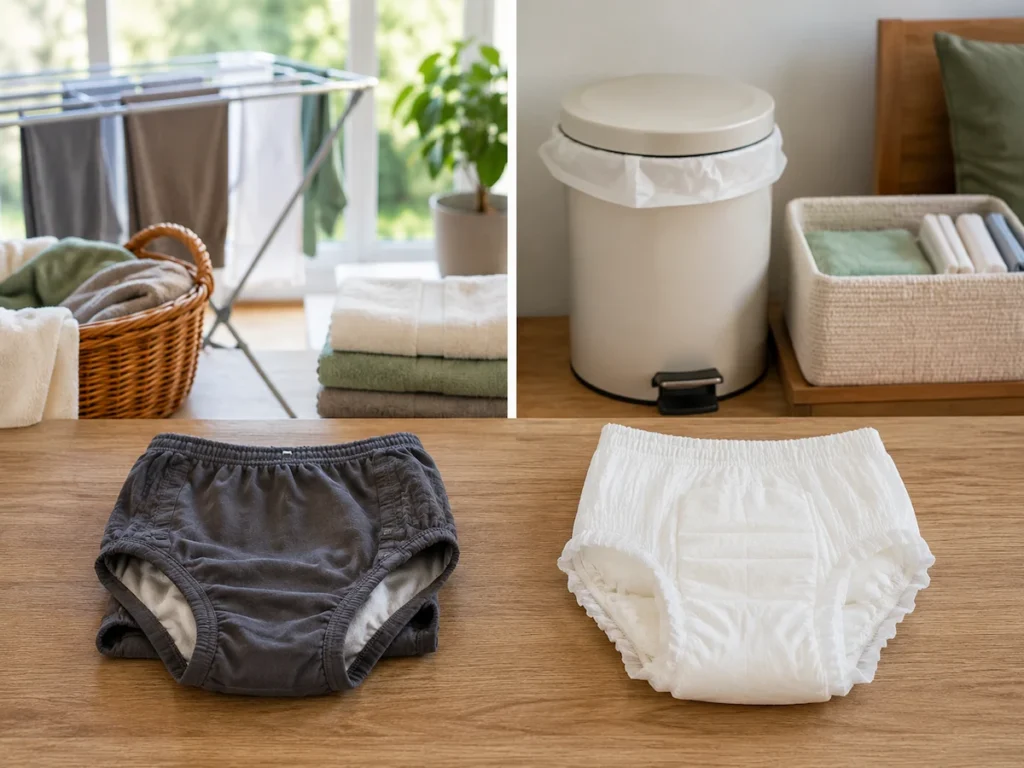
Now that the limitations are clear, here’s how reusable and disposable incontinence products compare directly.
| Factor | Reusable Incontinence Underwear | Disposable Incontinence Products |
| Absorbency Level | Light to moderate | Light to heavy |
| Ease of Use | Requires washing and drying | Ready to use, no upkeep |
| Skin Comfort | Moisture builds up over time | Designed to stay skin dry longer |
| Cost | Higher upfront, lower ongoing | Lower upfront, higher ongoing |
| Eco Friendly | Fewer disposables, less waste | Higher plastic consumption |
| Mobility | Requires pulling up and down | Tabbed options available |
| Best For | Light bladder weakness, active users | Heavy incontinence, limited mobility |
Neither option wins across every category. Reusable underwear suits active women and men with light bladder weakness. Disposable underwear, in contrast, works better when absorbency, ease, and speed of change take priority.
Honestly, many people use both. Washable incontinence products work well for everyday wear at home, while disposable incontinence products step in when travel, overnight stays, or heavier leaks call for something stronger. That split brings the eco-friendly benefit of fewer disposables without sacrificing protection.
What’s more, single-use waste is a genuine concern with disposables. Even so, the plastic consumption argument for reusables only holds up when the product genuinely suits your incontinence needs.
When Disposable Incontinence Products Make More Sense
Some situations make reusable incontinence underwear the wrong call. No amount of planning changes that. Let’s cover exactly when disposable incontinence products make more sense than washable incontinence options.
Travel, Overnight Stays, and Being Away From Home
Travelling with washable incontinence pants means carrying soiled laundry. Disposable options remove that problem entirely.
Picture a weekend away with family. You’ve packed your washable incontinence underwear, but there’s no washing machine at the accommodation. By day two, you’re out of clean pairs and managing incontinence issues without the right protection in place.
Disposable pads and disposable underwear remove that burden. They’re compact, discreet, and go straight in the bin after use. No soaking or waiting for things to dry. You don’t even need to rush for a laundry facility.
Overnight stays call for extra protection as well. Most washable incontinence pants aren’t built for the absorbency level needed through a full night’s sleep. Disposable options handle that more reliably, so you wake up dry rather than dealing with a wet bed at two in the morning.
Heavy Incontinence and High-Volume Bladder Leaks
Heavy incontinence produces urine volumes most reusable underwear can’t contain. That’s where disposable products take over.
When the bladder releases a high volume of urine at once, reusable incontinence underwear quickly hits capacity. Leaks reach clothing and bedding before there’s any chance to reach a bathroom. That’s a stressful situation, and it happens very frequently with heavy incontinence.
However, large pads and high-absorbency disposable options give far better extra security in these situations. They’re built with multiple absorbent layers that lock urine away quickly and keep skin dry under sustained leakage. Reusable incontinence underwear simply isn’t designed to match that level of protection.
With that in mind, anyone managing heavy or unpredictable bladder leaks needs a product built for the volume they’re actually dealing with. Staying loyal to reusables at this stage creates more problems than it solves.
Incontinence Issues: Post-Surgery and Medical Recovery Situations
After surgery, a daily laundry routine is the last thing you need. Urinary incontinence after surgery is common and usually temporary. Disposable incontinence products make that recovery period far simpler to manage.
Investing in a full set of reusable incontinence products during that window doesn’t make sense. Disposable options cover the recovery period without any long-term commitment or upfront cost.
Movement during recovery is restricted too. Pulling washable pants up repeatedly puts strain on surgical sites, particularly after abdominal or hip procedures. Disposable products with tabbed sides remove that physical demand completely.
Post-surgery skin is also more sensitive than usual. Friction from reusable incontinence products during frequent changes aggravates already tender skin. Disposables are gentler in that context, and the convenience of simply removing and replacing them speeds up every single change.

Are Washable Incontinence Pads a Better Middle Ground?
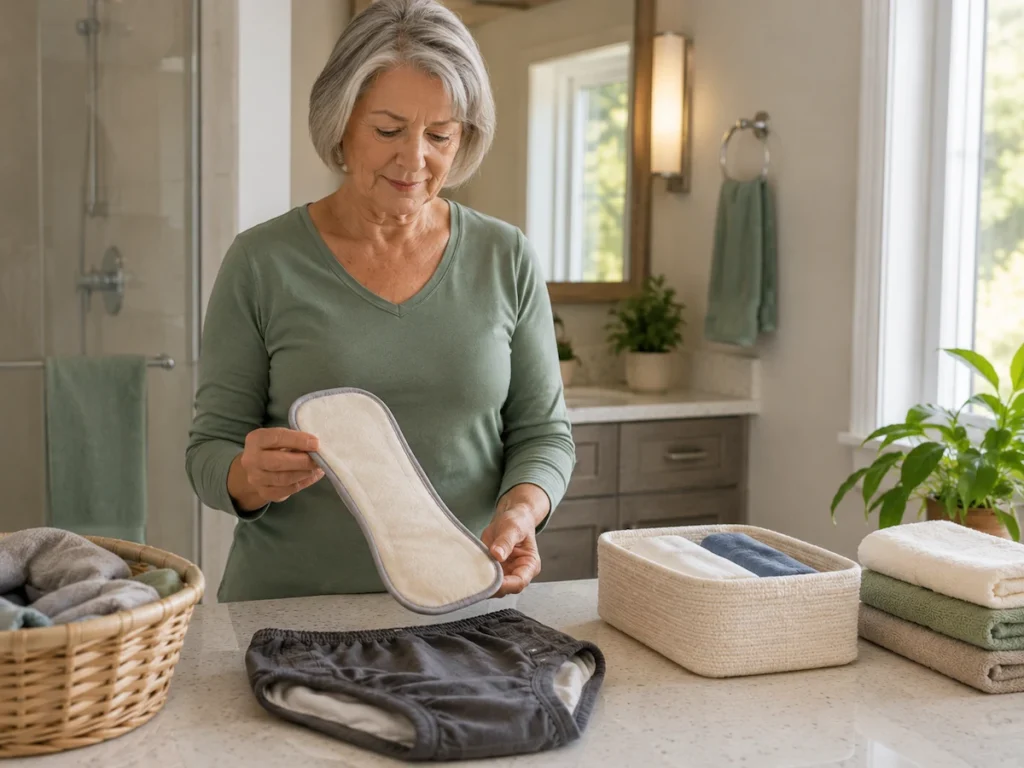
Washable incontinence pads give you reusable protection without the bulk. They’re worth understanding before dismissing reusables entirely.
Unlike full washable incontinence pants, washable incontinence pads sit inside your regular underwear. They stay in place with a strip of adhesive, much like sanitary napkins or panty liners. The difference is that washable incontinence pads are built specifically for bladder weakness, not menstrual flow.
That’s worth keeping in mind. Period underwear and panty liners aren’t absorbent enough for even light incontinence. Washable incontinence pads, by contrast, handle light to moderate bladder leaks without the bulk or fit issues of full incontinence underwear.
They suit women who want a discreet, washable option that works with their existing underwear. Reusable pads also work well as a backup layer inside standard underwear for added security during the day.
Here’s a quick look at who benefits most from washable incontinence pads:
- Women managing light incontinence or bladder weakness daily
- Anyone who finds full washable incontinence underwear too bulky
- People wanting a reusable option without committing to specialist pants
- Those using pads as a backup alongside other incontinence products
Washable incontinence is a broad category. Pads sit at the lighter end of that spectrum, but for many women, that’s exactly where the right level of protection lands.
The Eco-Friendly Argument: Do Washable Incontinence Pants Always Hold Up?
Reusable incontinence products are sold as the eco-friendly choice. But the full environmental picture is more complicated than that.
The obvious benefit is fewer disposables ending up in landfill. Every reusable incontinence product used instead of a disposable one cuts down on plastic consumption and single-use waste. That’s a genuine advantage, and it’s worth acknowledging.
At the same time, washable incontinence products need cold water washing and air drying after every use. That still consumes water and electricity. Across dozens of wash cycles a week, that environmental cost builds up in ways most people don’t account for.
The eco-friendly case weakens further for heavy incontinence users. Someone going through four or five pairs daily generates significant wastewater. That’s comparable to what a moderate disposable user produces in diapers and packaging.
So naturally, the right answer depends on your actual incontinence needs. Reusable products reduce waste effectively for light bladder weakness. Beyond that level, the environmental trade-off between reusables and fewer disposables narrows considerably.
What to Look For in Reusable Incontinence Underwear
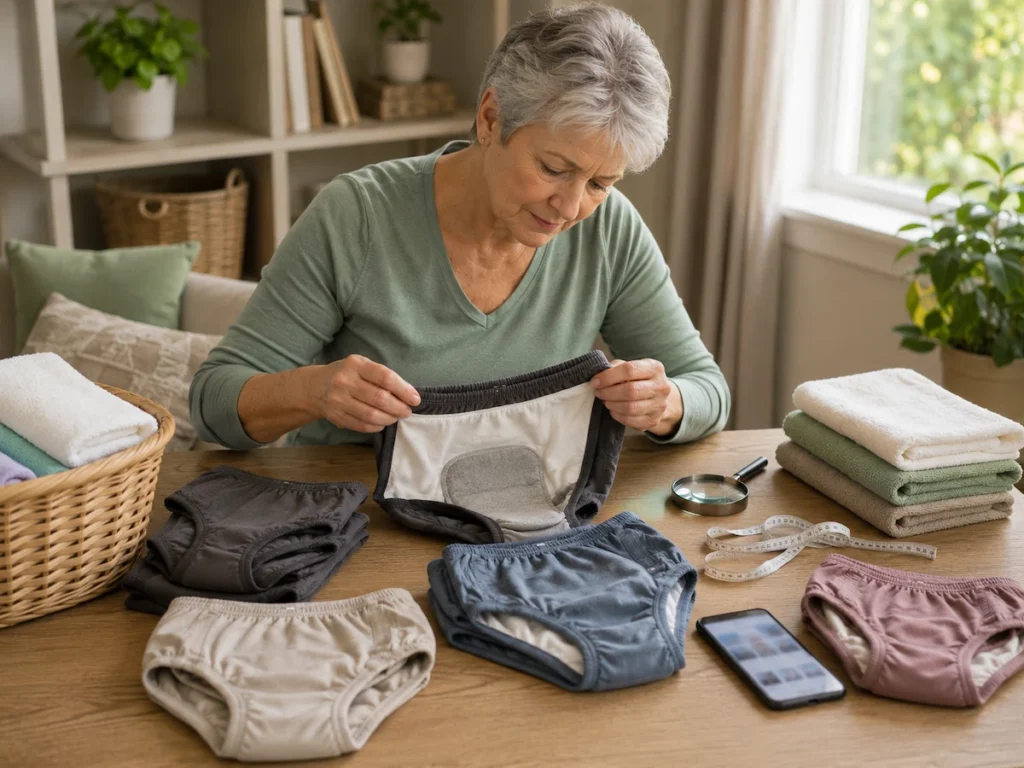
If reusable incontinence underwear still appeals, these are the things worth checking before spending money on a full set.
- Absorbency Rating: Many brands list capacity in millilitres on the packaging. A product rated at 50ml suits light bladder weakness, while anything above 150ml handles moderate incontinence more reliably.
- Fabric and Skin Comfort: Look for washable incontinence pants with a moisture-wicking inner layer that pulls urine away and keeps skin dry. Many brands use synthetic blends that wear rough after repeated washing. Other brands use natural fibres that hold up better over time.
- Sizing and Fit: Fit varies significantly across washable briefs. Sizing isn’t consistent between brands, so checking measurements rather than going by standard clothing size saves frustration. A poor fit reduces absorbency and increases leaks regardless of product quality.
- Wash Instructions: Confirm the care instructions before committing to a full set. Some reusable incontinence underwear has strict washing requirements that don’t suit every household routine.
Reusable incontinence underwear works well when it’s the right fit for your body and your routine. Taking a little time upfront to check these details saves a lot of wasted money and discomfort down the track.
Still Not Sure? Let’s Help You Figure It Out.
Reusable incontinence pants work well for some people. For others, the washing routine, absorbency gaps, and fit issues make disposable options the smarter, more workable choice.
The right incontinence product depends on your leakage volume, daily routine, mobility, and skin sensitivity. There’s no single answer that suits everyone, and that’s completely fine.
What’s important is finding something that actually works for your lifestyle. If you’re still weighing up your options, contact us at Oz Continence, and we’ll help you find the right fit.
FAQs About Reusable Incontinence Pants
Can reusable incontinence underwear fully replace disposable options?
For light bladder weakness, reusable incontinence underwear works well as a practical solution day to day. That said, many factors affect whether it can fully replace disposables, including leakage volume, mobility, and daily routine. Most women find a combination of both works better than committing to one entirely.
Are washable incontinence pants the same as real underwear?
Washable incontinence pants look and feel close to real underwear, but they aren’t the same. Standard underwear has no absorbent lining and offers zero incontinence protection. Reusable incontinence underwear has built-in layers designed specifically to catch and hold urine, which standard underwear simply can’t do.
How long do reusable incontinence pants last with proper care?
With proper care, most reusable incontinence underwear lasts anywhere from six months to two years. Washing in cold water and air drying after every use protects the absorbent lining and extends the lifespan considerably. Hot washing breaks down the layers fast, so following care instructions makes a genuine difference to how long each pair holds up.
Are reusable incontinence products a good choice for women after childbirth?
For women managing light urinary incontinence after childbirth, reusable incontinence underwear is worth considering. It’s a more eco-friendly option than disposables and feels closer to normal underwear during recovery. That said, women with heavier post-birth leakage may need disposable options until bladder control improves.
What makes reusable incontinence underwear different from period underwear?
Period underwear and reusable incontinence underwear look similar, but they serve different purposes. Period underwear absorbs menstrual flow, which is lighter and slower than urine. Reusable incontinence underwear handles faster, higher-volume bladder leaks and needs a stronger absorbent core to do that reliably. Using period underwear for incontinence protection leaves most women without adequate coverage.
