
One day, you’re helping an elder with their daily routine. The next thing you know, you’re searching “how often to change incontinence products for elderly adults” at midnight, hoping for a straight answer.
We understand how exhausting it feels to care for an elderly adult with incontinence. The worry, the guesswork, the interrupted nights all take a toll. Knowing when to change a pad can feel like one more unanswered question.
Oz Continence is here to support you through that. And in this blog, we’ll walk you through how often to change an incontinence product, what signs to watch for, and which products make the routine easier. Stay with us, and that midnight search will finally have its answer.
How Often Should Elderly Adults Change Incontinence Products?
Most elderly adults do well changing incontinence products every three to four hours during the day. It’s not a one-size-fits-all rule, though. Pads, pull-on styles, and tab-style adult diapers all serve different purposes, so the schedule shifts depending on what you’re using.
One rule applies across all of them: if there’s any bowel soiling, change immediately. Unlike urinary leakage, faecal incontinence doesn’t follow any timed routine. And every bowel accident calls for a fresh pad straight away.
Urine leakage is a little more forgiving, but not by much. A dry pad still requires changing at least twice daily. After all, bacteria build up in warm, humid conditions either way.
What actually shifts that schedule depends on a few personal factors.
What Happens to Elderly Skin When a Pad Stays On Too Long?

Elderly skin is already thinner and more delicate than younger skin. And prolonged exposure to moisture can set off a chain of problems that worsen the longer a change is delayed.
Here’s what actually happens to elderly skin when a pad stays wet too long:
- Incontinence-Associated Dermatitis (IAD): Direct contact with urine or faecal matter breaks down the skin’s surface layer. The perineal area turns red, raw, and painful within hours. At this level, skin irritation needs prompt treatment before the damage deepens.
- Urinary Tract Infections (UTIs): You might not see it coming until the symptoms are already there. That’s because warm, damp pads are breeding grounds for bacterial infections. And for elderly adults, those infections can escalate into a serious medical event if carers miss the early signs.
- Accelerated Skin Breakdown: Skin barrier function weakens over the years. Even a short window of moisture against the groin area can trigger breakdown that takes weeks to heal.
Nine times out of ten, these conditions are entirely preventable. A consistent change routine is what keeps IAD, UTIs, and skin breakdown from taking hold.
Why the Right Change Schedule Isn’t the Same for Every Adult
How often you need to change depends on your leakage level, product absorbency, skin condition, and mobility. Yet most people start with a generic schedule and wonder why it isn’t working.
The answer is usually in one of these four areas.
How Much You’re Leaking Changes Everything
Major leakage fills a pad within one to two hours. A lighter bladder leak, by contrast, might allow a four-to six-hour window. Either way, comfort and odour should always have the final say, rather than the clock.
Absorbency Level Decides How Long You Can Wait
Sometimes the schedule isn’t the problem at all. The product is.
For example, a higher absorbency pad pulls fluid into the core quickly and holds it there longer, which extends safe wear time without leaving skin exposed. A lower absorbency pad fills faster and shortens that window.
So the pad you choose directly controls how long you can comfortably wait between swaps.
Fragile Skin Needs a Shorter Window
Since elderly skin breaks down faster than younger skin, even two extra hours in a damp pad can cause open sores and painful rashes. For anyone already dealing with irritation, treat it first and shorten the wearing window straight away (irritation that continues past 48 hours warrants a GP review).
Mobility Determines Who Sets the Schedule
Someone with an active lifestyle can respond to their own body cues and act when the time comes.
However, someone with limited mobility can’t do that. For them, a carer sets the schedule. The product needs to suit their physical situation in three ways: the right size, absorbency level, and style for easy handling.
Quick Tip: Keep an eye on how well the current setup is working. Mobility changes over time, and the routine should follow.
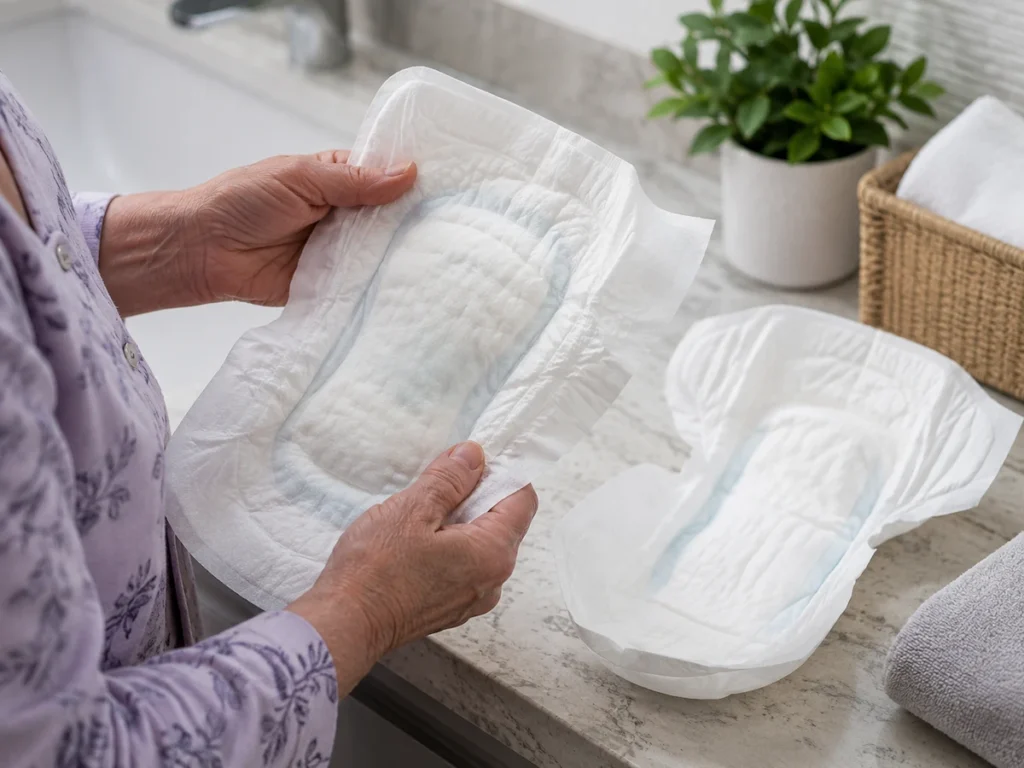
How Often Should You Change Incontinence Pads During the Day?
Leakage volume drives your daytime schedule, and it isn’t set in stone. What you drink, how active you are, and the time of day all influence it.
From what we see at Oz Continence, fluid intake tends to catch people off guard the most. After all, a few extra glasses of water can fill a pad a full hour earlier (and that’s before accounting for tea, coffee, or other drinks that make your bladder work harder).
Use the table below to match your leakage level to a schedule:
| Leakage Level | How Often to Change | Signs It’s Time |
| Light | Every four to six hours | Pad feels damp, slight odour |
| Moderate | Every three to four hours | Pad feels heavy, skin feels wet |
| Heavy | Every one to two hours | Pad near capacity, risk of accidental leaks |
| Bowel soiling | Immediately | Any faecal matter present, no waiting |
That said, activity and product fit can push your personal threshold shorter or longer. Check regularly throughout the day and tweak it as you go. Your body will signal when the routine requires updating.
Should You Change Adult Diapers and Pull-Ons Differently Overnight?
You might be thinking overnight products need a midnight change to stay safe. But for most elderly adults, that’s not the case.
Adult diapers and night pads handle extended wear by design. Their higher absorption capacity pulls fluid away quickly, so most people sleep through the night without needing a midnight swap. That’s largely down to better liquid capture technology built into the core.
Even so, swap the product immediately upon waking. Leaving a saturated pad on through the morning hours carries the same skin risks covered earlier.
Worth Knowing: Modern overnight products often include a wetness indicator. It changes colour when the pad reaches capacity, so carers can check saturation at a glance without disturbing the person’s sleep.
Six Signs Your Incontinence Pad Needs Changing Right Now
Still not sure when to change? Check for these six signs. If you notice even one, act immediately regardless of the last scheduled change.
- Visible Sagging or Swelling: A pad that looks swollen or droops away from the body has reached its absorption limit. Accidental leaks will follow from this point.
- Odour You Can Notice: Bad odours are a clear sign that bacteria are active inside the pad. Don’t wait for the next scheduled check. By then, they’ve had too long to multiply.
- Skin Feels Damp or Warm: If the skin around the intimate area feels warm or moist to the touch, the pad’s surface layer is no longer doing its job. Plus, clothing against damp skin makes the irritation worse.
- Leaking at the Edges: A securely fitted pad shouldn’t leak at the sides. Edge leaking means the product is past capacity. So replace it as soon as possible.
- Discomfort or Chafing: Any pulling, rubbing, or soreness around the pad area is a sign something isn’t right. Ignoring it gives moisture and friction more time to harm.
- Wetness Indicator Has Changed: Many modern pads include a colour-strip indicator. Once it activates and shifts from yellow to blue, the pad has done its job. Swap it out before the skin has a chance to react.
These six signals override any timed schedule. Most people find that once they know what to look for, the whole routine becomes second nature rather than guesswork.
And for those who can’t self-monitor, a carer doing regular checks keeps things on track.

How Often Should Bedridden Elderly Adults Have Their Pads Changed?
Carers should check pads on bedridden elderly adults every two hours during the day, and at least once through the night. Bedridden adults can’t self-monitor, so a carer’s consistency drives the entire routine.
Typically for this group, the type of incontinence determines how fast someone needs to act. As we already mentioned, bowel soiling can’t wait for a scheduled check. That means a fresh pad straight away, every single time. A missed bowel check can lead to rapid skin breakdown. In bedridden adults, that damage is extremely common and very difficult to reverse.
Urinary leakage follows a different rule, but it still needs attention. So, go by schedule and change based on what you find, whether that’s wetness, saturation, or leaking at the edges.
Beyond the change itself, skin care between checks deserves the same attention as timing. If you’re caring for a bedridden adult, gently clean their perineal area, pat it dry, and apply barrier cream before putting on a fresh pad.
Can the Right Adult Incontinence Product Mean Fewer Changes and Extra Protection?
In one word, yes. When the pad suits your actual leak level, you act less often and protect skin better. At Oz Continence, we find that most people are either over-protecting or under-protecting, and both cause problems. Here’s what that looks like in practice.
Matching Absorbency to Your Bladder Leak Level
Each leakage type calls for a specific absorbency level. A product with greater absorbency than you need can hide how wet the skin is underneath. As a result, neither the elderly adult nor their carer notices any pattern change until irritation appears.
On the flip side, under-protecting means the pad fills too quickly and forces an unplanned swap mid-outing or mid-sleep.
A well-matched product brings fewer of those moments and better natural skin health in the long run.
What Dry Pads and Overnight Products Are Actually Built to Do
Dry pads aren’t simply a rebranded version of what you already use. They pull fluid into a layered core faster than standard options. The surface stays dry, so skin stays comfortable between checks. That’s the protection level you’re paying for.
Overnight products take that further. They combine higher absorbency with reinforced leak guards for extra protection through six to eight hours of rest. That level of protection is what allows comfortable sleep without interruption.
While a good product won’t replace consistent care, it takes a lot of the pressure off. If you’re not sure where to start, a GP or continence nurse can assess your needs.
Oz Continence can also help you find the right fit, and reaching out is just one step away.

A Cleaner Routine Starts Here
Managing incontinence well isn’t complicated, but it does take consistency. These four rules are the ones that genuinely keep everything on track:
- Change every three to four hours during the day as a baseline, and adjust from there.
- Treat any bowel soiling as an immediate change (no exceptions).
- Check bedridden adults every two hours and apply barrier cream at each swap.
- Match the product to the actual leak level, not just what’s available.
Simple on paper, but we know that putting it into practice as a carer is a different story. Many carers feel overwhelmed when incontinence becomes part of daily life, and those feelings often feed negative perceptions around the topic. In reality, good carers ask for help.
Our team at Oz Continence is here whenever you need guidance, a recommendation, or simply a place to start.
FAQs
Here are some of the questions we hear most often at Oz Continence.
Can Poor Hygiene from Infrequent Pad Changes Cause Uncomfortable Infections?
Changing pads too infrequently allows bacteria to take hold before anyone notices. This risk applies to all elderly adults, especially those with sensitive skin or a history of skin irritation.
If you leave a soiled pad on too long, uncomfortable infections like IAD or UTIs are often what follow. That’s why changing pads regularly and cleaning the area carefully after each swap matters so much. Those two habits keep skin hygiene issues from developing, and if irritation does appear, treat skin irritation early before it deepens.
Is Faecal Incontinence Managed Differently from Urinary Incontinence?
Yes, it’s an entirely different situation. Faecal incontinence follows completely different rules from urinary leakage, and the emotional toll it places on both the person and their carer can be significant.
We recommend pads designed with odour control and a specific shape for bowel leakage. They reduce how often changes are needed and cause less disturbance overall.
How Do You Change an Incontinence Pad for Someone Who Can’t Stand Up?
Pads with special lie-down protection are individually suited to bedridden adults and work best when the carer follows a consistent technique.
First, roll the person gently onto their side and remove the soiled pad. Clean the intimate area carefully, apply a fresh pad, then roll them back. After that, pat the skin dry before securing the new pad in place. That’s what maintains dryness and protects the skin surface.
A smooth routine like this causes less disruption and lets your loved one continue sleeping without prolonged discomfort (and a good night’s sleep supports their recovery and overall comfort).
Can Elderly Adults Wear Incontinence Pads with Their Own Underwear?
Yes, and many prefer it. Various forms of incontinence pads fit inside a person’s own underwear and offer excellent protection without the bulk of pull-on briefs. They prevent accidental leaks while still allowing the person’s body to move freely.
For anyone ready to update their incontinence routine gradually, this is a practical first step.
Does Improving Awareness of Pad Changes Help with Odour Control?
It does, and it’s incredibly important for dignity and comfort. Various factors affect how well odour control works, from product fit to change frequency. People change dry pads more often once they know what to look for, but a set schedule alone isn’t enough.
Odour control built into the pad helps, but it’s no substitute for a consistent swap routine. And if that routine still isn’t solving the problem, it’s worth looking deeper. If irritation continues despite changing your incontinence products regularly, clean the skin carefully and speak to a GP.
Underlying skin hygiene issues sometimes need professional treatment, and asking for that help takes courage, not weakness.
