Wearing the right-sized incontinence pad each day protects your skin, keeps leaks contained, and lets you move through life with personal dignity intact. But if you grab the wrong size, you have to deal with side leaks, skin soreness, and a pad that doesn’t stay in its place every time you stand up.
The worst part is, most people don’t notice it until after dealing with an uncomfortable moment that could’ve been avoided. So today, Oz Continence is here with a full breakdown on how to find your correct pad size.
We’ll walk through absorbency, materials, brand differences, and what sizing actually costs. By the end, you’ll know exactly which size suits your needs. Let’s start with the size options themselves.
Incontinence Pad Size Options: A Quick Overview
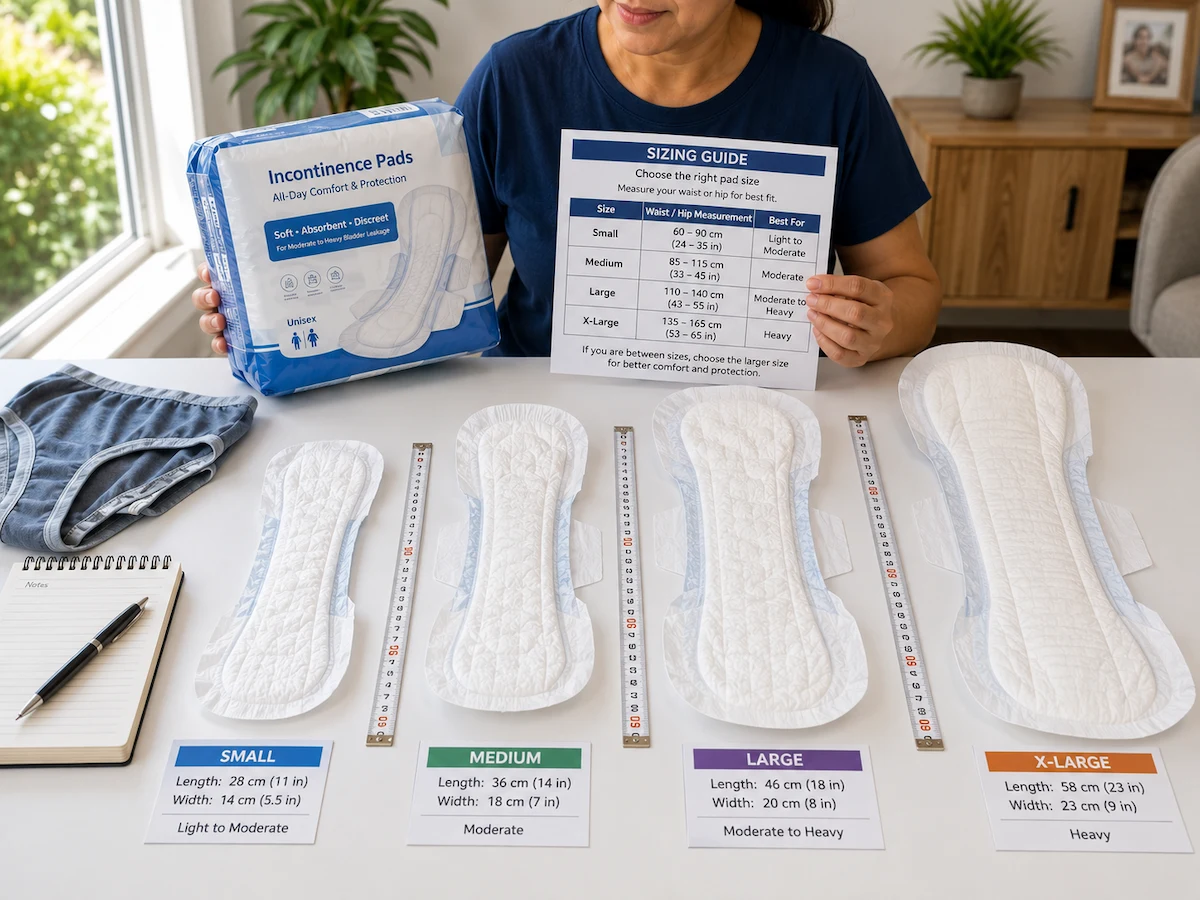
Finding the right incontinence pad size can feel like searching for a needle in a haystack. So many different sizes, so many brands, and barely any clear guidance on where to even begin. We suggest starting by shortlisting your options based on your waist and hip measurements first.
Incontinence pads usually come in small, medium, large, and extra large, with most brands basing their sizing on those two measurements. The standard size ranges typically break down like this:
- Small: waist roughly 60–80cm
- Medium: waist roughly 80–100cm
- Large: waist roughly 100–120cm
- Extra large: waist 120cm and above
These figures do vary between brands, so always cross-check against the packaging before committing to a purchase. You can also opt for all-in-one pads that come in these same size brackets.
But those typically include wraparound coverage with resealable tabs and better suit people who need a more secure fit or find it harder to change pads independently.
Body Shape and Incontinence Pad Fit: Where to Begin

Measuring yourself is the starting point when choosing a brand. Depending on your clothing size, you’ll need completely different incontinence pads.
Let’s break down exactly where to begin.
Why Hip and Waist Measurements Come First
Hip and waist measurements are the two numbers every size chart starts from. Most brands build their sizing scale around these two figures. A pad matched to your exact waist and hip width stays flush against your body, rather than shifting mid-wear.
To measure your waist, wrap a measuring tape around the narrowest point of your torso, just above your belly button. And for your hips, measure around the widest part, typically the fullest section of your buttocks.
Here’s a quick example of how those two measurements map to pad sizes:
- Small: waist 60–80cm, hips 80–95cm
- Medium: waist 80–100cm, hips 95–110cm
- Large: waist 100–120cm, hips 110–125cm
- Extra large: waist 120cm, hips 125cm
Curved vs. Straight Body Shapes and How Fit Changes
Getting your body shape category right means the pad’s back panel, side wings, and contour all sit flush against your skin without shifting. For curved frames, pads with wider back panels offer full coverage across the hips and legs. Straight body shapes, by contrast, tend to find standard-cut pads fit cleanly without bunching in the leg area.
A contour pad is also worth considering for curved frames, as its shaped design follows the body’s natural lines far better than a flat rectangular option.
What to Do When Your Weight Shifts Regularly
A weight change of 5–10kg is often enough to move you into a completely different pad size. That weight change alone can turn a previously snug fit into a pad that gaps, leaks, or feels uncomfortable by midday.
The solution is pretty simple: re-measuring your waist and hips every few months. This habit keeps your size choice accurate, rather than relying on a measurement taken months ago.
Worth Considering: Keeping a note of your right measurements alongside the brand and size that worked last time makes the whole process far quicker next time around.
Light Leak or Full Loss? Match the Pad to Your Situation
Pad size and absorbency level work together, and both need to be right. If you pick the wrong absorbency level by mistake, you’ll pay for it with bypass leaks even if the pad fits perfectly.
Here is a concerning statistic. According to the Australian College of Nursing, 7.2 million Australians over the age of 15 live with incontinence. Many of them are still paired with the wrong absorbency for their actual leakage volume, which is where sizing decisions start to fall apart. So, it’s important to know your leakage level to narrow down which pad sizes are even worth considering.
Incontinence pads group into four absorbency levels, each suited to a specific leakage range:
- Light: Small drips or occasional leaks, usually under 100ml per episode
- Moderate: Regular leakage across the day, roughly 100–200ml per episode
- Heavy: Larger or unpredictable volumes, often 200–400ml per episode
- Overnight: Extended wear protection, typically 400ml and above
The Royal Australian College of General Practitioners confirms in their pad usage and severity guidance that pad usage is one of the most reliable indicators of urinary incontinence severity. That said, a pad that’s too small for your leakage volume will hit its absorption capacity well before a change is due.
Ultimately, it raises your risk of bypass leaks and skin irritation, regardless of how well the pad fits.
On that note, contour pads and pad and pant systems both span across these absorbency ranges. So choosing a higher absorbency level doesn’t always mean going up a physical size. Many brands now offer high-absorbency options in slimmer profiles, so the pad won’t feel bulky under clothing.
Adhesive Tabs: The Small Detail That Fixes a Poor Fit
Most people focus on pad size alone and completely overlook the one thing holding it all together, i.e., the adhesive tabs.
Adhesive tabs are the strips on the underside of a pad that attach securely to the inside of your underwear. Without them doing their job properly, even the right size pad will fold, shift, or bunch by mid-morning.
The table below shows the main tab types, how they perform, and where they tend to fall short:
|
Tab Type |
Strength Level | Best Pad Style |
Common Issue if Wrong |
|
Single adhesive strip |
Light | Thin liners, light pads |
Shifts during movement |
|
Double adhesive strip |
Moderate | Medium to large pads |
May lift at edges if underwear is loose |
|
Resealable tabs |
Firm | All-in-one pads, overnight styles |
Loses grip after multiple refastenings |
|
Side fixation tabs |
Strong | Heavy absorbency, wraparound pads |
Can feel tight if pad is oversized |
Fixation pants are worth considering alongside tabbed pads, as they hold the pad snugly in place without relying solely on adhesive. They work particularly well for people who find that standard tabs don’t keep the pad positioned correctly during physical activity or extended wear.
And if you’re already dealing with a pad that won’t stay put, our guide on incontinence underwear shifting covers exactly why that happens and how to stop it.
Incontinence Pads vs. Protective Underwear: Two Different Sizing Worlds
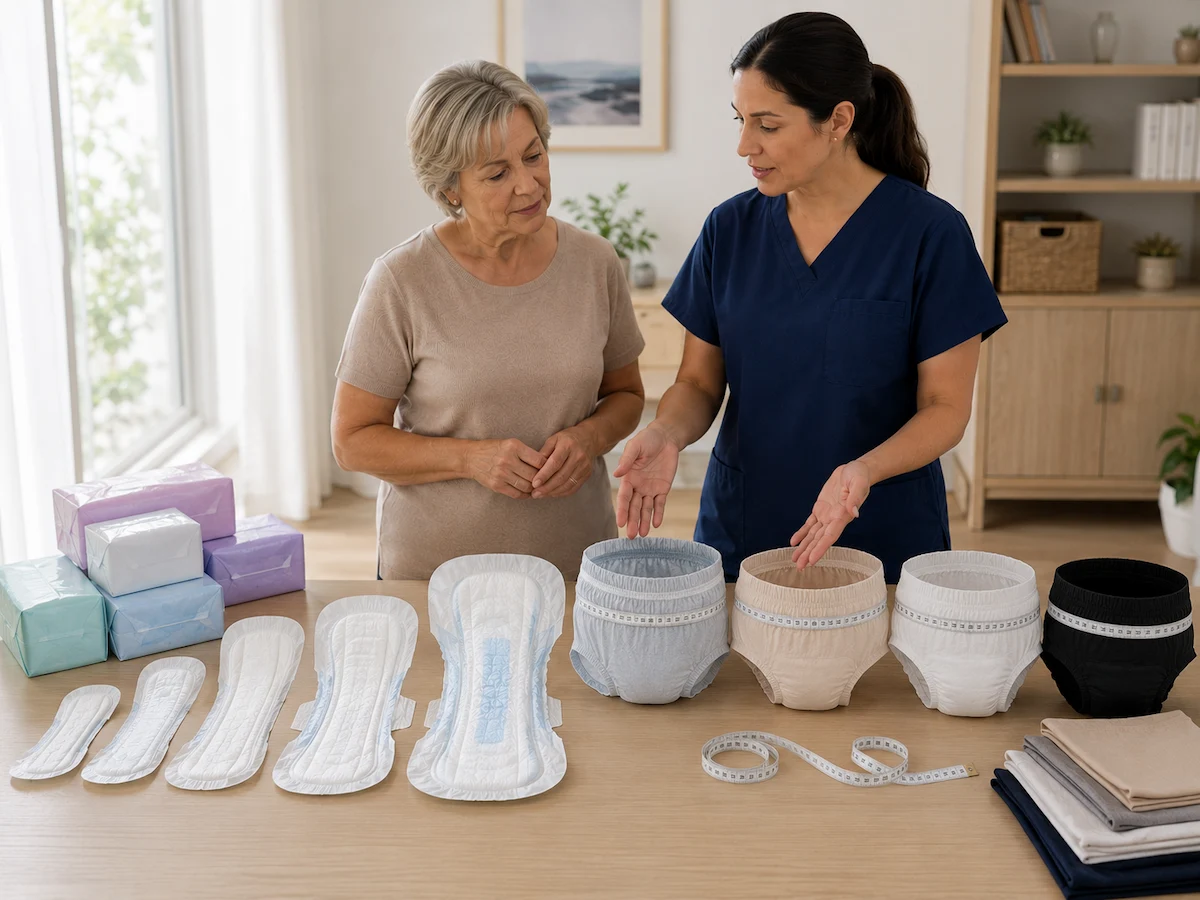
Incontinence pads and protective underwear don’t share the same sizing system at all. In fact, pads are sized by absorbency level and pad length, while protective underwear is sized by hip and waist circumference, much like regular clothing.
Pull-ups, for example, size purely by waist and hip circumference. A woman who wears a medium in disposable incontinence pads won’t automatically wear a medium in pull-ups. The sizing charts for each product type are built on entirely different bases, so carry-over assumptions between the two rarely hold up.
For anyone managing incontinence day to day, this distinction saves a lot of wasted money on the wrong incontinence product. So, always check which measurement the product uses before buying.
Same Size, Different Brand: Why the Fit Never Feels Consistent
If a medium pad from one brand fits nothing like a medium from another, you aren’t doing anything wrong. Every brand sets its own measurement ranges independently, and those ranges rarely line up with each other.
How Each Brand Builds Its Own Size Scale
No two brands define their size brackets the same way. One label’s medium can start exactly where another brand’s large ends.
Here’s a quick snapshot of how waist ranges typically differ across brands:
|
Size Label |
Brand A Waist Range | Brand B Waist Range |
Brand C Waist Range |
|
Small |
60–75cm | 55–70cm |
60–80cm |
|
Medium |
75–95cm | 70–90cm |
80–100cm |
|
Large |
95–115cm | 90–110cm |
100–120cm |
|
Extra Large |
115cm+ | 110cm+ |
120cm+ |
Waist Range Differences Between Brands
Someone sitting at a 95cm waist could technically fit a medium or a large depending on the brand. Even a small ten-centimetre overlap between brands is exactly why relying on a size label alone gets people into trouble.
Absorbency Ratings and How They Affect Pad Sizing
Higher absorbency pads are physically wider and thicker than lighter options. That added bulk affects how a size label actually feels in daily life.
A heavy-absorbency large from one brand may sit closer to an extra large from another, purely because of the extra material in the core.
Reading a Size Chart Without Getting Confused
Sizing charts are far more reliable than clothing labels. Before opening any chart, record your waist and hips with a measuring tape. Those two figures are the only numbers worth matching against a brand’s size column.
On top of that, two measurements taken together give you a far more accurate starting point than anything printed on a clothing tag. Pull-up styles sometimes include a thigh column in their charts as well, so check for that before deciding.
Certain brands use descriptive labels like “petite” or “plus” instead of standard size names. Those labels don’t map to any universal measurement range. That’s the reason you should always look for the centimetre figures listed beneath the label before committing to a purchase.
When the Tag Says Medium but Feels All Wrong
We see this come up constantly, and nine times out of ten it traces back to how a specific brand cuts its pads. A pad that bunches around the leg area or gaps at the hips usually needs a wider back panel. That’s a fit issue, not a size issue.
Try going one size up within the same brand first. If the discomfort carries across two or three sizes, that brand’s cut likely doesn’t suit your shape. At that point, switching brands is the faster fix.
Look for a brand whose sizing charts list wider hip measurements in your range. Different brands also shape their cores differently. A contour-cut pad tends to sit far more comfortably than a flat rectangular option. And that holds even when both carry the same size label.
Skin Sensitivity and Incontinence Pads: Does the Material Affect Your Size Choice?

Most people pick a pad size based on measurements alone and never factor in what the pad is actually made from. Thicker, skin-friendly materials add physical bulk to a pad. That bulk affects how it sits inside your underwear and whether it feels snug or causes irritation against your body.
Skin health is worth taking seriously here, too. An Australian acute care study published in the International Wound Journal found that 42% of incontinent patients developed incontinence-associated dermatitis. Pads made from synthetic materials without breathable layers are a known contributing factor to that irritation risk.
That’s where material choice starts crossing over into sizing territory. Wider, softer pads designed for reactive skin often run physically larger than standard options in the same size bracket. Someone who fits comfortably in a standard medium may find a skin-friendly medium feels closer to a large.
If you’re dealing with sensitive skin alongside sizing concerns, our guide on incontinence products for sensitive skin is a good place to start. It covers the materials and label terms worth checking before you buy.
Incontinence Pad Absorbency vs. Size: A Full Breakdown
A pad’s physical dimensions grow alongside its absorbency rating. Higher absorbency means more core material, and more core material means a wider, thicker pad overall. That added bulk shifts how the pad fits against your body, even within the same size bracket.
Quick Note: The Australian Government’s Department of Health outlines a practical pad weight test method for measuring leakage at home.
To get started, weigh a dry pad in a plastic bag before wearing it. At the end of wear, weigh the used pad in the same bag. Each gram of difference equals 1ml of urine leaked. A wet pad of 400g against a dry pad of 150g points to roughly 250ml of leakage, which tells you exactly which absorbency range applies to your body.
Below is a full breakdown of how absorbency levels, pad sizes, and body fit connect across the range:
|
Absorbency Level |
Volume Range | Pad Size | Best Body Fit |
Recommended Use |
|
Light |
Up to 100ml | Small to medium | Slim frames, lower hip measurements |
Daytime, active use |
|
Moderate |
100–200ml | Medium to large | Average hip and waist range |
Daytime, regular wear |
|
Heavy |
200–400ml | Large | Wider hip measurements, curved frames |
Full day wear, limited mobility |
|
Overnight |
400–700ml | Large to extra large | Most body types |
Extended wear, sleeping |
|
Maximum |
700ml+ | Extra large | Larger frames, higher waist measurements |
Overnight, high leakage volume |
The absolute starting point is matching your leakage volume to the absorbency column first. Then cross-check the corresponding pad size against your waist and hip measurements.
Fixation pants work well alongside higher absorbency pads, as the extra bulk needs something to hold it snugly in place. A pad that feels comfortable lying down can shift considerably once you’re upright and moving.
Pro Tip: Always factor in your activity level when picking a combination. A slim-profile moderate pad suits an active day far better than a bulkier heavy option, even if both fall within your size range.
Five Clear Signs Your Incontinence Pad Doesn’t Fit Right
Spotting these signs early saves you from skin irritation, repeated leaks, and days of unnecessary discomfort. Usually, it shows up as a small, persistent problem that quietly worsens over time.
Here are the five signs worth paying attention to:
- Leaking from the Sides or Back: Side and back leaks are the clearest indicator of a poor fit. A pad that doesn’t cover your leg area adequately, or sits too narrow across your hips, will let liquid bypass the absorbent core entirely. Moving up one size or switching to a wider-cut style usually resolves this quickly.
- Skin Redness or Chafing Along the Pad Edges: Redness or chafing along the pad’s edges points to a size that’s too tight against your skin. Edges that dig into your legs or groin area throughout the day create ongoing friction, and that friction raises your irritation risk considerably. A better-fitted pad sits flush without pressing into the skin.
- Constant Repositioning Throughout the Day: When repositioning becomes a regular part of your day, the pad length or width isn’t right for your body. That’s sometimes a tab issue, but fixation pants solve this in most cases. They hold the pad snugly regardless of movement or activity level.
- The Pad Feels Saturated Too Soon: Reaching your usual change time with a fully saturated pad points to an absorbency level that’s too low for your leakage volume. That’s worth addressing separately from sizing, though moving up in absorbency will almost always mean going up in physical size too.
- The Pad Feels Uncomfortable or Bulky All Day: Bulk and tightness throughout the day usually mean one of two things. Either the size is too large for your frame, or the absorbency level is higher than your leakage actually requires. Both affect how comfortably and confidently you move through the day.
With those five signs in mind, tracking your leakage pattern over a few days makes sizing decisions far more precise.
Record your leakage volume at each void across three days. Add the daily totals together, then match that figure to the absorbency range in the table above. That number tells you the right size for your body far more reliably than guesswork.
Incontinence Pad Sizes and What They Actually Cost: A Pricing Breakdown
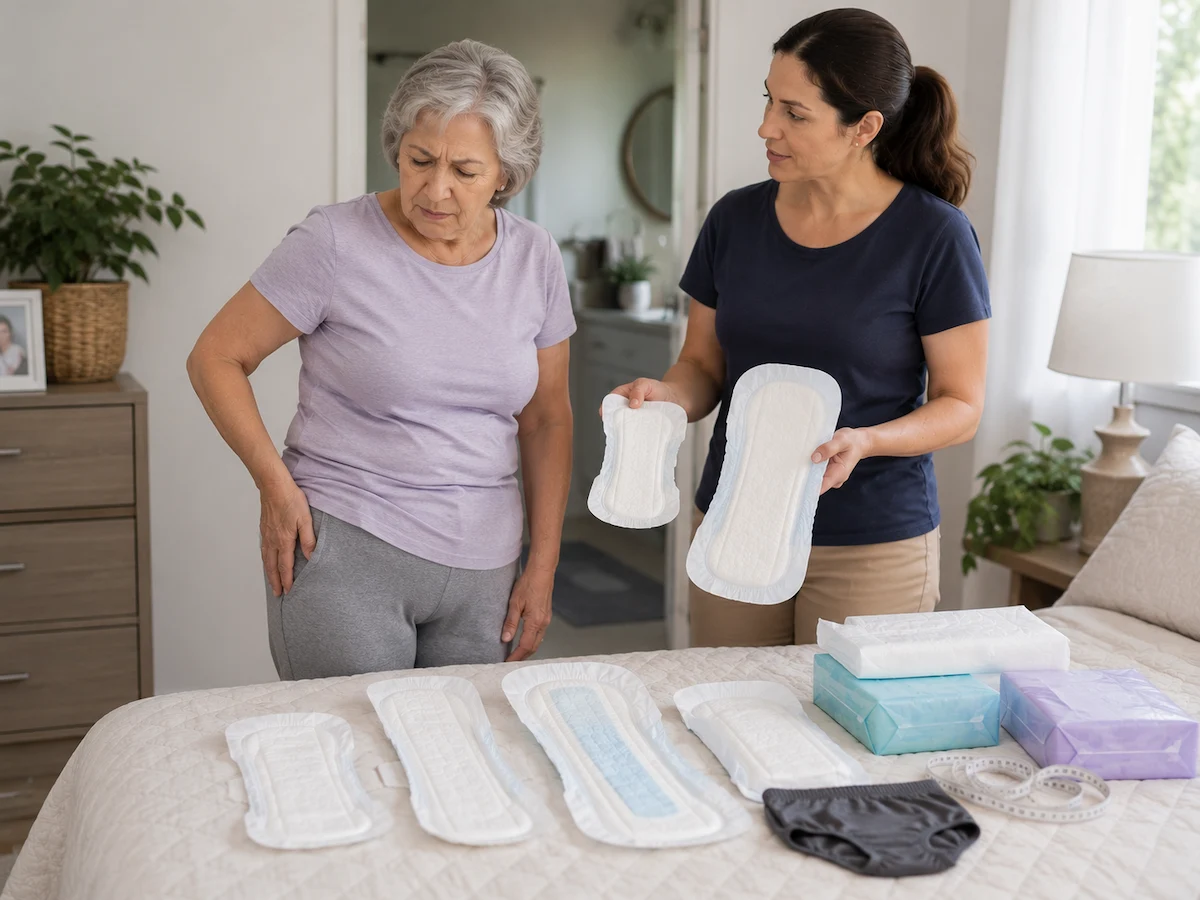
Larger pad sizes cost more per unit, and that gap widens with higher absorbency. Prices across Australian pharmacies typically break down like this:
- Light/small pads: roughly $8–$15 per pack
- Large/heavy pads: roughly $18–$35 per pack
- Overnight/maximum pads: roughly $25–$45 per pack
Buying in bulk brings the per-unit cost down noticeably, though it only makes sense once you’re confident in your correct size.
Two government subsidy programs are worth knowing about. The NDIS covers continence products for eligible participants. The CAPS payment scheme, run by Services Australia, provides a separate annual payment for those outside NDIS eligibility.
Both can reduce what you and your loved ones pay out of pocket each year considerably.
You’re One Right Size Away From a Better Day
Now that you’ve covered everything from measurements to materials, the right size is well within reach. Getting there doesn’t require guesswork. It takes two measurements, an honest look at your leakage volume, and a willingness to try one size either way if the first choice doesn’t land.
A quick recap of the most actionable steps from this guide:
- Measure your waist and hips before checking any sizing chart
- Match your leakage volume to the correct absorbency range
- Try one size up or down if a labelled size leaks or bunches
- Check NDIS or CAPS eligibility before committing to bulk purchases
Oz Continence has supported over 5,000 patients, with a 95% satisfaction rate among those who found the right incontinence product. If you’d like personalised guidance on sizing or absorbency, contact Oz Continence and our team will point you in the right direction.
FAQs
1. Can I Use My Clothing Size to Find the Right Pad Size?
Clothing size isn’t a reliable guide for finding the right fit in incontinence pads. Measure your waist and hips with a measuring tape instead, and match those figures to a brand’s sizing chart. That approach gives you far more accurate measurements than any label on your wardrobe.
2. What’s the Difference Between Pad Length and Absorbency Level?
Pad length determines how much of your body the pad covers front to back. Absorbency level determines how much liquid it holds. A longer pad doesn’t automatically mean higher absorbency.
Women particularly benefit from checking both figures separately before choosing the right pad for their specific needs.
3. How Do I Find the Right Size for a Loved One Who Can’t Measure Themselves?
Measure your loved one’s waist and hips while they’re standing, using a snug but not tight measuring tape position. Opt for a medium or larger size if you’re between two options, as a slightly bigger product causes far less discomfort than one that’s too tight.
Fixation pants help attach securely and keep the pad in place, which gives your loved one greater comfort and personal dignity throughout the day.
4. Do Incontinence Pad Sizes Differ Between Male and Female Products?
Yes, the cut and shape differ considerably. Female pads are contoured for a narrower front and wider back. Male pads are shaped for a different coverage area entirely.
Both use waist and hip measurements for sizing, but wearing the wrong style, regardless of size, affects optimal fit and the right fit across the leg area. Always check that the product is designed for the correct anatomy before buying.