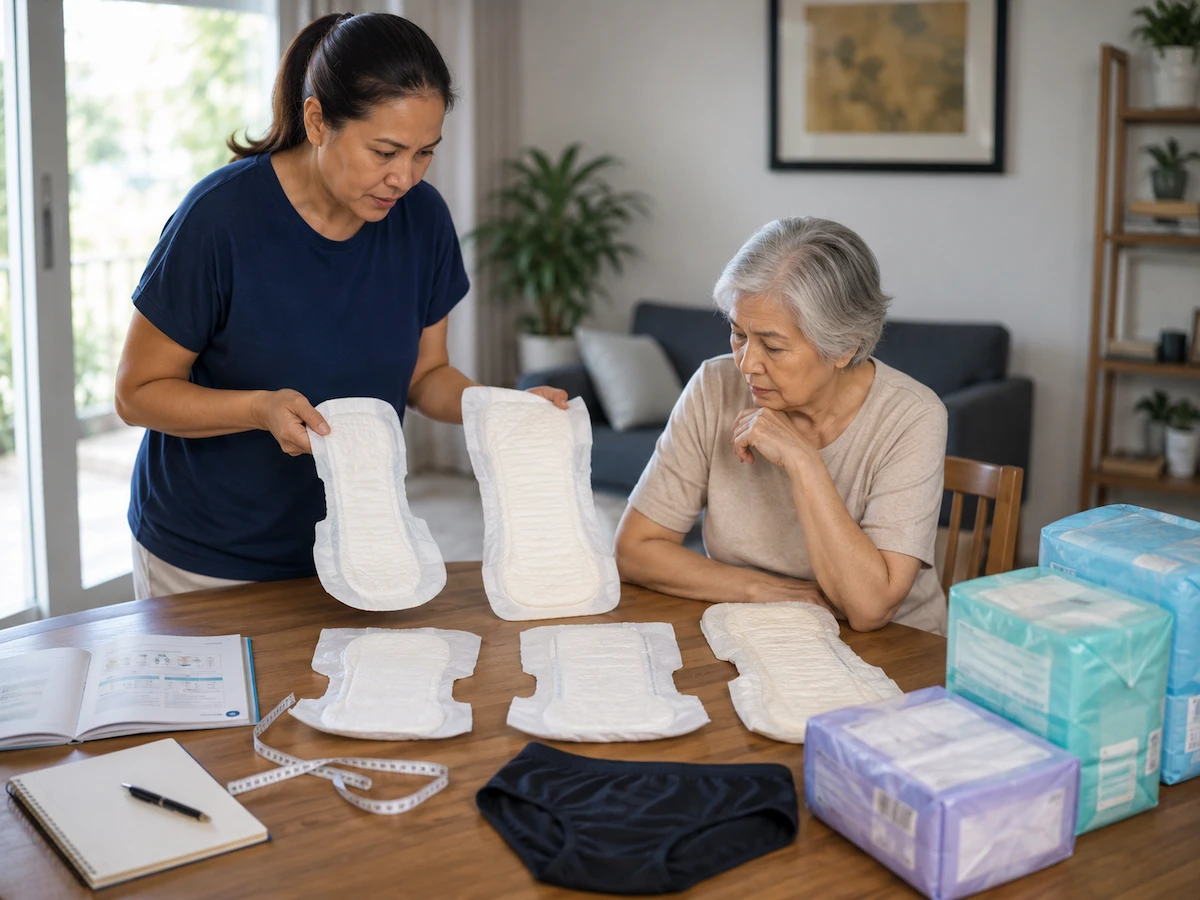
When looking for the most absorbent incontinence pads for elderly users, you should focus on absorbency level, leak guard design, correct sizing, and fit for the specific leakage type.
Urinary incontinence affects millions of older Australians, yet finding the right pads for daily life still feels overwhelming for many families. Although the market is full of options, each of them handles leakage differently. Some hold up through the night while others fall short by midday.
That’s exactly why the team at Oz Continence put this guide together to give you a clear starting point. In this article, you’ll learn:
- How absorbency ratings work and what they actually mean
- The difference between leakage types and which pads suit each one
- How to find the correct size and fit for your elderly loved one
- When to add bed pads and personal care products to the routine
Keep reading to find answers that make daily management a whole lot simpler.
Most Absorbent Incontinence Pads for Elderly People: What Actually Works

Not every pad marketed as “high absorbency” actually holds up through the night or through a full day of activity.
So how do you cut through the marketing and find which one is genuine? Well, you should check two things: the type of bladder condition your loved one has, and how absorbent pad construction actually works.
Let’s learn about these areas in detail:
Common Types of Incontinence in Older Adults
Older adults commonly experience several types of bladder control issues, and each one produces a different leakage pattern (each type behaves very differently under pressure).
These are the most common types to know:
- Stress incontinence: Leaks caused by physical movement, like coughing, sneezing, or lifting.
- Urge incontinence: A sudden, intense urge to urinate with very little warning time.
- Overflow incontinence: The bladder never fully empties, which causes constant small leaks throughout the day.
- Functional incontinence: Physical or cognitive barriers stop a person from reaching the toilet in time.
- Mixed incontinence: A combination of two or more of the above patterns.
- Bowel incontinence: Includes faecal incontinence, which involves involuntary loss of bowel control.
Carers who identify the right type early can match protection to actual daily needs more accurately. But if the symptoms are unclear, a doctor can help confirm the condition.
Why Absorbency Levels Differ Across Incontinence Products
Absorbency levels across incontinence products vary based on three main things:
- Core thickness
- The amount of SAP (super-absorbent polymer) used in the pad
- How many layers does the construction include
In practice, manufacturers build light, moderate, and heavy-absorbency products for different fluid volumes.
A light absorbent pad suits minor urine leakage, while heavy-duty protection handles significantly larger output. Therefore, choosing the wrong level can cause leaks, skin irritation, and clothing that needs changing frequently.
Reusable options also carry fluid capacity ratings, so disposable and washable products are both worth comparing before settling on one.
Key Factors to Check Before Buying Incontinence Pads

The best part about knowing these factors upfront is that you stop wasting money on pads that don’t last long enough. And honestly, a product that bunches or shifts mid-day causes more stress than the leakage itself.
So, before picking any incontinence products, run through these factors first:
- Absorbency Rating: This tells you how much fluid a pad can hold. As we’ve already mentioned, light protection suits minor bladder weakness, while heavy leakage needs a product for larger fluid volumes. So you should always match the rating to your loved one’s actual output rather than just what looks sufficient on the packaging.
- Waterproof Backing: A good absorbent product needs a waterproof backing layer to stop fluid from reaching clothing or bedding. Without it, even a high-absorbency pad will let moisture through under pressure.
- Leg Bands and Elastic Waistbands: These features create a secure seal around the body. For this reason, manufacturers use fitted leg bands to reduce side leaks and elastic waistbands to keep the pad in place during movement and sleep.
- Skin-Friendly Materials: Disposable pads sit against the skin for hours. As a result, rough or synthetic materials irritate quickly, so look for products with a soft, breathable top layer to support wellbeing through the day.
- Size and Discreet Fit: A pad worn in regular underwear needs to sit flat and stay discreet. At the same time, the right product should feel secure without being bulky or visible under clothing.
Cost is another practical consideration, especially for families managing ongoing personal care needs. In this case, reusable options can reduce long-term spending without sacrificing safety, so you can consider them when comparing them alongside disposable products.
Ultimately, the right pad should provide dependable protection while helping your loved one stay comfortable and confident throughout the day.
Functional Incontinence vs. Overflow Incontinence: Choosing the Right Pad
Most people don’t realise these two conditions require completely different pad designs to manage leakage properly. For instance, functional incontinence calls for quick-release tabs and full coverage, while overflow leakage needs a slimmer pad worn close to the body all day.
A side-by-side comparison of the two conditions compares:
| Functional Incontinence |
Overflow Incontinence |
|
|
What causes it |
Physical or cognitive barriers to reaching the toilet |
The bladder never fully empties due to blockage or weak muscles |
|
Leakage pattern |
Sudden, larger accidents when mobility is limited |
Constant small urine leaks throughout the day |
|
Who it affects |
Often elderly with poor dexterity or dementia |
More common in men with prostate issues |
|
Pad type needed |
Higher absorbency, full coverage, and easy to remove | Moderate absorbency, worn close to the body all day |
In general, functional incontinence calls for pads with strong fluid capacity and a simple removal design. And since poor dexterity makes complicated fastenings a problem, products with wide tabs and stretch waistbands work far better for daily use.
Overflow leakage, however, is a different beast entirely. In this case, urine leaks out in small amounts continuously, and the bladder never gets a chance to fully empty between changes.
To handle this, try using a disposable absorbent pad close to the body. You’ll also need to change the pad regularly to protect the skin from prolonged contact with moisture.
Overall, both conditions are manageable with the right incontinence products. But using a pad built for one condition to handle the other almost always results in leaks, discomfort, and unnecessary bowel or bladder accidents.
Disposable Pads or Incontinence Underwear: Which One Suits Your Elderly Loved One?
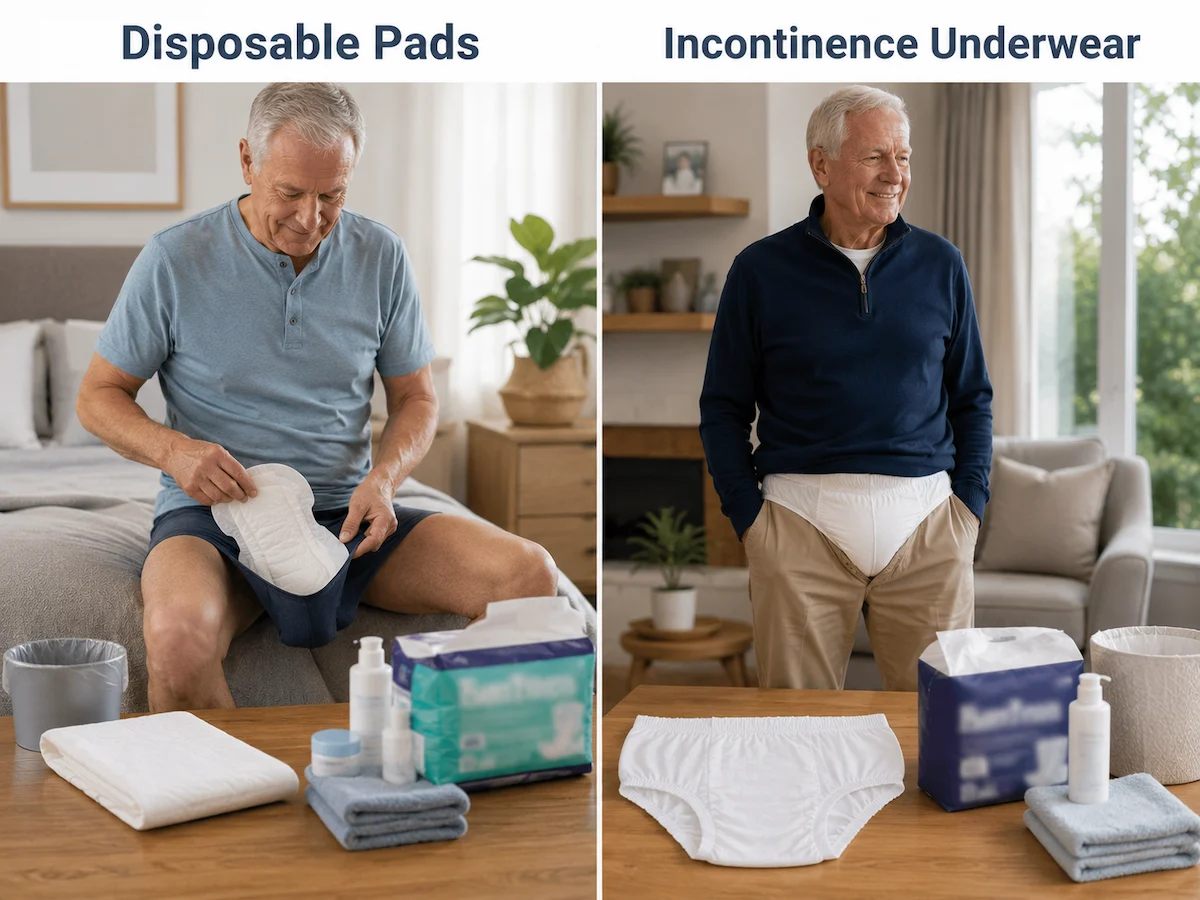
People with good mobility can wear disposable pads inside regular underwear to handle light to moderate leakage. These pads stay discreet, sit flat against the body, and allow users to change them independently throughout the day (mobility is significant here).
By contrast, leakage underwear focuses more on functionality. Pull-ups and pull-up pants offer full coverage and work more like regular undergarments, which many elderly users find easier to manage. And for people with heavier leakage, pairing a pad with absorbent pants provides greater protection than using a standard disposable pad alone.
Moreover, reusable incontinence underwear provides a washable, long-term option for people who prefer to reuse their products. For heavier leakage, go for products with a higher absorbency level than standard disposable pads can provide.
This way, leakage severity, mobility level, and personal comfort all point toward the fact that the format helps your loved one feel confident in daily life.
Mixed Incontinence and Faecal Incontinence: Getting the Correct Size and Fit
Fluid capacity alone doesn’t guarantee reliable protection. Size and fit are just as important, especially for mixed and faecal leakage, where even small gaps can lead to leaks. In fact, a properly fitted pad stays in place, provides better coverage, and performs as intended.
The following two areas need your attention before buying:
Find the Correct Size for Maximum Protection
Most families we’ve spoken to had no idea about sizing charts until their first failed purchase. Getting the correct size starts with two measurements.
|
Measurement |
How to Take It |
How It Helps |
|
Hip circumference |
Measure around the fullest part of the hips |
Determines pad width and side coverage |
|
Waist circumference |
Measure around the natural waistline |
Affects how securely the pad sits in place |
|
Body weight |
Check against the brand weight range | Many brands use weight alongside measurements |
Typically, Australian women and Australian men often fall into different size ranges, so never assume one size fits both. A well-fitted pad usually lies flat, stays centred, and sits securely close to the body. And gaps around leg openings are the most common entry point for leakage, so the fit needs to be snug without causing discomfort.
Honestly, heavy incontinence leaves very little room for sizing errors. Whereas the right product gives full security throughout movement, sleep, and daily activity.
Quick Tip: If you’re choosing a pad for a mixed bladder condition, look for a shaped design with a wider back panel to improve coverage.
Faecal Incontinence Pads: What Makes Them Different
Through our experience supporting elderly care decisions, faecal containment failures almost always trace back to using the wrong pad category. Why? Well, standard bladder pads and faecal leakage pads are not interchangeable.
Faecal incontinence pads use reinforced containment zones and stronger odour-neutralising technology than other products. They sit thicker in the rear section and include higher back guards to contain bowel leakage fully.
As bowel incontinence produces a very different type of output from bladder leakage, absorbency alone doesn’t protect against accidents. As a result, using a regular disposable pad for bowel continence issues almost always results in containment failure.
Fortunately, the range of faecal-specific products available in Australia has grown considerably in the past few years. But if you are confused, a doctor can help narrow down the right product for your loved one’s specific condition.

Bed Pads and Personal Care: Protecting More Than Just Clothing
Night-time leakage often requires more coverage than a wearable pad alone can provide. In this case, bed pads add an extra layer of defence by helping keep mattresses, bedding, and furniture dry.
These two areas cover the things you need:
When to Add Bed Pads to Your Daily Routine
Overnight use usually places different demands on incontinence products. So, longer periods between pad changes and extended time in one position can increase the chance of leakage. To address this, bed pads provide an extra layer of coverage.
Bed pads come in three main forms, and each one suits a different situation:
|
Type |
Best For |
Key Benefit |
|
Disposable bed pads |
Convenience, travel, hospital stays |
Quick to change, no laundry needed |
|
Reusable bed pads |
Long-term home use |
Washable, reduces ongoing costs |
|
Mattress protectors |
Full mattress coverage |
Waterproof backing, added nighttime security |
Simply put, adding bed pads to the routine works best when overnight leakage regularly soaks through wearable protection. Specifically, high-volume leakage often requires both wearable protection and a bed pad to provide reliable overnight safety and greater security.
Personal Care Tips That Work Alongside Incontinence Pads
Managing incontinence needs a lot of guesswork beyond choosing the right pads. And that’s mostly due to skin health. Yet this is the area most families overlook until a rash or sore appears (barrier cream is cheap and genuinely worth it).
Your regular doctor can recommend the right products for your loved one’s skin type. In the meantime, these personal care steps improve your personal care day to day:
- Change pads promptly to avoid prolonged moisture contact on the skin
- Cleanse the area gently with a pH-balanced product after each change
- Apply a barrier cream after cleansing to protect the skin from the next pad
- Track output patterns at each change to spot any shifts in bowel or bladder function
- Keep a consistent change schedule to support dignity and reduce odour
This way, good personal care alongside the right products makes daily lifestyle management far less stressful. It also helps carers notice changes in leakage patterns, skin condition, or pad usage that may need medical advice.

Ready to Find the Right Protection for Your Loved One?
Here’s a quick recap before you go:
- Match absorbency to your loved one’s actual leakage volume rather than just the packaging claim
- Always check sizing charts before buying, as gaps around leg openings cause most accidents
- Add bed pads for overnight security when wearable products aren’t enough alone
- Pair good skincare habits with every pad change to protect skin and support dignity
We confess that finding the right incontinence products takes a little research. But it makes an enormous difference to your loved one’s comfort, confidence, and lifestyle.
The Oz Continence website has a full range of absorbent protection options, helpful guides, and practical advice to assist you in making the best choice. Head over and explore what’s available for your loved one’s specific needs.
FAQs About Incontinence Pads for Elderly Care
These are the questions families ask most when they first start managing incontinence care for an elderly loved one. Let’s wrap up with clear, direct answers.
1. Can Disposable Pads Cause Skin Irritation in Elderly Users?
Yes, they can, but the material quality creates a difference here. For example, cheaper disposable pads often use rougher synthetic layers that trap moisture against the skin for too long.
That’s why you should look for products with a soft, breathable top layer that wicks urine away from the surface quickly. In most cases, changing pads regularly reduces irritation risk considerably, regardless of the product type.
2. How Often Should Incontinence Pads Be Changed?
Most absorbent incontinence pads for elderly users need changing every 3 to 4 hours during the day, or sooner after a bowel accident. So leaving a soiled pad on too long increases discomfort and skin breakdown risk.
For overnight use, a high-absorbency product can last through the night, but check the pad first thing in the morning without fail.
3. Are Bed Pads Reusable or Disposable?
Both options exist and suit different situations. For instance, reusable bed pads wash and dry easily, which makes them a cost-effective choice for long-term use. By contrast, disposable varieties suit travel, hospital stays, or situations where laundry isn’t practical.
Either way, look for a waterproof backing layer and check that the absorbency rating matches your loved one’s overnight output.
4. Do Most Absorbent Incontinence Pads Work for Overnight Use?
Not all of them. Standard daytime pads aren’t built for 6 to 8 hours of continuous use. Because of this, choose products specifically rated for heavy leakage and nighttime use.
A pad and pant system works particularly well here to give full coverage and a secure fit through the night. But if the leakage persists, a doctor can help identify whether your loved one is using the right incontinence product.