
Heavy-duty continence products like overnight pads and adult diapers can last anywhere from 8 to 12 hours. That means the longest-lasting option isn’t always the best fit for everyone.
What most people really want is incontinence protection that feels comfortable all day. You probably also want something that prevents leaks, protects your skin, and doesn’t feel bulky under your clothes.
So how do you find that balance? In this post, we’ll walk you through:
- The different types of incontinence products
- What affects how long they last
- How to choose the right one for your lifestyle
Let’s start with why some products outlast others, even when they look almost identical.
Which Incontinence Protection Lasts Longest? Comparing Continence Products by Type
As we mentioned, adult diapers and heavy-duty pull-ups generally last the longest among all incontinence products. Here’s a look at how these products work, how they stack up, and what really affects wear time in everyday life.
How Absorbency Levels Work in Incontinence Pads and Diapers
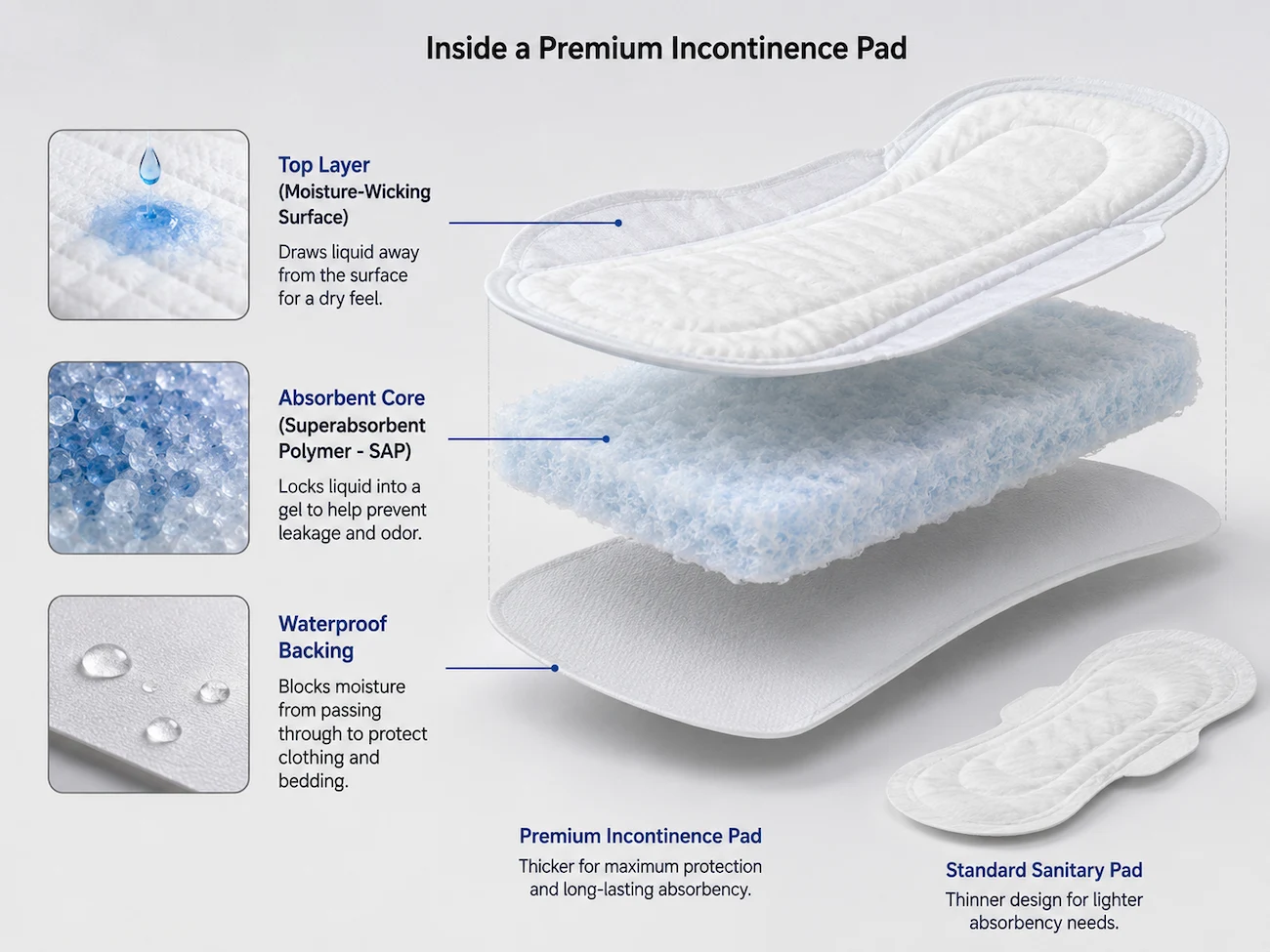
Every absorbent incontinence product handles urine in three stages.
The top layer pulls moisture away from your skin first. Then the absorbent padding underneath locks that liquid into a gel using superabsorbent polymers, also called SAPs. A waterproof backing at the bottom stops anything from soaking through to your clothes.
Most continence pads also control odour by trapping it inside the same gel layer. Some even use activated carbon (the same material found in water filters) to reduce bacteria and smell. Even so, a pad can still leak before it reaches its full absorbency due to sudden heavy flow, body movement, or a poor fit.
That’s why you shouldn’t compare absorbency labels directly. In fact, manufacturers measure absorbency differently across brands. According to the National Association for Continence (NAFC), there’s no official standard for describing how much protection a product provides. So labels like “maximum” or droplet icons may look similar but don’t always offer the same level of protection.
That also means sanitary pads and incontinence pads aren’t interchangeable. Incontinence pads use SAPs that can absorb up to 20 times their weight in liquid. On the other hand, sanitary pads aren’t designed for urine, and using them for bladder leaks can cause skin irritation and inadequate protection.
Incontinence Products Compared: Wear Time, Absorbency, and Fit
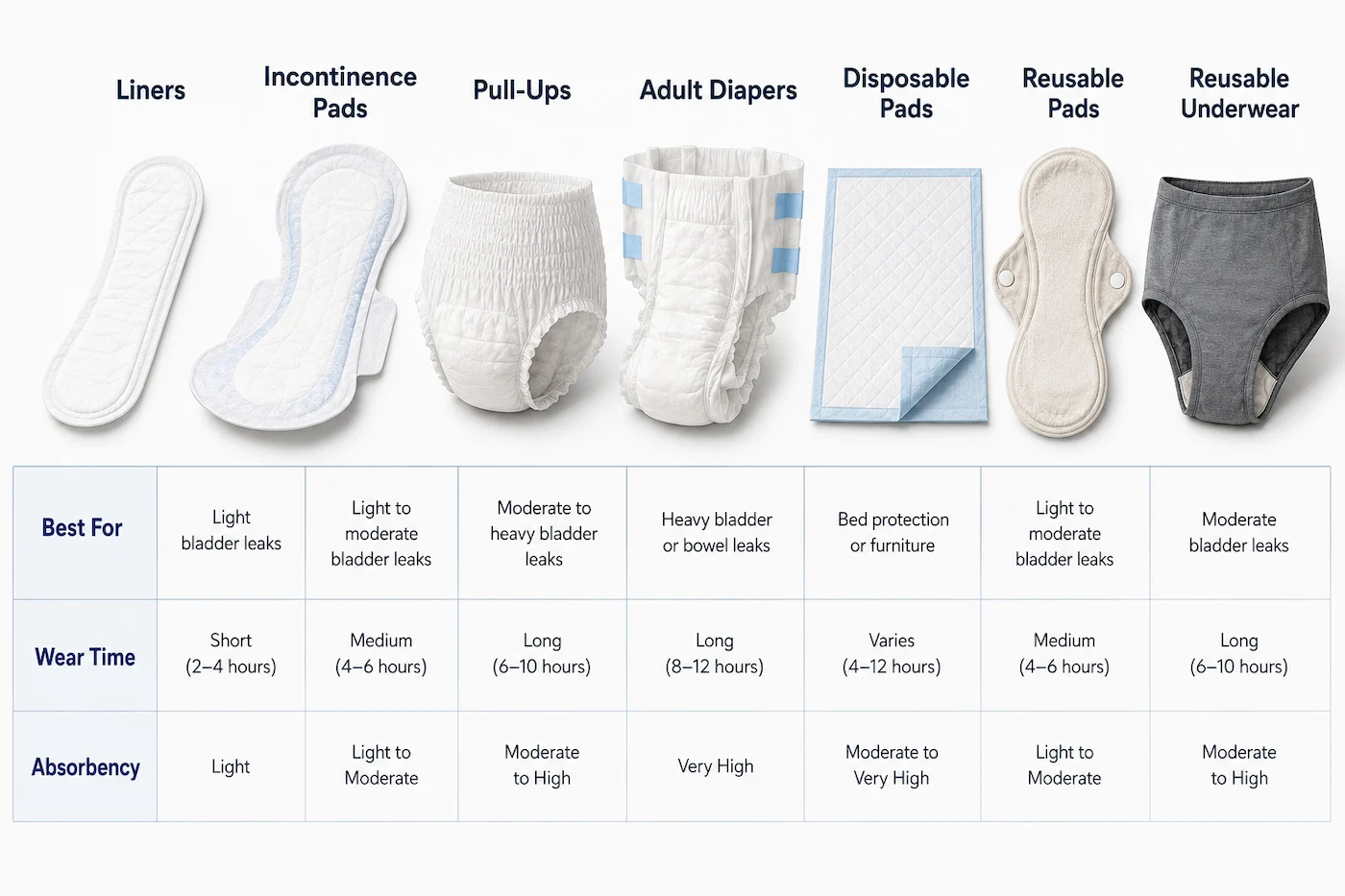
Not every continence product suits the same situation. Some are built for light bladder leaks, while others handle heavy incontinence through the night.
This is a side-by-side look at how the main types compare.
|
Product Type |
Best For | Typical Wear Time | Absorbency | Pros |
Cons |
|
Liners |
Light bladder leaks | Short | Low | Thin and discreet |
Limited protection |
|
Incontinence pads |
Light to moderate urinary incontinence | Moderate | Moderate | Discreet under clothes |
Can shift during activity |
|
Pull ups |
Moderate to heavy leakage | Long | High | Comfortable for active users |
Need removing to change |
|
Adult diapers |
Heavy incontinence, overnight | Longest | Very high | Maximum protection, adjustable waist fit with tabs |
Bulkier than other options |
|
Disposable pads |
Light to moderate leaks | Moderate | Moderate | Easy to replace |
Single use only |
|
Reusable pads |
Light leakage | Moderate | Moderate | Washable, eco-friendly |
Lower maximum capacity |
|
Reusable underwear |
Light to moderate | Moderate | Moderate | Comfortable, feels like normal underwear |
Longer drying time |
The right product depends on how much urine you lose, how often leaks happen, and how active your day tends to be. Your doctor can also help you match absorbency levels to your specific needs.
Factors That Affect How Long Urinary Incontinence Products Last
Two people can use the same pad and get very different results. Because, as we briefly mentioned before, wear time depends on a lot more than the absorbency rating printed on the pack.
Here’s a closer look at what affects how long your protection lasts.
Volume and Frequency of Urine Loss
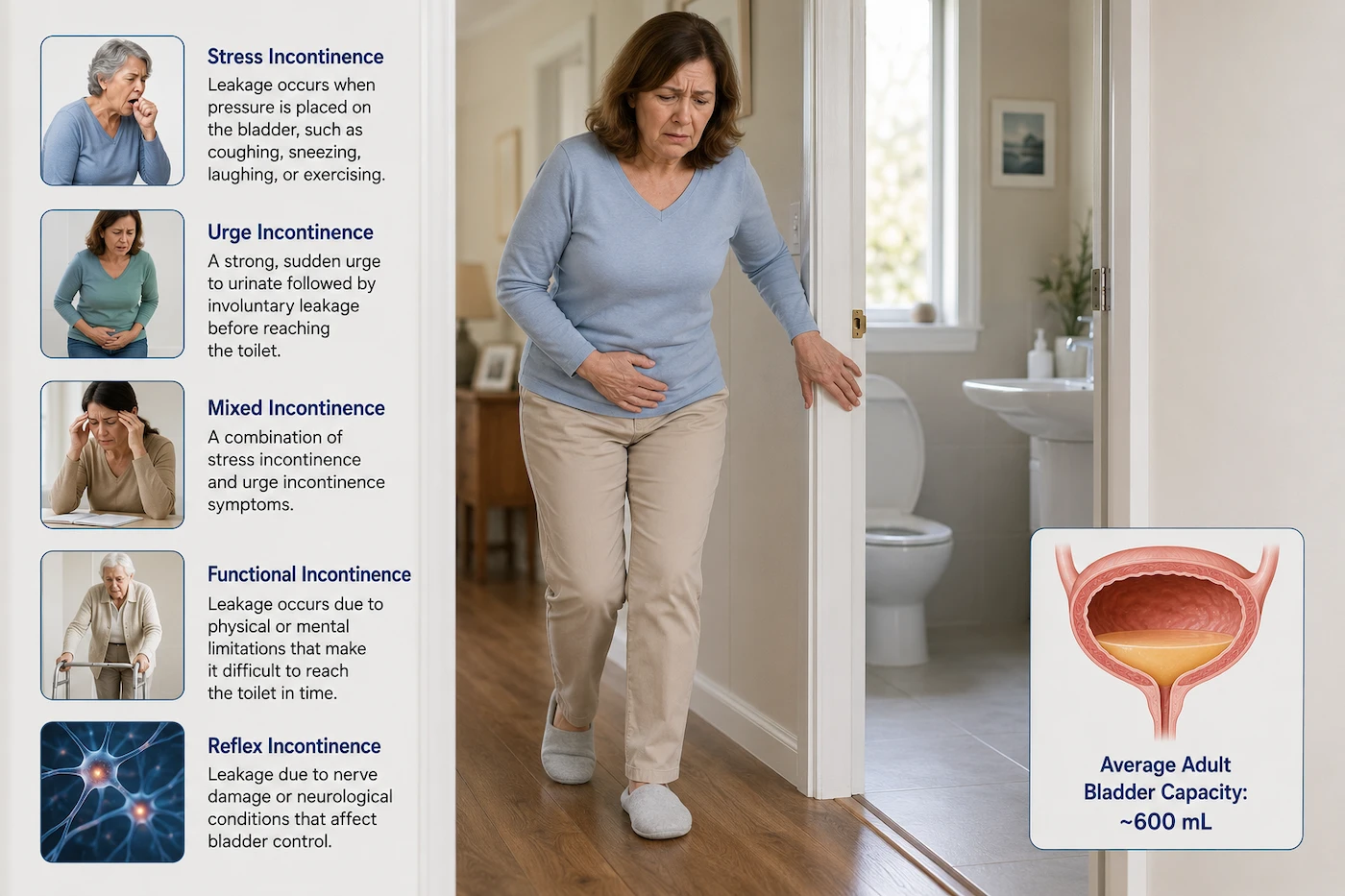
Someone with light bladder leaks will usually get more wear time from a pad than someone with urge incontinence. That’s because people with urge incontinence (or overactive bladders) often cause larger or more frequent leaks, along with more trips to the toilet. As a result, the pad fills up faster and needs changing sooner.
Stress incontinence works differently. It happens when activities like coughing, sneezing, or lifting put extra pressure on the bladder. Some people also experience mixed incontinence, which combines stress and urge incontinence symptoms.
There’s also functional incontinence, which is linked to physical or cognitive challenges that make reaching the toilet in time difficult, even though bladder function itself is normal. Reflex incontinence is less common and can result from neurological conditions (such as spinal cord injuries, multiple sclerosis, or stroke) that disrupt the signals between the brain and bladder.
The amount of urine your bladder releases in a single leak affects absorbency as well. The average adult bladder holds around 600 millilitres of urine. This means, if your bladder releases a near-full bladder’s worth of urine at once, even a high-capacity product may not last as long as the label suggests.
Bowel Incontinence
Bowel leakage breaks down absorbent materials much faster than urine alone since stool doesn’t absorb into the pad the same way urine does. If you deal with both bladder and bowel incontinence, you’ll usually need to change products immediately after a bowel leak (even if the product hasn’t reached its absorbency limit).
Body Shape and Sizing
When a product doesn’t fit properly, it can’t provide the protection it’s designed to offer. To be specific, many women find that incorrect sizing creates gaps around the legs. The same goes for men, especially with pull-ups and pants that sit too loosely around the waist.
Movement and Pressure
Everyday movements can make leaks more likely. Sitting, in particular, compresses the pad and can force moisture toward the edges. Walking and bending can also move the pad out of position, which leaves small gaps where urine can leak through.
Moisture and Temperature
Sweat is easy to overlook, but it competes with urine for the same absorbent space inside a pad. Hot and humid weather increases sweating, so the pad can fill up more quickly and may need changing sooner.
That’s why people in warmer climates benefit from more frequent changes during summer months. For example, a product that lasts about six hours in Melbourne may only last around four hours on a hot, humid day in Darwin.
Why Continence Pads and Pull-Ups Leak Before They’re Full
A pad can still feel dry on the outside and already be leaking underneath.
In many cases, the problem starts with the fit. If a pad doesn’t sit snugly against your body, urine can escape through gaps around the sides before the absorbent core has a chance to soak it up. Adhesive strips that shift inside regular underwear can make this even more likely.
A sudden heavy flow of urine can also cause leaks. When too much liquid reaches the pad at once, the top layer may not absorb it quickly enough. Instead, some of the urine can run off the surface before it reaches the absorbent core. Wearing supportive, close-fitting underwear keeps the pad in place and lowers this risk.
As we mentioned earlier, sitting down compresses the padding, too. That squeezes trapped moisture toward the edges. And if you’re using a product with the wrong absorbency level, this compression will cause leaks even faster.
If your current product isn’t providing enough protection, your doctor can help you find an absorbency level that’s a better fit for your body and lifestyle.
How to Choose the Right Incontinence Products for Longer Wear Time
Choosing the right incontinence products comes down to matching absorbency with your actual level of leakage. A product that’s too light won’t last long enough, and one that’s too heavy can feel bulky and uncomfortable. For both men and women, the goal is finding that comfortable middle ground.
So let’s look at some practical ways to get there.
Match Your Continence Products to Your Level of Leakage
For occasional urine leaks, liners or light incontinence pads are usually enough. They’re thin and discreet, which makes them easy to swap out during the day.
However, as leaks become more frequent, you’ll likely need a product with greater absorbency. Pull-ups or mid-range pads are often a good choice for moderate urinary incontinence since they provide more protection while still being comfortable enough for everyday activities.
When it comes to heavy urinary incontinence, adult diapers with the highest capacity will give you the longest wear time. They work especially well for large or frequent voids.
And if you’re managing bladder or bowel incontinence together, heavy-duty continence products with full front-to-back coverage are your best bet.
You also have the choice to extend the life of disposable incontinence products by using booster pads. These add an extra absorbent layer inside your existing pad or pull-up (a handy option if you need a bit more protection without switching to a bulkier product).
Pro tip: All these options can feel overwhelming at first, so start by thinking about how often you leak and how much urine you usually lose. Then adjust your product as your needs change.
Choosing Incontinence Protection for Different Lifestyles
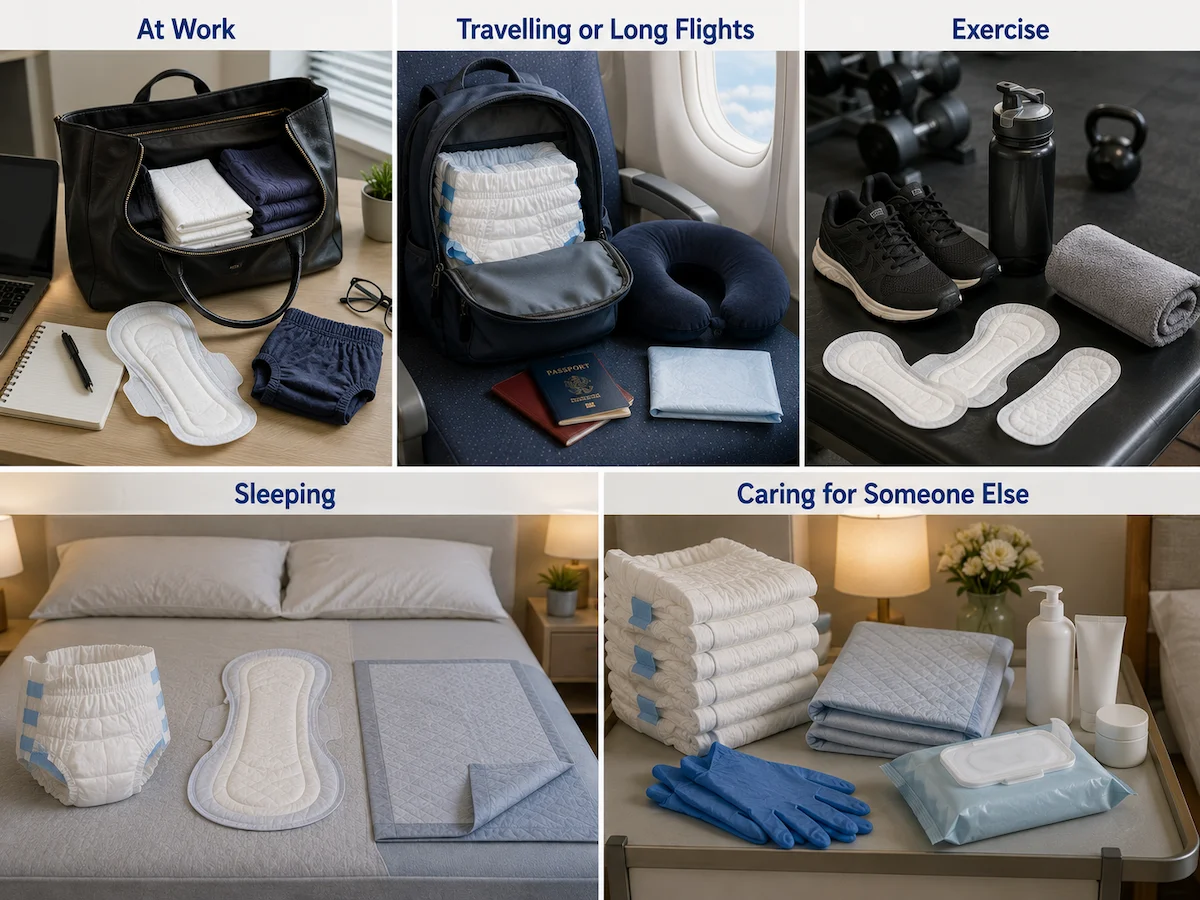
Your daily routine plays just as big a role as your leakage level when picking a product. After all, something that works perfectly at home might not suit a long flight or a busy shift at work. So it helps to think about what your day actually looks like:
- At Work: Disposable pads or pull-ups with moderate absorbency are easy to change in a toilet cubicle. Keep two or three spares in your bag to stay prepared for longer shifts.
- Travelling or Long Flights: Here, access to a toilet can be limited for hours at a time, so disposable underwear with higher absorbency reduces the risk of leaks. Many people also prefer pull-ups for travel because they’re easy to change in small spaces, such as aeroplane or train toilets.
- Exercise: Lighter pads or liners with adhesive strips work best during physical activity. They sit closer to the body, which means less shifting when you’re on the move.
- Sleeping: Your body position changes everything at night. Overnight adult diapers or heavy-duty pads with a longer absorbent core cover both front and back, so you’re protected no matter how you roll. They also absorb more urine than daytime products.
- Caring for Someone Else: Tab-style adult diapers make changes easier since the person doesn’t need to stand up. And placing reusable bed pads underneath adds a helpful extra layer of protection between changes (just make sure to replace them every six to 12 months).
As you can see, no single product suits every part of your day. Our team has found that many people do best with a lighter option during the day and then something heavier for the night.
Protecting Your Skin While Wearing Pads and Diapers Longer
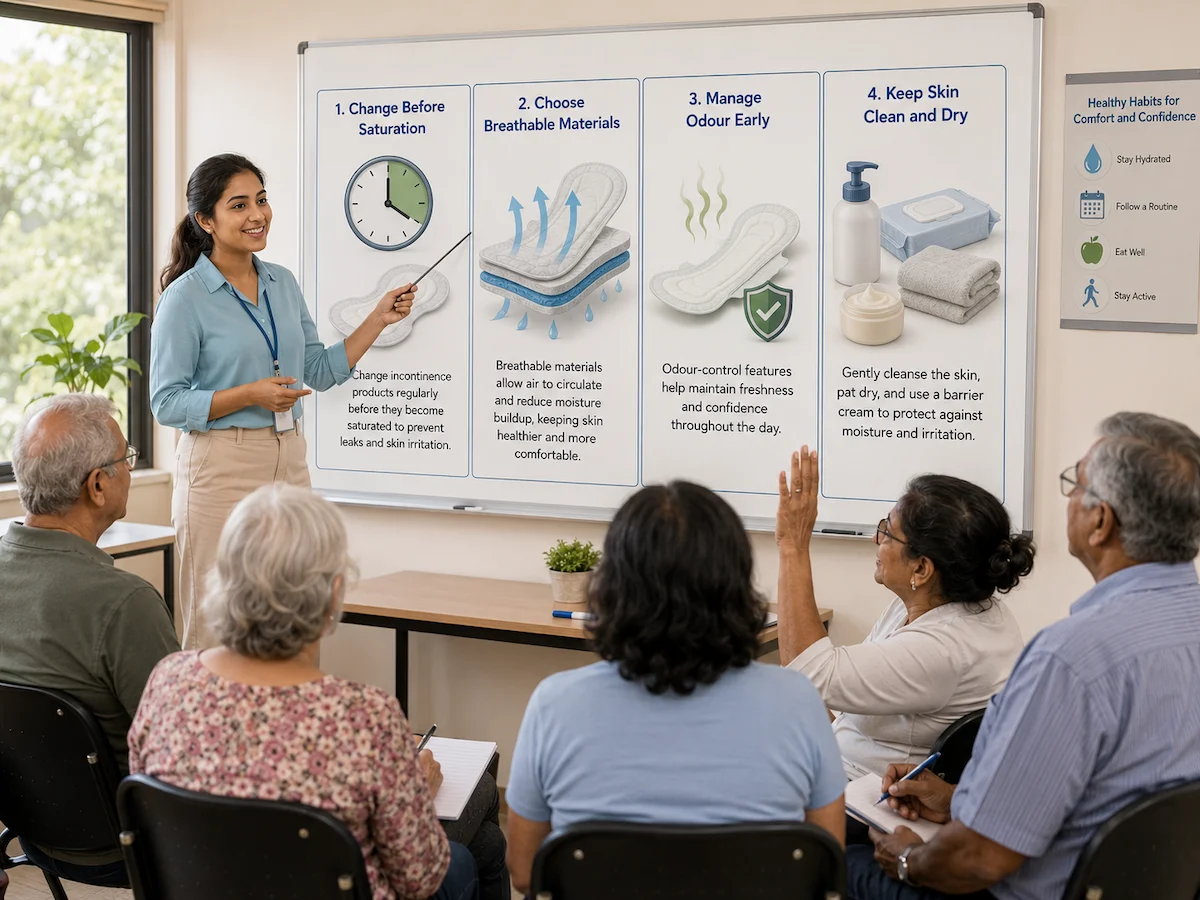
Longer wear times can increase the risk of skin irritation. That’s because moisture, friction, and contact with urine put extra stress on your skin. Fortunately, you can reduce this risk by following these few simple skin care habits.
Change Before Saturation
Don’t wait until a product feels full before you change it. Staying in a wet pad for too long raises the risk of skin irritation and a condition called incontinence-associated dermatitis (a painful rash caused by prolonged contact with urine or faeces). As a general rule, you need to change most products every 3-4 hours during the day. That applies even if they still have some capacity left.
Choose Breathable Materials
Products with breathable waterproof backing allow air to circulate while still preventing leaks. This reduces the moisture that gradually builds up against your skin throughout the day. As you wear a product for longer, trapped heat and dampness increase the risk of skin irritation.
Manage Odour Early
Odour develops when bacteria in urine break it down after it sits in a pad for several hours. Products with built-in odour control can slow this process down, but regular changes are still the best way to keep it under control. If you notice a strong smell before a product even feels wet, that’s a clear sign it needs changing right away.
Keep Skin Clean and Dry
Give your skin a gentle clean each time you change a pad or diaper. A mild, pH-balanced cleanser works better than regular soap for this purpose, as it cleans without stripping away the skin’s natural oils. After cleaning, pat the area dry (instead of rubbing) and apply a barrier cream if your skin feels tender. This simple routine will protect your skin and prevent longer-term skin breakdown.
Find the Right Incontinence Product for Longer-Lasting Protection
No single incontinence product lasts the longest for everyone. What works best for you really depends on your leakage severity, bladder or bowel symptoms, daily routine, comfort, and skin health.
To keep it simple, choose a product based on how much protection you need. Here’s a reminder of how each option suits a different level of leakage:
- Liners → Light leaks
- Incontinence pads → Mild to moderate leakage
- Pull-ups → More absorbency with comfort for staying active
- Adult diapers → Heavy leaks and the longest wear time
- Reusable products → A suitable option when they fit your routine and lifestyle
Whichever you choose, the best product is always the one that matches your actual needs. Even a high-capacity product may not work well if it shifts, feels uncomfortable, or irritates your skin.
For more practical tips on choosing and managing continence products day to day, explore the free resources available from Oz Continence.
Frequently Asked Questions About Long-Lasting Continence Products
These are some of the most common questions we hear from people choosing incontinence protection for everyday use. If you’re still unsure about what suits you best, these answers should help.
Can Reusable Pads Absorb as Much Urine as Disposable Pads?
Reusable pads and washable cloth diapers handle light to moderate leakage well. They use layered fabric to absorb liquid, so they work fine for smaller leaks. Disposable pads, though, lock away more urine per use thanks to their polymer gel core. So if your leakage is on the heavier side, disposable products will generally last longer between changes.
Are Sanitary Pads Suitable for Urinary Incontinence?
They’re really not. Sanitary pads are built to absorb menstrual blood, which is thicker and flows much more slowly than pee. Urinary incontinence involves a faster, thinner liquid that sanitary pads can’t wick away in time. So the result will be bladder leaks, skin irritation, and lingering odour. Incontinence pads are designed specifically for urine, and they’ll keep your skin drier for much longer.
How Much Urine Can Absorbent Incontinence Products Hold?
That depends on the type and size you choose. Most products come in a range of absorbency levels to suit different needs. For instance, light continence pads hold around 200 to 450 mL of liquid. And heavier options with thicker absorbent padding can hold anywhere from 600 mL to over 1,000 mL. You’ll also find various sizes available, including extra large sizes for a more comfortable fit on larger body types.
Are Pull-Ups or Adult Diapers Better for Heavy Incontinence?
It really comes down to your level of independence and how much protection you need. Pull-ups suit men and women who can still use the toilet and prefer something easy to slide on and off. Adult diapers with tabs, on the other hand, offer higher absorbency. They also let caregivers change the product without removing pants or shoes.
For men with light urine leaks caused by prostate issues, a drip collector or a collection bag paired with a urinary sheath may be a better fit. A urinary sheath sits over the penis and allows urine to drain continuously into the bag, so there is no absorbent product to change. Some people also wear plastic pants over disposable underwear to prevent leaks.
Should I Speak With a Doctor if I Need Continence Products Every Day?
Absolutely. If you’re relying on continence products every single day, it’s worth having a conversation with your doctor. Many women and men live with urinary incontinence without realising that treatments can reduce how often they urinate or leak.
Continence Health Australia, the national association for bladder and bowel health, suggests speaking with a GP or nurse continence specialist as a good first step. Options like pelvic floor exercises, medication, and bladder training can all prevent leaks over time. Absorbent products are great for managing symptoms day to day, but they shouldn’t be your only plan if things are getting worse.
