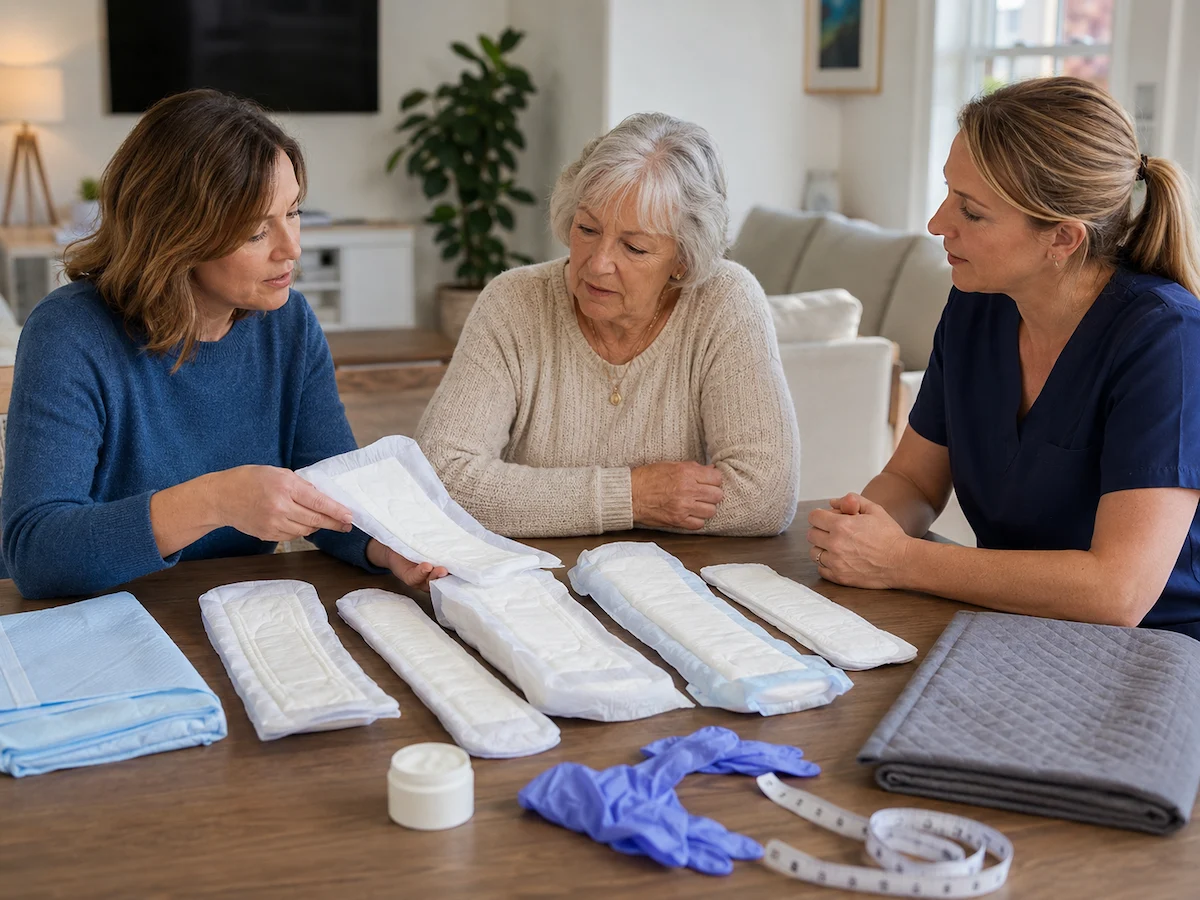
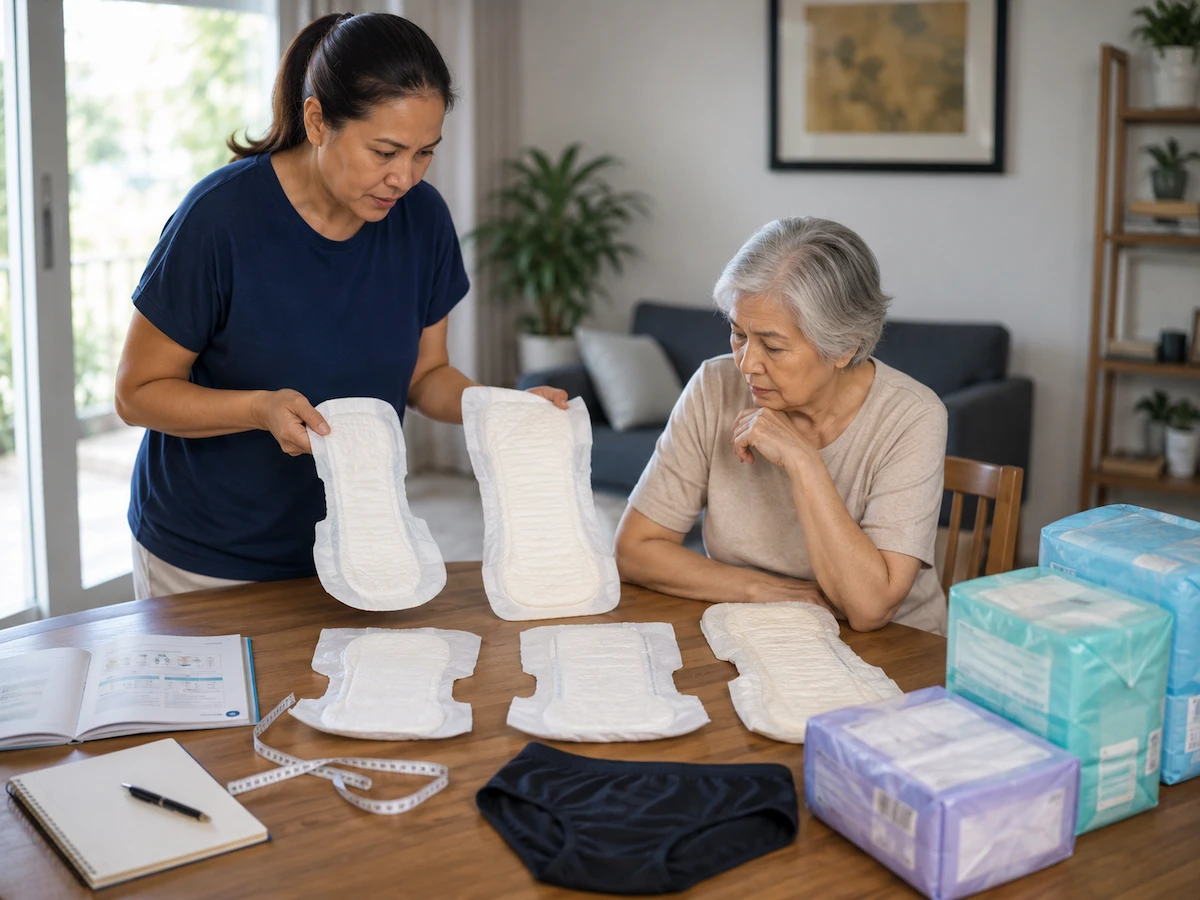
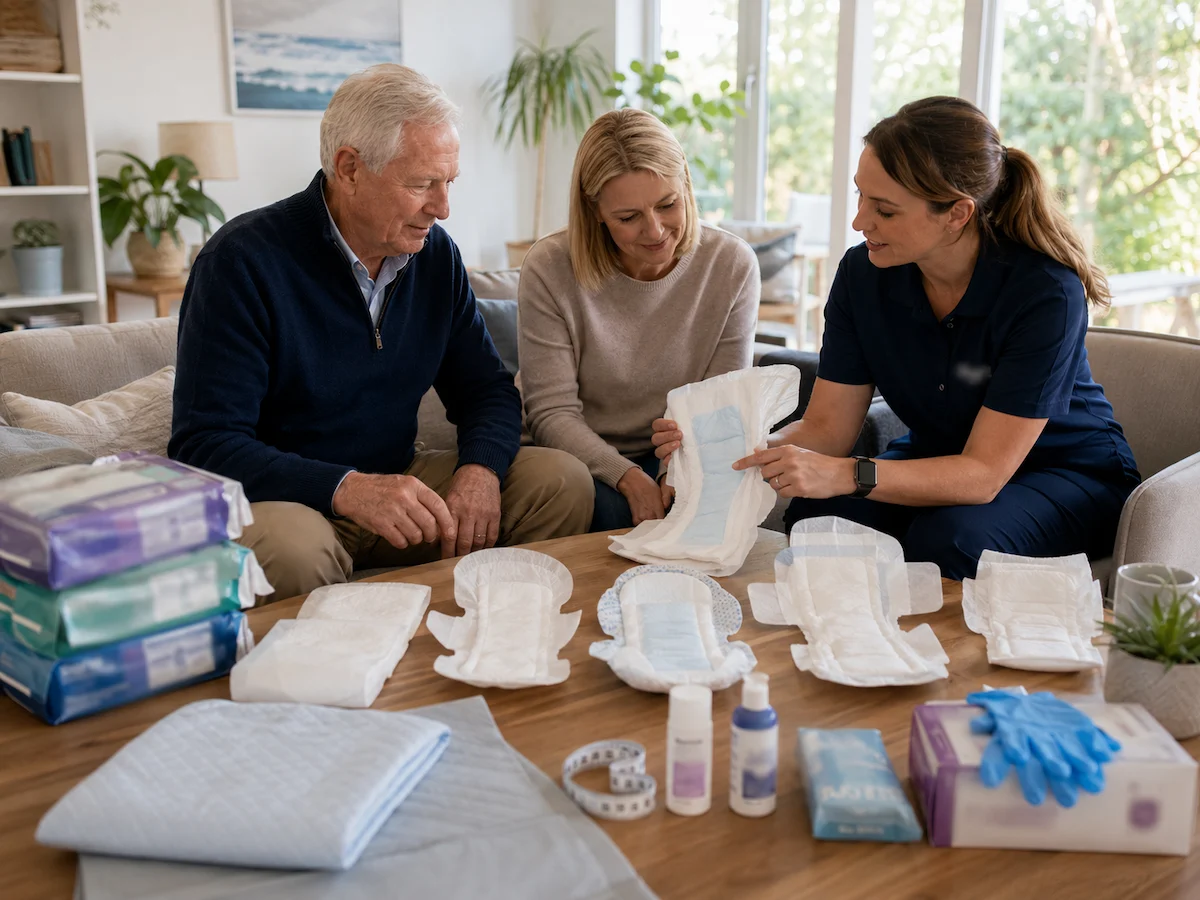
You can reduce odour with adult incontinence pads by choosing the right absorbency level, changing pads regularly, and following some easy hygiene habits. These three things work together, and skipping any one of them is usually the reason why odour becomes a daily problem.
Honestly, bladder leakage can feel frustrating, especially when you’re also worried about odour. That’s why at Oz Continence, we help people manage incontinence with practical advice and products that make everyday life more comfortable.
In this article, you’ll learn how to:
- choose the right incontinence pad
- build a simple hygiene routine
- keep odour under control throughout the day and night
Read on to learn how small changes can make odour management easier.
Odour Control in Adult Incontinence Pads: How It Actually Works
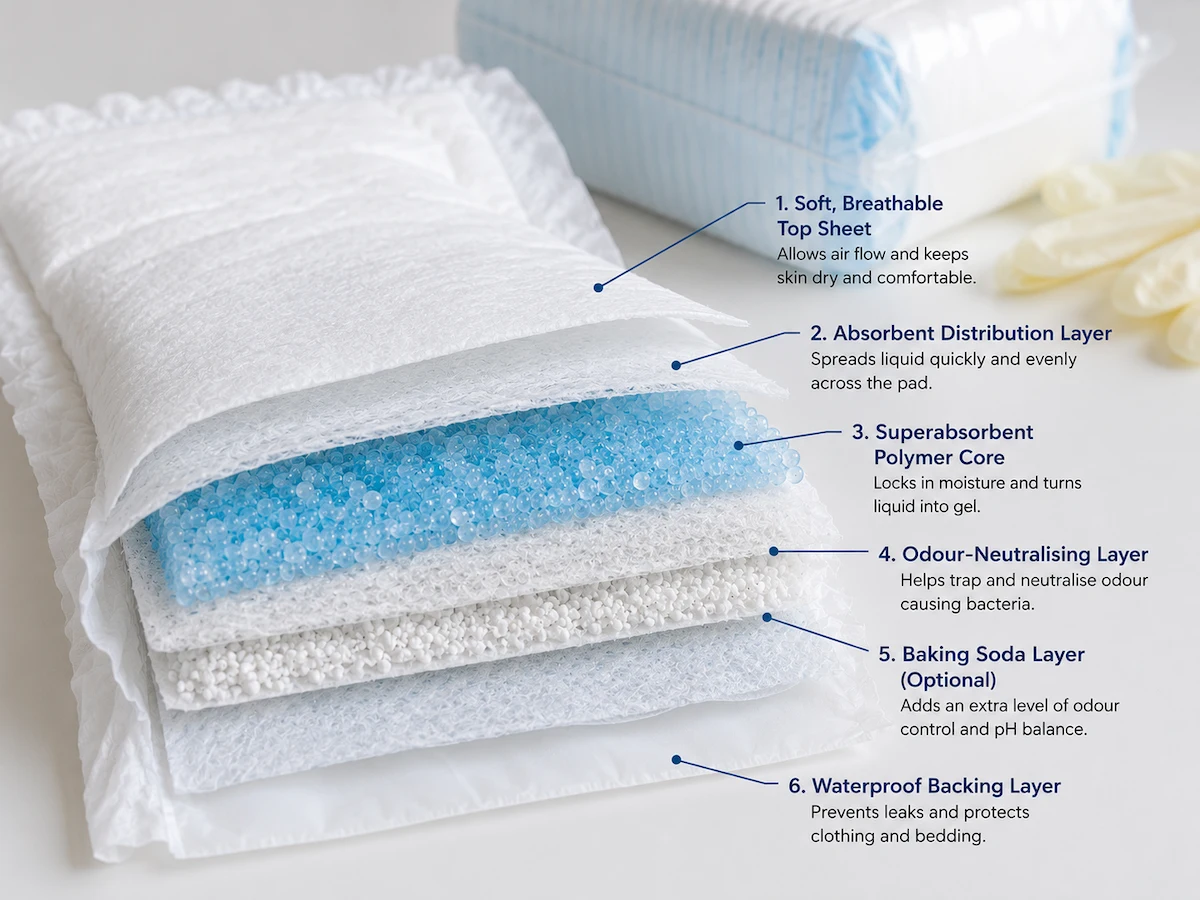
Odour generally forms when urine breaks down, and bacteria multiply in your skin. But modern liners have specific layers to stop that process early.
Before choosing any pad for odour management, you should know what causes smell and how the pad’s internal design fights it.
What Makes Odour Happen in the First Place
Fresh urine usually has very little odour when it leaves your body. The smell develops as urine breaks down and bacteria release ammonia (a sharp-smelling compound). Warmth and moisture trapped inside the pad further speed that process up noticeably.
In practice, a wet pad against warm skin creates ideal conditions for bacteria to multiply. And the longer the moisture remains, the stronger the odour becomes (and yes, even a pad that doesn’t feel full can still be producing odour).
Delaying pad changes lets bacteria multiply well past the point any product can control. That’s why the smell isn’t only about the pad itself. Changing it at the right time is just as important.
How Modern Incontinence Pads Fight Odour
Modern incontinence pads absorb urine, reduce odour, and keep moisture away from your skin.
At their core, most pads contain superabsorbent polymers. These are tiny gel-forming particles that draw moisture away from the skin and lock it inside the pad’s core. That way, with less moisture against the skin, bacteria have fewer opportunities to multiply and produce odour.
Beyond absorption, many liners include an odour-neutralising layer that captures ammonia before it escapes into the air. This helps reduce unpleasant smells even after the pad has absorbed urine.
Some products also contain baking soda in the absorbent core to neutralise odour rather than simply masking it.
Choosing the Right Incontinence Pad for Odour Control
Not all incontinence pads handle odour equally well. While absorbency helps manage moisture levels, the materials and design also affect how effectively a pad reduces unwanted smells.
Here are four things you should check ahead of settling on a pad:
- Absorbency Rating Matches Your Needs: Under-absorbent pads saturate quickly and start producing smell fast. So if you’re dealing with moderate to high incontinence, you’ll need a pad to handle that volume. In this case, you can try adult diapers and pull-ups for heavier leakage, as they can manage larger amounts without breaking down.
- Odour-Lock Technology: Look for products with odour-lock or odour-neutralising layers. These highly absorbent products pull urine away from your skin and contain the scent before it escapes.
- The Fit Actually Contains Leakage: A poorly fitted disposable pad leaves gaps around the edges by allowing urine to bypass the absorbent core. And once that happens, odour can escape before the pad has a chance to contain it.
- The Material Lets Your Skin Breathe: Stiff or non-breathable materials trap moisture and heat the bacteria love. By contrast, a pad with a soft, breathable top layer lets you feel fresh and reduces skin irritation for longer periods.
The right pad combines absorbency, fit, breathable materials, and odour-control features to manage leakage effectively. However, even the best product needs regular changing to keep odour under control.
Pad choice sets the foundation for neutralising odour. But even the best pad won’t help much if it isn’t changed often enough.
How Often Should You Change Pads to Stay Odour Free?
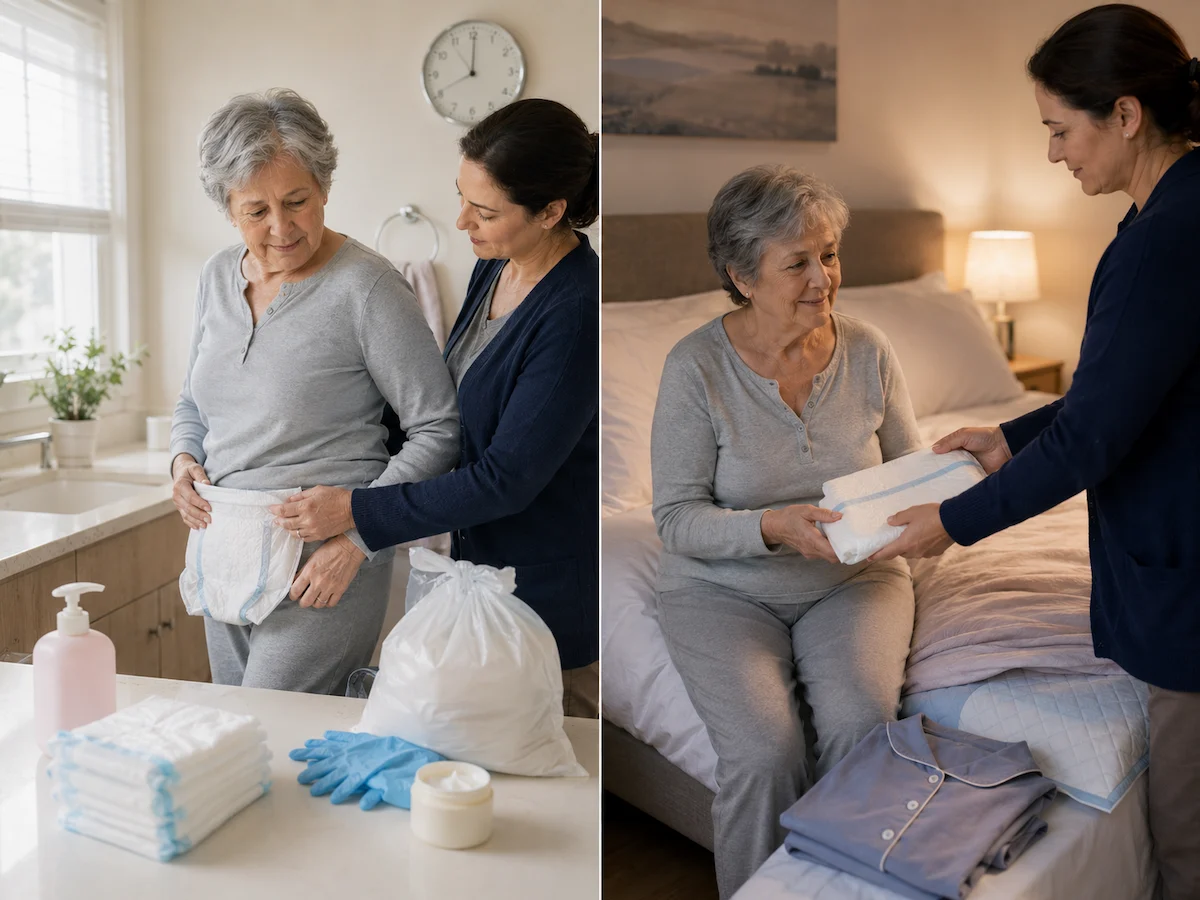
Changing your pad every three to four hours is a reliable way to stay odour-free throughout the day. It sounds simple, but many people stretch that window. (especially when a pad doesn’t feel full yet).
Here’s the thing: a pad doesn’t need to reach full capacity to start producing odour. As urine remains in the absorbent core, the pad’s ability to control moisture and odour gradually declines. Therefore, waiting too long allows bacteria to multiply, increases odour intensity, and raises the chance of skin irritation.
Beyond controlling unwanted smell, regularly changing your pad protects your skin because urine can irritate it if the body stays in contact for too long. In some cases, it even reduces the chance of urine soaking through and leaving difficult-to-remove stains on clothing.
That said, night-time incontinence requires a slightly different approach because the pad needs to manage leakage for several hours without a change. To manage this, you must choose a higher-absorbency pad designed for overnight use, then put on a fresh one before bed. This helps contain odour, reduce leaks, and provide reliable protection until morning.
Personal Hygiene Habits That Work Alongside Your Incontinence Products
Daily hygiene habits keep odour under control, and most take only a few minutes to include in your routine. At the same time, your incontinence products handle moisture, while good hygiene helps reduce bacteria and urine residue.
Two areas have the largest impact on your personal hygiene:
Skin Care Routines That Reduce Odour and Irritation
After each change, cleaning your skin properly is just as important as putting on a fresh pad. In our experience, people who switch to a pH-balanced gentle cleanser notice a real drop in both skin irritation and odour within the first week.
Follow these four skin care steps with every pad replacement:
|
Skin Care Step |
Why It Helps |
|
Use a pH-balanced gentle cleanser |
Removes bacteria and urine residue without stripping your skin’s natural barrier |
|
Use fragrance-free disposable wipes when out |
Gentle on sensitive skin and convenient for hygiene on the go |
|
Apply a moisture barrier cream after cleansing |
Sits between your skin and the pad, reducing direct urine contact and irritation risk |
|
Avoid scented sprays or powders near the pad area |
Layers scent over odour without fixing it, and often worsens skin irritation |
As you can see, heavily scented products near the pad area don’t solve the problem. You need a consistent skin care routine to control odour, which provides more comfort than any spray or powder ever will.
Good Hygiene Practices to Build Into Your Day
Most hygiene practices take less than a minute, and consistent routines help prevent odour between pad changes.
Start with the four habits and odour becomes far easier to manage:
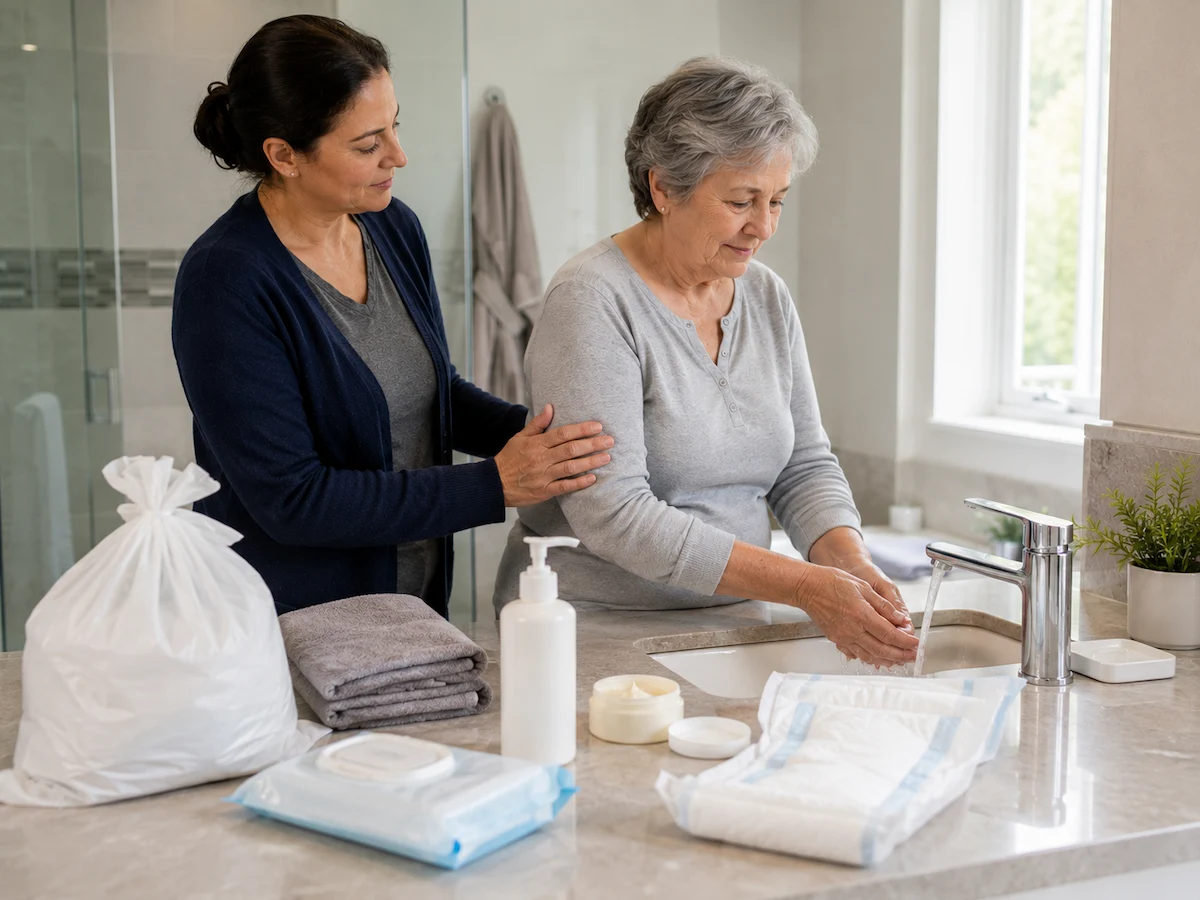
- Wash Hands at Every Change: Before and after every pad change, wash your hands to prevent bacteria from spreading to your skin or clothes.
- Use Sealed Disposal Every Time: You must wrap and seal used pads straight away to stop smell from escaping into the surrounding air. Leaving them exposed even briefly lets odour build up quickly.
- A Small Kit Goes a Long Way: Tucking a fresh pad, disposable wipes, and a gentle cleanser into your bag means good hygiene stays within reach. That way, you can swap your pad whenever you need, even when you’re away from home.
- Soiled Clothing Needs Prompt Attention: Urine residue on fabric quickly produces a strong smell, and the longer it sits, the harder it is to remove. In this case, changing out of soiled clothing promptly stops odour from spreading beyond the pad area.
These habits work alongside your incontinence products rather than replacing them. And consistent good hygiene is what keeps odour genuinely under control day to day.
Stay Hydrated: Why Drinking Water Helps With Odour
Drinking more water directly reduces urine concentration, which is one of the leading causes of intense odour in people managing incontinence. Usually, cutting back on fluids actually makes things worse rather than better.
A quick look at how hydration affects urine odour:
| Hydration Level | Urine Colour |
Odour Strength |
| Well hydrated | Pale yellow |
Mild, barely noticeable |
|
Mildly dehydrated |
Dark yellow |
Noticeably stronger smell |
|
Dehydrated |
Amber or brown |
Strong, sharp odour |
The colour of your urine is genuinely a good indication of your hydration level. Generally, pale and dilute urine produces less smell than concentrated urine, and staying well hydrated is also kinder to your skin and bladder over time.
For that reason, you should aim to drink 6 to 8 glasses of water daily. Although it sounds like the last thing you want to hear, more water genuinely helps dilute urine and reduce odour.
We’ve seen many people dealing with incontinence cut back on fluids to feel safer. In reality, dehydrated urine sits heavily in the pad, breaks down quickly, and produces a sharper smell than well-hydrated urine does.
Diet, Clothing, and Other Factors That Affect Odour
Good hygiene and the right incontinence products help control odour, but they’re only part of the picture. Your diet and clothing choices also influence how odour develops throughout the day.
Let’s learn about them in detail:
Foods and Drinks That Make Odour Worse
Some foods and drinks can make urine smell stronger than usual. If odour is a regular concern, reducing your intake of these items may help.
A few common food groups tend to show up again and again when odour gets worse:
|
Type |
Examples |
Effect on Odour |
|
Vegetables |
Asparagus |
Affects urine odour within 15 to 30 minutes of eating |
|
Hot drinks |
Coffee, tea |
Concentrates urine and intensifies smell over time |
|
Alcohol |
Beer, wine, spirits | Dehydrates the body, producing stronger, sharper urine odour |
|
Spicy foods |
Chilli, curry, hot sauce |
Alters urine composition and pushes smell noticeably higher |
|
Sugary drinks |
Soft drinks, fruit juice |
Feeds bacteria in the bladder environment, worsening odour |
These foods don’t cause urinary incontinence, but they do make existing odour considerably more intense. That’s why even small reductions, like one less coffee a day or swapping soft drinks for water, can lead to a real drop in smell strength gradually.
What to Wear to Keep Things Fresh
Breathable fabrics allow moisture to evaporate more easily. From our experience working with people managing incontinence, the switch from synthetic underwear to breathable cotton pants can affect how fresh someone feels by the end of the day.
In general, tight synthetic fabrics trap heat and humidity around the pad area. That warm, damp environment is where bacteria grow, and odour develops quickly. In this case, loose-fitting clothes over your incontinence pad allow air to circulate, which keeps scent from concentrating in one spot.
Natural fibres like cotton also absorb a small amount of surface moisture that synthetic fabrics can’t. As a result, your skin gets an extra layer of comfort between pad swaps.

Odour at Night: Managing Incontinence Pads While You Sleep
Daytime odour containment is one thing, but overnight brings different challenges. At night, you’re wearing the same pad for seven to eight hours, and lying down changes how the pad absorbs urine. Consequently, leaks can happen easily if you leave the pad in place for too long.
And we understand how frustrating overnight accidents can be, especially when they interrupt your sleep, and you have to deal with extra cleaning the next morning. Frankly, nobody wants to start their day like that.
To prevent this suffering, these are three practical steps for keeping odour under control through the night:
- Overnight Pad with Higher Absorbency: Manufacturers don’t design standard daytime pads to wear for 8 hours. That’s why you can go for overnight incontinence pants and highly absorbent disposable options. These pads handle larger leakage volumes without breaking down or letting smell escape.
- Waterproof Protection: Pair a waterproof mattress protector with breathable cotton bedding to manage overnight odour. In practice, synthetic fabrics trap heat at night the same way they do around your clothing during the day, so natural fibres genuinely help.
- Before Bed, Do a Quick Reset: Put on a fresh pad just before bed to reduce the time your skin stays in contact with a used one. A quick wash beforehand removes urine residue and bacteria, which decreases overnight odour.
The right products and a consistent routine make night-time incontinence easier to manage. However, if odour persists despite all of this, you should discuss it with your General Practitioner (GP) immediately.
When Odour Becomes a Sign of Something More Serious
Persistent odour often signals an underlying issue, like a Urinary Tract Infection (UTI) or bladder condition, that requires medical attention. Good hygiene and regular pad changes control everyday smell, but they can’t fix what’s happening inside your body.
In practice, unusually intense or foul-smelling urine is one of the clearest signs your body needs checking. For instance, urinary tract infections are common in women managing incontinence. And a sharp odour appearing suddenly alongside increased bladder leakage points strongly toward an infection needing treatment.
Dark urine, visible stool residue, or blood are not normal signs. Early treatment reduces the health risks associated with each condition.
For your convenience, a quick guide to common warning signs, what they could mean, and what to do next:
|
Symptom |
Odour Type |
Action |
|
Urinary tract infection |
Sharp, ammonia-like smell |
See GP promptly |
|
Dehydration |
Strong, concentrated urine odour |
Drink more water first |
|
Bladder leakage increase |
Foul-smelling urine |
Track and report to GP |
|
Stool residue in pad |
Distinct, sharp smell |
GP review needed |
|
Blood in urine |
Unusual odour with discolouration |
Urgent GP visit |
Suggestion: If odour keeps returning despite your best efforts, don’t ignore it. A conversation with your GP can identify any underlying cause and rule out infection or other health concerns.

Small Steps, Fresher Days: You’ve Got This
Odour control with incontinence pads isn’t complicated once you know what actually drives the problem. The right pad, regular changes, good skin care, and staying hydrated all work together to manage odour.
Living with incontinence doesn’t mean accepting constant odour as part of life. Simple hygiene habits, wiser clothing choices, and staying active all help you to keep yourself fresh and comfortable throughout the day.
If you’d like more practical advice on managing leaks, choosing absorbent products, or protecting your skin, Oz Continence is here to help.
Browse our articles and guides to find the information you need to feel confident and in control, every single day.
Frequently Asked Questions (FAQs) About Odour Control in Adult Incontinence Pads
Now that we’ve covered the main topics, here are the questions that come up most often when managing incontinence and keeping odour under control.
1. Can Scented Pads Help With Odour Control?
Scented incontinence pads mask smell rather than absorb the odour at the source. The fragrance often irritates sensitive skin and can make it harder to maintain good hygiene. By contrast, a pad with proper odour-neutralising technology does a far better job of preventing odour than any scented option.
2. Does Drinking Less Water Reduce Bladder Leaks?
Cutting back on fluids actually concentrates urine, which makes odour stronger and increases the risk of skin irritation. For that reason, drink enough water to keep urine pale. Better hydration supports bladder health and helps prevent odours from building up inside the pad.
3. Can White Vinegar Help With Incontinence Odour?
White vinegar works well for washing soiled clothing or bedding after accidents. So you can add half a cup to your wash cycle to neutralise urine smell on fabric. It won’t replace good pad hygiene, but it’s a handy solution for odour on clothes and sheets.
4. Why Does My Pad Smell Even After a Recent Change?
Strong odour shortly after changing your pad rarely indicates poor hygiene. It often points to concentrated urine from low fluid intake, certain foods, or an underlying bladder issue worth discussing with your GP. They’ll help you track when the smell occurs and narrow down the cause.