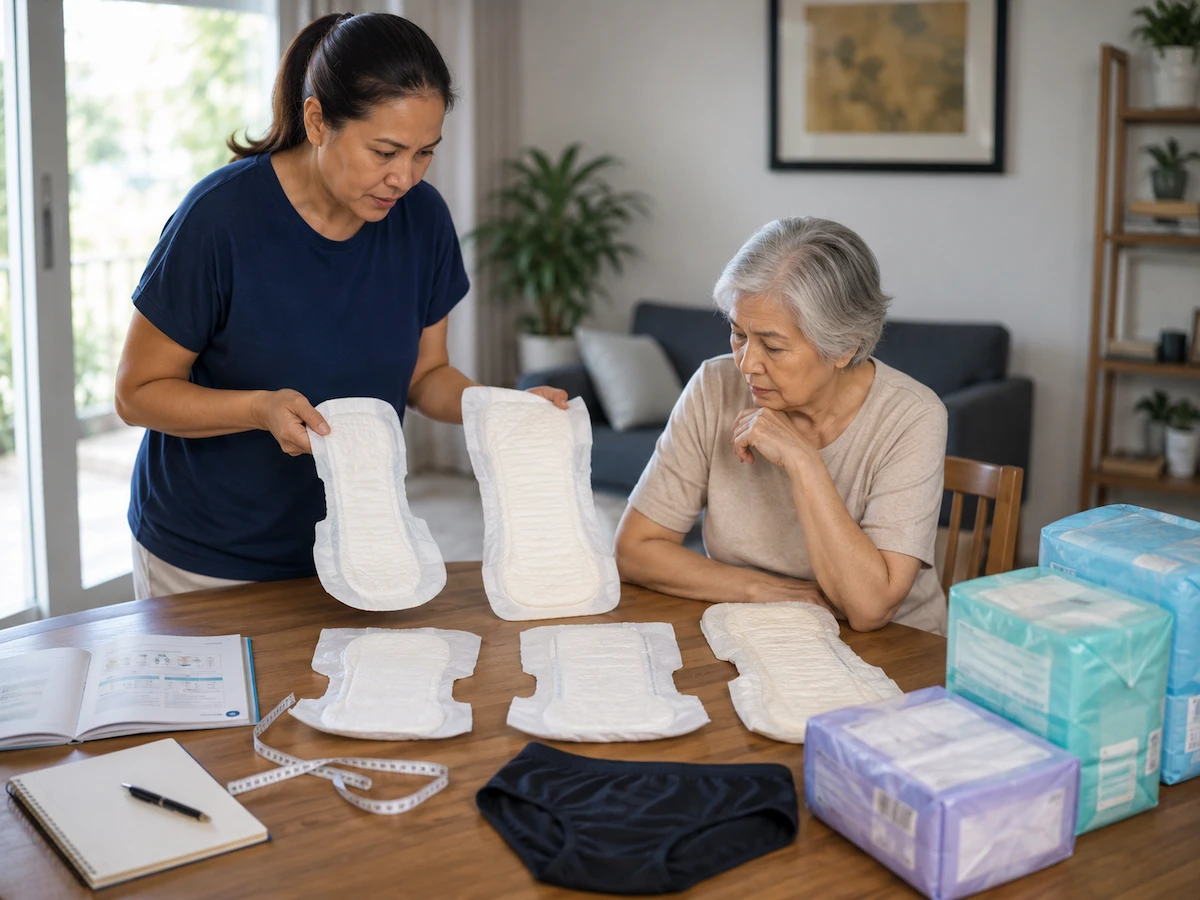
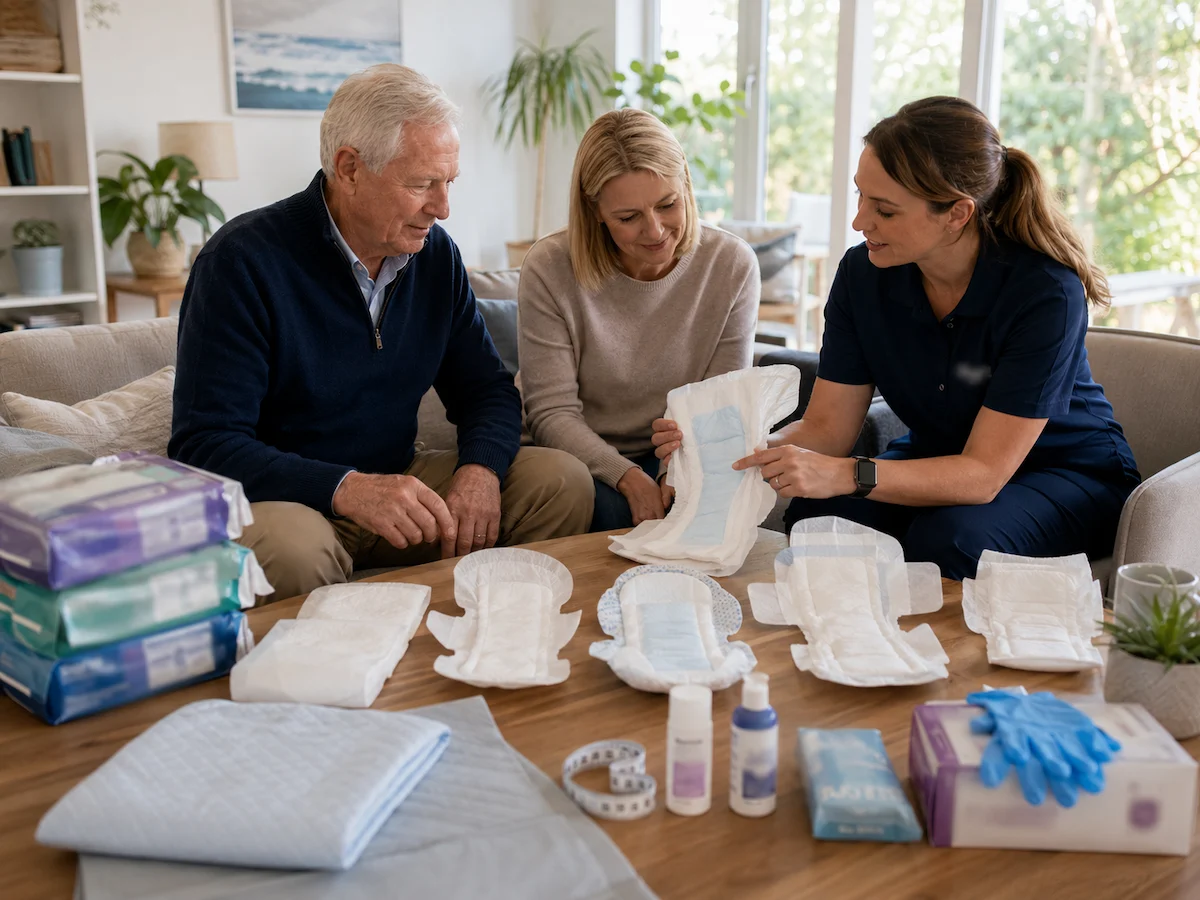
Incontinence pads that use high-absorbency materials and have reinforced layers generally last longer for elderly users. Choosing the right one is a common confusion that carers and families deal with. And the option isn’t always obvious with so many incontinence products on the market.
At Oz Continence, we’ve helped many Australians find suitable pads. In this article, we’ll explain everything you need to consider before buying incontinence pads. By the end, you’ll be informed about:
- Absorbency levels
- Core pad technology
- Fit and sizing
- Skin protection
- Overnight options
There’s a lot here that’ll make the decision clearer for you. Let’s get it sorted.
Which Incontinence Pads for the Elderly Last Longer?
Pads with high absorbency and leak-proof designs generally last longer for elderly users. Longer-lasting incontinence pads are designed to match absorbency to your loved one’s leakage volume.
Three things decide how effective a product is: absorbency level, what’s inside the pad, and whether it fits correctly.
Absorbency Levels: Light, Moderate, and Heavy Explained
Light incontinence pads suit occasional drips from stress incontinence or mild urge incontinence. Moderate ones, on the other hand, handle more frequent or larger leaks. Meanwhile, heavy pads are built for severe incontinence or full bladder loss.
Choosing too low a level forces frequent earlier changes, which costs more time and money over the week. For overnight use, it’s always worth stepping up one level beyond what your loved one uses during the day. A moderate daytime pad, for instance, might not be enough to last a full night without leaking.
Core Technology: What’s Inside the Pad
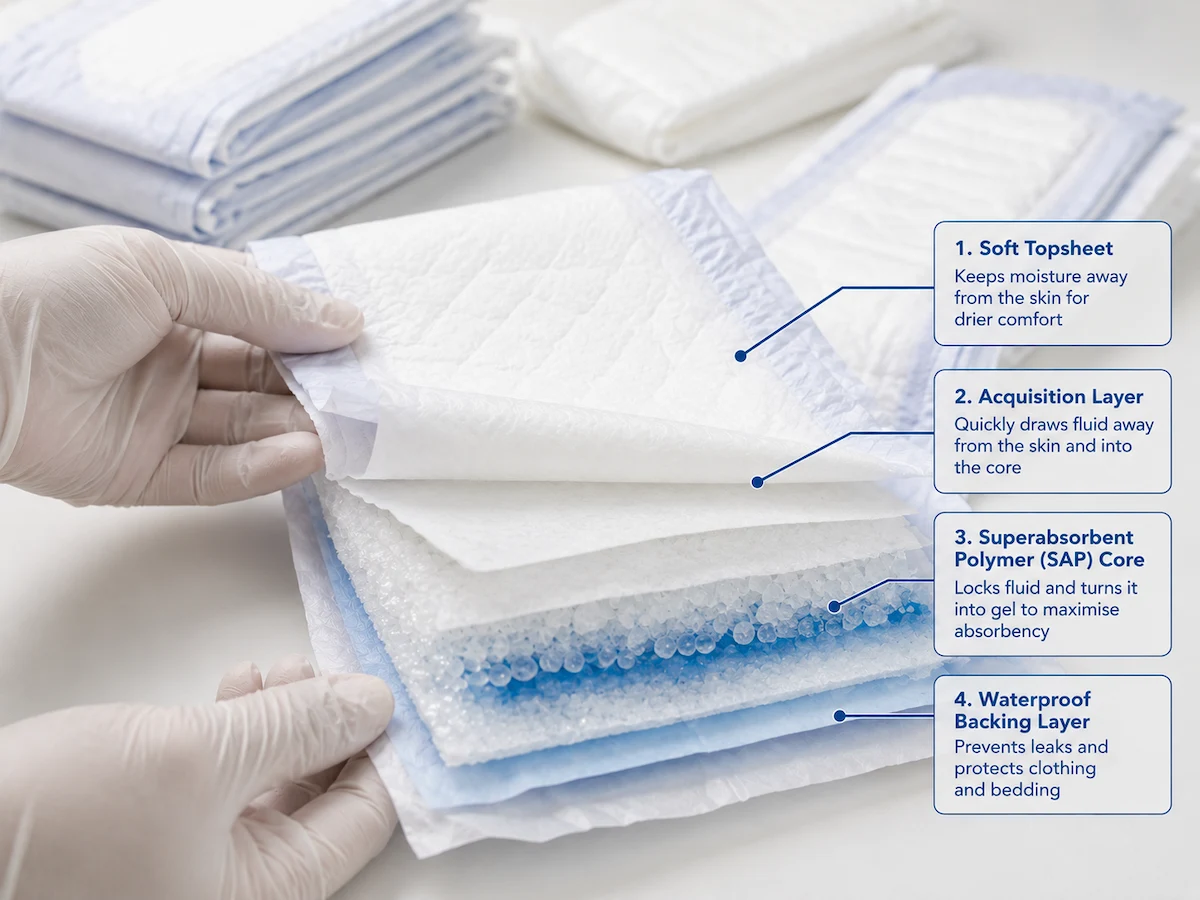
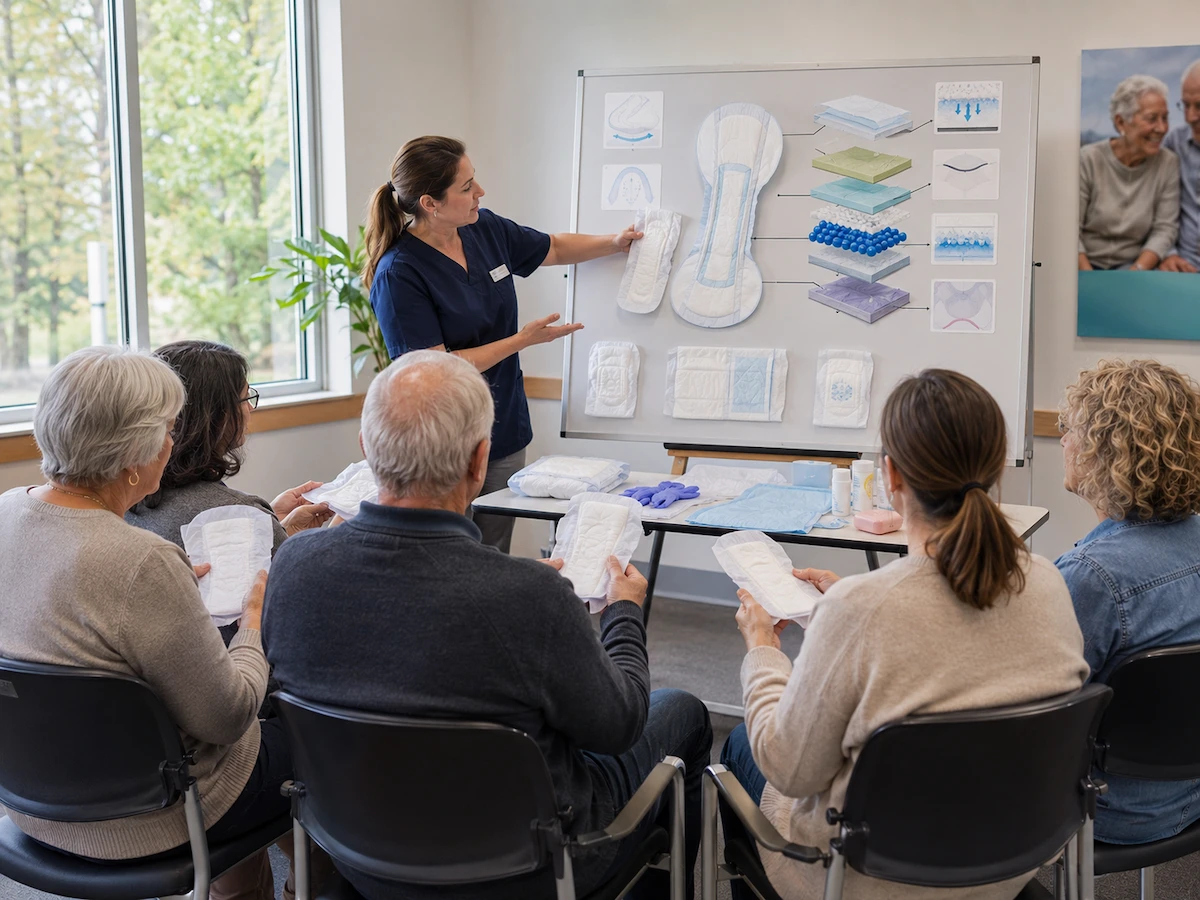
The absorbency rating on the packet only tells part of the story. Most quality incontinence pads rely on a superabsorbent polymer (SAP) at their core. They can absorb up to 300 times their own weight in fluid, and once absorbed, they lock it into a gel that doesn’t release.
Pads without SAP saturate faster and feel wet against the skin well before they’re full. A multi-layer pad, in contrast, works as a system:
- A soft topsheet pulls moisture in
- An acquisition layer spreads it
- The SAP core seals it away
This system absorbs liquid quickly and evenly, plus prevents leaks even during movement. Having these features gives both the wearer and caregivers confidence in its protection.
Correct Size and Fit: Why Getting This Wrong Costs You
It sounds like a small thing, but it really does change the result. An ill-fitting pad leaks from the sides no matter how high its absorbency rating is. If it’s too large, the pad will bunch and chafe. Too small, and gaps open at the legs and waist.
So before buying, measure waist and hip circumference and check the sizing chart on the packet (a detail skipped way too often at the pharmacy counter). Getting the correct size makes sure that the pad aligns during movement, especially when your loved one sits, stands, or walks.
Other Factors That Make an Incontinence Pad Hold Up Longer
Absorbency alone doesn’t determine wear time. Construction features count just as much. Across the people we’ve supported with continence care, the ones who get the factors right from the start even have less skin trouble.
Here are the five key factors that decide how long an absorbent pad holds up between changes:
- Leak Guard Barriers: These are raised side cuffs that run along both edges of the pad. They stop leaks from escaping sideways, even when the absorbency core is close to full. Leg bands alone can’t prevent side leakage reliably without them.
- Waterproof Backing: A sealed outer layer sits between the pad and clothing, and blocks moisture from soaking through. This layer keeps your loved one’s clothes dry and adds protection against leaks, discomfort, and embarrassment during longer wear periods.
- Odour Neutralising Layer: Many quality incontinence products include a layer that traps odour at the source. Combined with the moisture-locking core, it ensures a discreet and comfortable experience throughout wear.
- Moisture-Locking Core: When liquid hits the superabsorbent polymer (SAP) granules in the pad, it instantly turns into a gel. This feature locks moisture inside the core and keeps the surface dry against the skin long after absorption.
- Breathable Outer Material: By allowing air to circulate near the skin, this fabric reduces heat and sweat buildup during extended wear. Its snug design also helps keep the pad in place and prevents irritation.
If a pad leaks before it’s full, the problem is rarely the absorbency rating. In that case, check the leak guards and the backing first, because those two features fail most of the time than the core does.
Disposable Pads or Reusable Pads: Which One’s Better for Seniors?
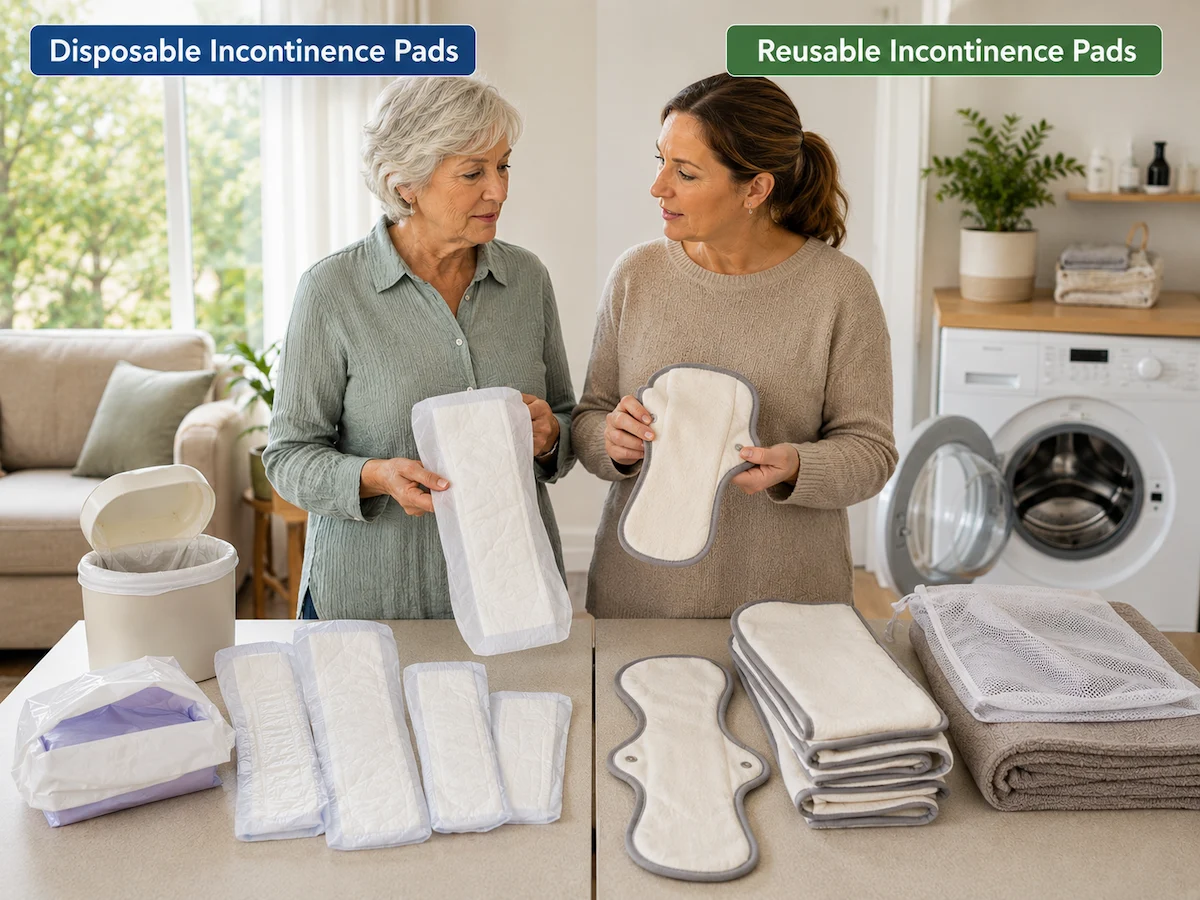
Neither disposable pads nor reusable pads are universally better for every elderly person. The right choice comes down to your loved one’s daily lifestyle, how mobile they are, and what your budget looks like long-term.
Both options have solid strengths, and both have trade-offs worth knowing before you buy.
|
Feature |
Disposable Pads |
Reusable Pads |
|
Wear duration |
3–8 hours per use |
Up to 8 hours per use (then laundered) |
|
Absorbency range |
Light to maximum |
Light to heavy |
|
Best for |
Daily use, travel, active seniors |
Home use, cost-conscious carers |
|
Skin-friendliness |
Varies by brand |
Often softer, breathable fabrics |
|
Long-term cost |
Higher ongoing spend |
Lower after initial purchase |
|
Ease of use |
No washing required |
Requires laundering |
In general, disposable pads are easier to manage day to day, particularly for seniors who are out and about or travelling. Reusable pads, on the flip side, tend to use softer fabrics that sit more gently against the skin.
While aiding incontinence patients, we’ve seen that for most families, a mix of both works better than committing to just one.
Are There Good Incontinence Pads for Active Elderly Adults?
Yes, slim-profile pads with stretch designs allow active seniors to move freely without bulk. The needs of someone with an active lifestyle differ distinctly from those of someone who’s bedbound or has limited mobility.
This is what to look for, and when to reconsider your current choice.
Best Features in Incontinence Pads for Active Users
A slim profile, flex design, and a strong adhesive strip are the features active seniors need most. The slim fit sits discreetly under regular clothing without adding bulk. Plus, the adhesive strip keeps the pad secured close to the body during walking or light physical activity.
Besides, a quick-dry surface layer pulls moisture away from the skin and keeps your loved one feeling comfortable and confident throughout the day.
When Heavier Absorbency Beats a Slim-Profile Pad
Slim pads are suitable for light leakage, but they’ll fall short well before an outing ends (especially if the flow is moderate to heavy). Our customers often say that a slightly bulkier pad is a way better option than a slim one that leaks through clothing and causes anxiety.
Consider the longest time your loved one goes without access to a bathroom during the day. That gap (rather than the pad’s thinness) should decide the absorbency level you need to look for. In some situations, using a pad with a pant system, or just stretch pants, can provide extra coverage while still staying discreet.
What Makes Bed Pads Last Through the Night for Seniors?
Nighttime is the hardest period for any incontinence product to hold up under pressure. There are no pad changes for around six to eight hours. Plus, leakage volume during sleep tends to be higher than during the day.
Bed pads add a second layer of protection beneath the body, and extend the whole system’s wear time. Some construction features that mark a quality bed pad are:
- High-Absorbency Rating: Overnight bed pads need to hold at least 500 mL, and should cover one or more full voids during sleep. Anything below that threshold puts both your loved one’s comfort and the bedding at risk before morning.
- Non-Slip Backing: Shifting during sleep is unavoidable, so a grip-backed base keeps the pad anchored to the mattress throughout the night. Even the most absorbent pad might end up out of position by 2 am without it.
- Waterproof Layer: A sealed underside stops moisture from soaking through to the mattress itself. Reusable and disposable bed pads both need this layer to provide overnight security.
- Washable Construction: Quality reusable bed pads can withstand around 200–300 wash cycles before their absorbency starts to drop. That brings the long-term cost down compared to buying disposable pads week after week.
As an example, Ontex’s Nefertiti overnight pad features a 30% wider back for targeted protection with up to 12 hours of coverage. That kind of design specification is what to look for when comparing overnight pad options.
Quick Tip: Pairing a high-absorbency overnight pad with a well-fitted bed pad underneath removes the weak points from both products, if needed. They support comfort through the night without relying on either one to do the full job alone.
How Often Should Elderly People Change Incontinence Pads?
Elderly people should change their incontinence pads every 3–6 hours during the day, or straight away after a leak occurs. Leaving urine against the skin for too long can cause irritation, redness, sores, and even skin infections (and elderly skin has less tolerance for that kind of moisture exposure than younger skin does).
The table below breaks down recommended change intervals by situation:
|
Situation |
Recommended Change Interval |
Why It’s Important |
|
Light daytime leakage |
Every 4–6 hours |
Keeps skin dry and reduces odour build-up |
|
Moderate daytime leakage |
Every 3–4 hours |
Prevents saturation and side leakage |
|
After any noticeable leak |
Straight away |
Prolonged urine contact breaks down elderly skin fast |
|
Overnight use |
Once upon waking |
Overnight pads are rated for extended wear, but shouldn’t be left on past morning |
|
Bed-bound seniors |
Every 2–3 hours |
Immobility increases pressure on skin, raising infection risk |
Even with overnight pads rated for extended wear, the pad still needs changing first thing in the morning. Urine leakage left against the skin overnight (even in a pad that hasn’t fully saturated) raises the risk of irritation and infection.
The general rule is simple: Change the pad before it’s full.
Can the Wrong Pad Harm an Elderly Person’s Skin?
Yes, prolonged moisture contact from a saturated or ill-fitting pad directly damages elderly skin. As we age, skin becomes thinner and loses much of its natural resilience. Gradual ageing makes it more vulnerable to moisture-related injury than younger skin.
The wrong pad choice can cause lasting harm for elderly people living with incontinence issues. Now let’s read about what that harm looks like, and how to choose a pad that actively protects the skin instead.
What Is Incontinence-Associated Dermatitis (IAD)?
IAD is a painful skin inflammation caused by prolonged exposure to urine or faeces against the skin (and for elderly people, the consequences land even harder). Nearly one in five incontinent patients across care settings develops IAD, and women are affected more often because of anatomical differences.
Symptoms typically include:
- Redness
- Burning
- Skin breakdown
- Open sores (in severe cases)
We’ve seen firsthand how often incontinence patients tolerate the wrong pad for weeks before anyone realises a better option was available. That delay can lead to irritation, painful sores, or pressure ulcers, especially for someone with dementia or limited ability to communicate discomfort.
How to Pick a Pad That Protects Elderly Skin
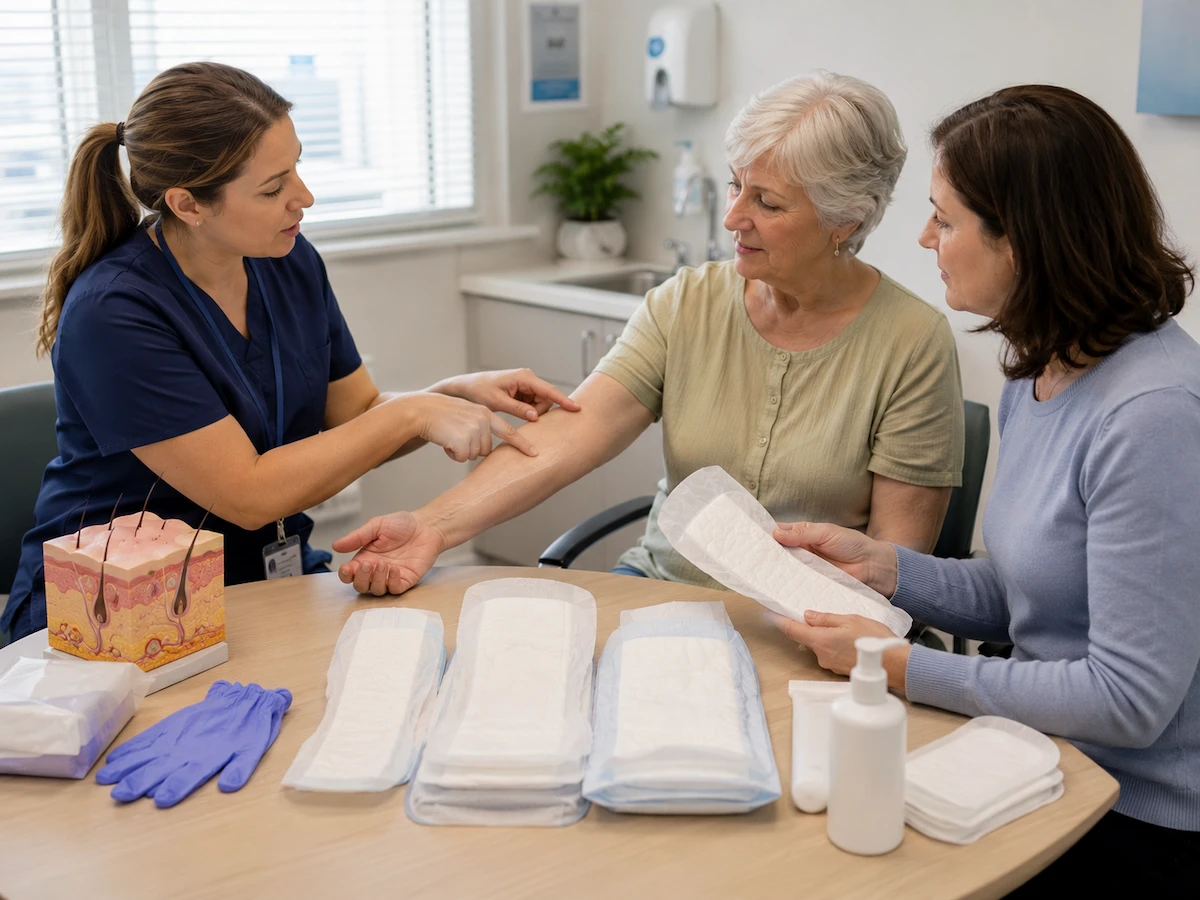
Hypoallergenic, fragrance-free incontinence pads with a moisture-wicking top layer do the most to minimise IAD risk (which is why the pad’s outer material deserves more attention than it usually gets). That top layer pulls urine away from the skin surface and reduces the time moisture spends in contact with the skin.
Moreover, breathable outer materials reduce heat build-up during longer wear periods. Heat and moisture together accelerate skin breakdown much faster than either one alone.
In this situation, applying a barrier cream alongside the right pad adds another layer of protection. Your loved one’s doctor or continence nurse can recommend a suitable product for their (the senior’s) skin type.
What Are the Signs an Incontinence Pad Isn’t Right for You?
Many seniors tolerate a poor-fitting or wrong-absorbency pad for weeks without realising better options exist. Discomfort, leaks, and broken sleep are often accepted as unavoidable, when in reality they’re almost always a sign that the pad needs changing.
Carers often notice this before the person wearing the pad does. At that time, this table can help you decide on a more suitable option:
|
Warning Sign |
What It Usually Means |
What to Try Instead |
|
Leaking before the pad is full |
Wrong shape or poor fit |
Try a different size or contoured pad |
|
Skin redness or rash |
Material too harsh or pad worn too long |
Switch to a hypoallergenic or breathable option |
|
Pad shifting or bunching |
Adhesive strip not strong enough |
Look for pads with wider adhesive strips |
|
Odour despite regular changes |
Absorbency too low for leakage volume |
Step up to a higher absorbency rating |
|
Waking up wet overnight |
Pad not rated for overnight use |
Swap to an overnight-specific pad or bed pad |
If your loved one is showing more than one of these signs, the issue is rarely the brand itself. A pad from a different range, or a switch between disposable pads and a reusable option, often resolves the problem. It’s worth trying two or three options before settling on a long-term choice.
What Other Incontinence Products Should Seniors Know About?
Pads aren’t the only option, and other incontinence products might work better for different needs and leakage levels. Some seniors feel more comfortable with pull-ups, briefs, or booster pads, depending on their mobility and how much support they need day to day.
Many people say that the right product is a combination of these options below, rather than a single solution.
Protective Underwear and Pull-Ups for Seniors
Pull-ups look and feel like regular underwear, which is a large part of why they’re so popular with independent, mobile seniors. A pad and pant system like this offers 360-degree coverage that a standard adhesive pad simply can’t provide. Also, it’s more discreet under everyday clothing.
These pants are also much easier to manage independently than tab-fastened briefs for seniors with poor dexterity. They suit moderate leakage well and give your loved one the confidence to stay active without worrying about their lifestyle.
All-in-One Briefs for Heavy Incontinence
For heavy or unpredictable leakage, all-in-one briefs with tab fasteners provide maximum absorbency and full coverage. They’re built for seniors with limited mobility or those who need carer assistance during changes. Plus, the elastic waistbands help keep everything in place during repositioning.
The higher absorbency capacity also involves fewer changes across the day, which reduces discomfort and skin exposure to moisture. This type of brief offers more reliable protection than a standard pant system alone for severe incontinence or bowel incontinence, including faecal incontinence.
Booster Pads: A Simple Way to Extend Any Pad’s Life
Booster pads are absorbent inserts placed inside a disposable brief or pull-up to add capacity without a full product change. They don’t have a waterproof backing, so the flow-through design absorbs liquid first and then passes any excess straight into the host garment beneath.
That makes them genuinely useful for overnight use or long outings where stopping to change isn’t easy. Not to mention, they’re a cost-effective way to get more options out of the incontinence products your loved one already uses regularly.
Your Next Step Towards Better Incontinence Care
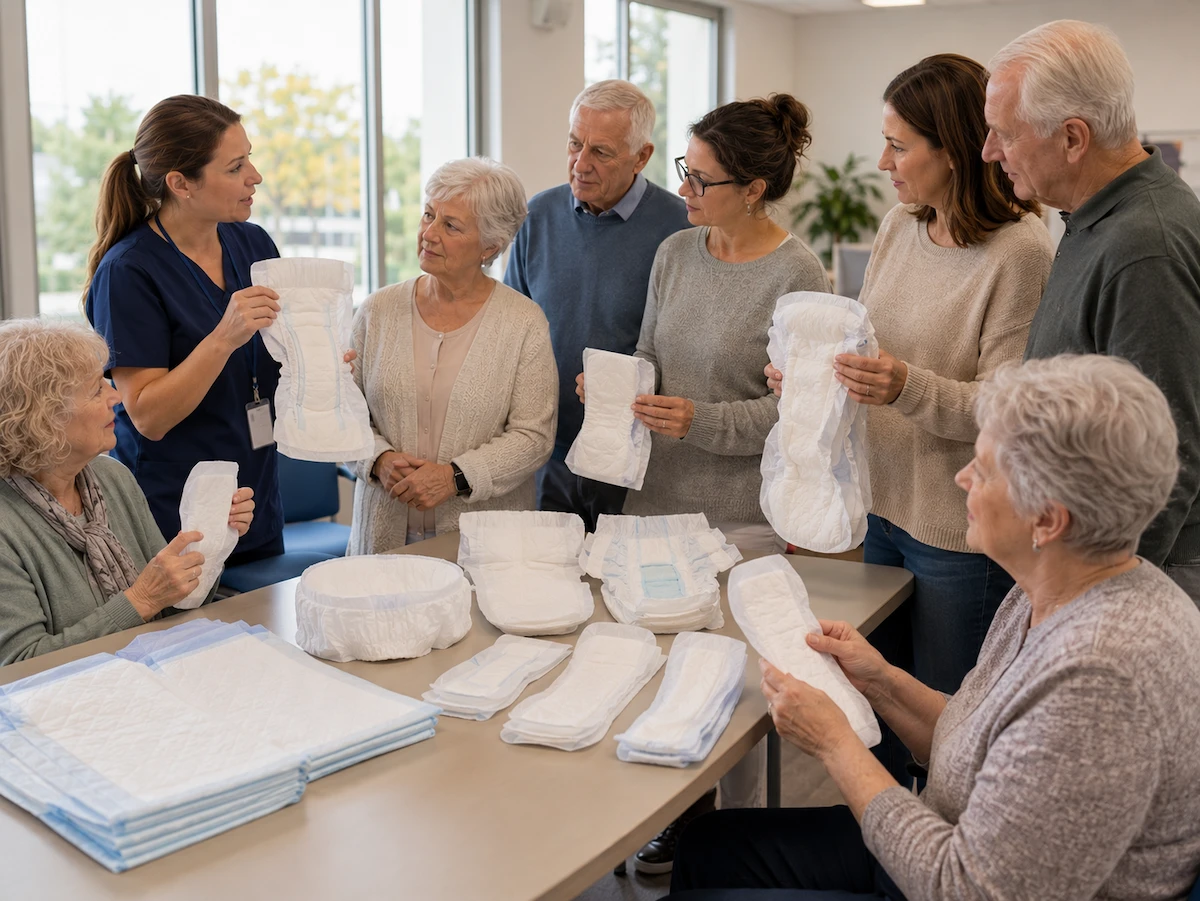
Finding the right incontinence pad for an elderly person takes a little trial and adjustment. Absorbency level, construction, fit, and your loved one’s daily lifestyle all play a part. Remember that what works well for one person won’t always work for another, and that’s completely normal.
The right incontinence products are out there, and getting closer to them is usually a matter of narrowing down one factor at a time. Your loved one’s doctor or continence nurse can also offer support if you’re not sure where to start.
At Oz Continence, we’re here to help you feel confident in every decision. Browse our other articles for guidance on managing incontinence across different situations, budgets, and changing needs.
Frequently Asked Questions About Incontinence Pads for Seniors
These are some of the most common questions we hear from carers and families managing incontinence for elderly loved ones. The answers below cover ground the article hasn’t already addressed.
1. What Are the Most Common Types of Urinary Incontinence in Elderly People?
The most common types of urinary incontinence in elderly people are stress incontinence, urge incontinence, overflow incontinence, mixed incontinence, and functional incontinence. Diagnosing the accurate incontinence types helps carers choose the right absorbent product.
2. Can Women With Moderate Incontinence Use Stretch Pants Instead of Pads?
Yes, women with moderate incontinence can use stretch pants or pull-ups as an alternative to adhesive pads. They offer better coverage and tend to feel more like regular underwear throughout the day.
During physical activity, stretch pants stay more securely in place and give better confidence than a standard pad alone.
3. Are Reusable Incontinence Products as Absorbent as Disposable Ones?
Reusable incontinence products can be just as absorbent as disposable options, though the range varies by brand and product type.
High-quality reusable pads use multi-layer construction with moisture-wicking fabrics that perform well across moderate leakage levels. They aren’t always suitable for severe or overnight incontinence, so it’s worth checking the absorbency rating before switching across fully.
4. How Do You Help Someone With Dementia Feel Confident About Wearing a Pad?
Routine and simplicity help most. Choosing a pad that feels close to regular underwear, such as a pull-up style, reduces resistance for someone with dementia. Keeping change times consistent also helps your loved one feel at ease over time.
If discomfort or refusal is ongoing, a doctor or continence nurse can suggest approaches customised to their specific needs.