
The best products for severe incontinence include adult diapers, pull-up pants, absorbent pads and bed protection. And the ideal option really comes down to your symptoms, lifestyle and how much protection you need.
Finding that right fit can take a while. Many people spend hundreds of dollars on different incontinence products before landing on something that works. Without the ideal pick, you’re left dealing with leaks, skin irritation, odour and a loss of confidence.
The reality is that there isn’t one perfect product for everyone, and that’s completely okay. This guide will cover options for both urinary incontinence and bowel incontinence. You’ll also learn how absorbency levels work and which products suit different situations.
First, we’ll match the right protection to your level of incontinence.
Best Products for Severe Incontinence: Choosing the Right Protection for Your Needs
Severe incontinence calls for more than a basic pad. As we mentioned, the best incontinence products depend on your body, daily routine, and how much protection you actually need. So let’s walk through your options.
Understanding Severe Urinary and Bowel Incontinence
With moderate incontinence, you’re dealing with smaller leaks that lighter pads can handle. Severe incontinence is different. The average adult passes around 300–600ml of urine per void. And severe incontinence can involve several of these full bladder leaks throughout the day with little or no warning.
While urinary incontinence affects your bladder control, bowel incontinence involves the unexpected loss of faeces. Some adults experience both at once, and healthcare professionals call this double incontinence. In Australia alone, around 4 in 100 people deal with both urinary and bowel incontinence at the same time.
Best Products for Severe Incontinence by Product Type
Since each type behaves differently, your absorbency levels and product choice should always match your specific symptoms. Something designed for urinary leaks, for example, won’t necessarily manage bowel incontinence the same way.
Here’s a look at your main options and when to choose each one :
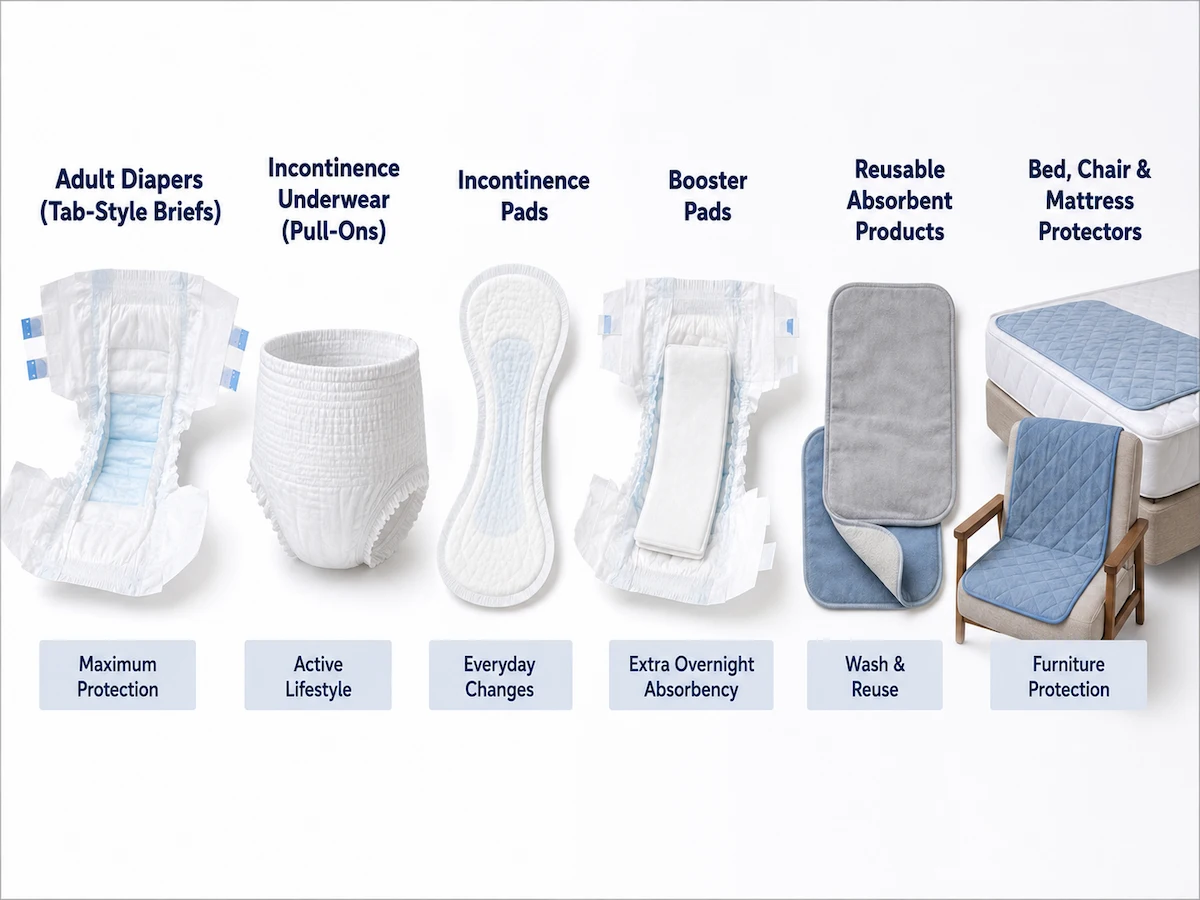
- Adult Diapers (Tab-Style Briefs): If you have limited mobility or need solid overnight protection, tab-style briefs are your best option. Premium options hold well over 2,000ml of liquid, and most come with built-in odour control (although they can feel a bit bulkier under clothes). Caregivers also prefer them since they’re easier to change without removing pants or shoes.
- Incontinence Underwear (Pull Ons): These look and wear like regular underwear, so most people won’t notice them under your clothes. They suit active adults who can still use the toilet independently. Their absorbency sits a touch lower (at around 800ml) than tab-style briefs because the design prioritises a slimmer fit.
- Incontinence Pads: Also called continence pads, you place these inside firm-fitting underwear, and swap them out in seconds during the day. They come in varying absorbency to suit different needs. Most can hold around 250ml of urine or slightly more.
- Booster Pads: Think of these as add-ons rather than stand-alone pads. You place a booster pad inside pull-up pants or adult diapers for extra overnight protection. They typically hold between 160ml and 420ml of additional liquid, and once full, any remaining liquid passes through into the main product.
- Reusable Absorbent Products: For anyone looking to save money in the long term, reusable pads are worth a look. They do need washing after each use, but one reusable pad can replace dozens of disposable products over its lifetime. You’ll also cut down on waste heading to landfill.
- Bed, Chair and Mattress Protectors: Waterproof bed pads keep your mattress dry and reduce overnight laundry. You can find both disposable and reusable bed protection options at most pharmacies. Chair protectors follow the same idea and are especially handy for living rooms or car seats.
Once you’ve matched the right product to your daily needs, it’ll help prevent leaks and protect your skin from moisture build-up and irritation.
Build a Complete Protection System Instead of Relying on One Product
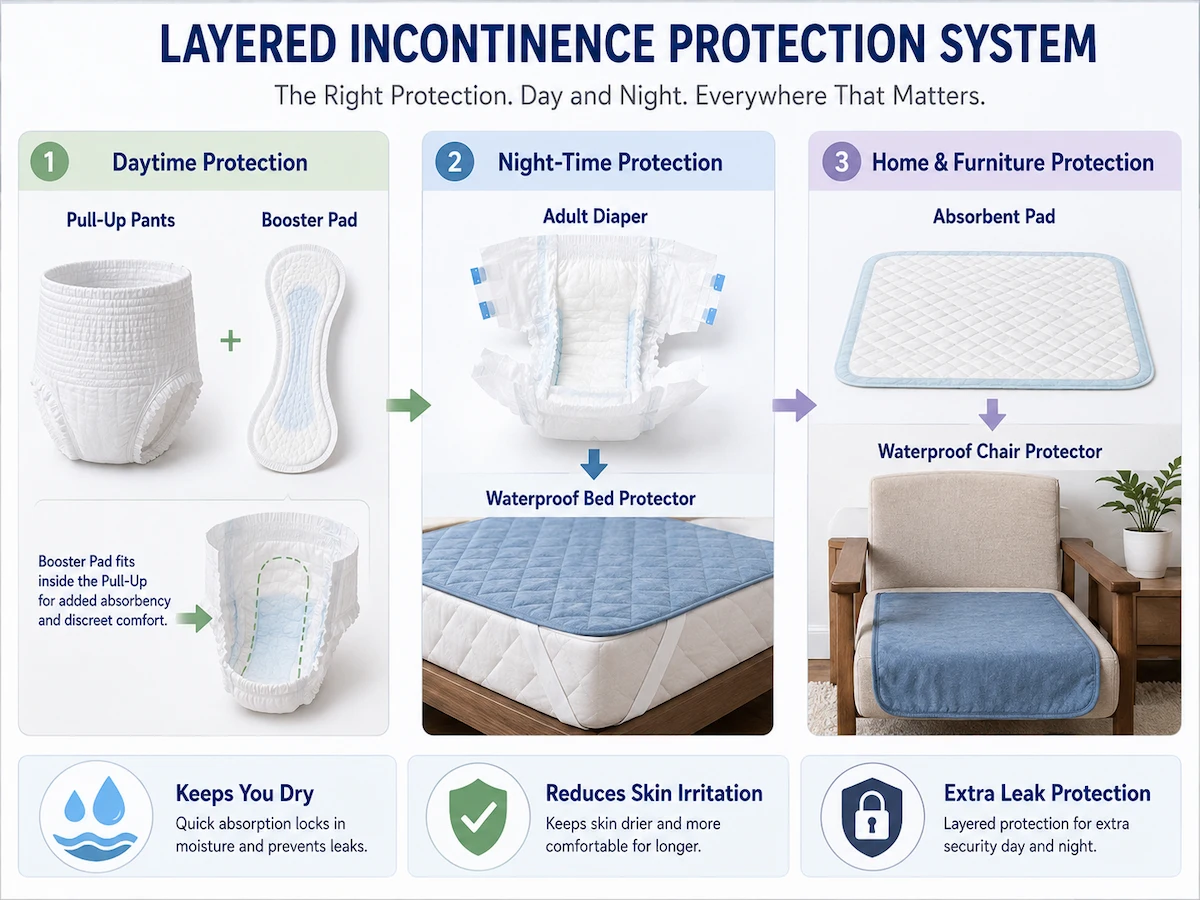
Often, combining a few incontinence products together gives you much better support throughout the day and night.
During the day, try pairing pull-up pants with a booster pad for extra absorbency. When night-time comes around, adult diapers combined with bed protection can prevent leaks and help you sleep without stress. For added security around the house, disposable pads paired with waterproof furniture protection also work well.
A layered system like this keeps you dry, reduces skin irritation, and takes the stress out of daily continence care.
How to Choose the Right Incontinence Products That Fit Your Needs
Even the best incontinence product can let you down if your skin isn’t protected or your changing routine is off. But if you get the following right, you’ll spend less time worrying about leaks and more time living your life.
Choosing the Right Absorbency Level
Incontinence products come in different absorbency levels, which means picking the best one isn’t as simple as grabbing the “maximum” option.
A high-absorbency product won’t help much if it doesn’t match the way your body releases urine. That’s because leak patterns vary from person to person. Some adults pass more urine in one large bladder void, while others deal with frequent smaller leaks throughout the day.
So each pattern calls for a different product. Overnight use typically needs higher absorbency too, since you can’t swap pads while you sleep.
Now, you’ll notice that most brands label their range from light to super absorbent, but those labels aren’t always consistent across brands.
A better approach is to choose a product based on how much urine you usually leak, then adjust if needed. If the product feels wet or leaks through after just one or two leakage episodes, that will tell you a higher absorbency level is needed.
Finding the Right Fit
Even with the right absorbency, a poorly fitting product is one of the most common reasons for leaks. Many adults don’t realise this. You could have the most absorbent pad available, but if it doesn’t sit properly against your body, it won’t collect urine the way it should.
That’s why it’s important to choose a style that suits your body shape. For example, someone with thinner thighs may get better results from tab-style briefs. Pull-ons, on the other hand, typically suit people with fuller thighs and a smaller waist. Women and men carry weight differently too, so gender-specific cuts can provide better protection where you need it most.
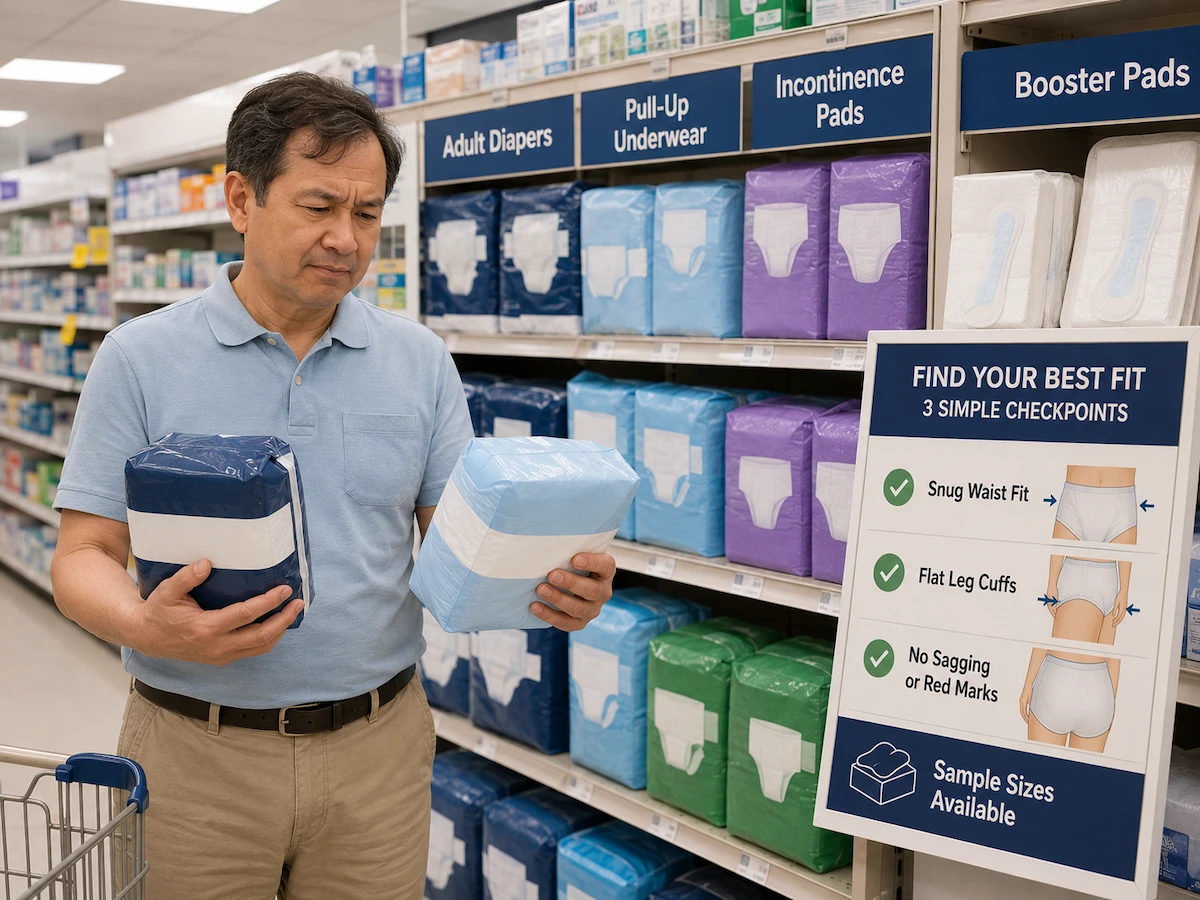
When checking the fit, first, make sure the waist sits snug without digging in. The leg cuffs should lie flat against the skin with no gaps. More obviously, red marks mean the product is too tight, while sagging usually means it’s too loose.
Pro tip: Many brands offer samples, which is a great way to test the perfect fit before buying in bulk.
Matching Products to Your Lifestyle
Your daily routine should guide your product choice just as much as absorbency and fit. After all, what works at home on a quiet day won’t always suit a long commute or an afternoon walk.
Take a look at how different situations can change what you need:
- Working or Commuting: Pull-ons with moderate absorbency stay discreet under work clothes. To stay prepared, toss two to three spare pads in your bag so you can do a quick swap at the toilet if needed.
- Travelling: Pack a range of disposable products along with spare underwear and disposal bags (just in case). It’s not as if rest stop bathrooms have a reputation for always being clean or convenient.
- Sleeping: Night-time is when your body produces more urine without a chance to change products. Pair a high-absorbency option with bed pads, and you’ll get through the night with far less disruption.
- Exercise and Activity: Lighter, slimmer continence pads handle physical activity well without feeling bulky. The challenge, though, is making sure the fit is snug enough that nothing shifts while you move.
- Carers Assisting With Changes: Tab-style adult diapers fasten at the sides, which makes them much easier for carers to replace without repositioning the whole body. For bed-bound adults, in particular, this design saves time and reduces discomfort.
- Wheelchair Users or Reduced Mobility: Frequent changes aren’t always practical when you’re seated for hours at a time. Products with high absorbency and secure leg cuffs bridge those longer gaps between swaps comfortably.
Remember, the right product for your lifestyle shouldn’t slow you down. It should give you confidence to get on with your day.
Protecting Your Skin and Managing Odour Control
Incontinence doesn’t just affect your bladder or bowel. Over time, it can take a real toll on your skin too. Prolonged contact with moisture breaks down your skin’s natural barrier, and that’s when irritation, redness and even infection can develop.
The good thing is that a few simple habits can reduce the risk of skin damage:
Moisture Management and Breathable Materials
Look for products with a moisture-wicking top layer that draws liquid away from your skin. Breathable back sheets made from fabrics that let air circulate and microporous materials that allow airflow can also help by reducing heat build-up (which lowers the chance of skin irritation).
But if you constantly feel wet while wearing a product, that’s a sign to switch to a higher absorbency level or change the product more often.
Odour Control
Most quality incontinence products include built-in odour control that neutralises urine odour. Unfortunately, with bowel incontinence, pads alone won’t manage the smell. In those cases, you need to change your product as soon as you can after a bowel episode and carry disposal bags when you’re out.
Barrier Creams and Changing Frequency
Barrier creams with zinc oxide or petrolatum create a protective layer between your skin and moisture. We recommend applying them after every change for the best results.
Moreover, healthcare professionals generally suggest swapping your product every 3–4 hours during the day (or sooner after any episode). Each time you change, gently clean and dry your skin before putting on a fresh product. This simple routine will keep your skin healthy and lower the risk of irritation and pressure damage.
Common Mistakes People Make When Managing Severe Incontinence
Most adults managing severe incontinence make at least one avoidable mistake that leads to leaks, skin damage, or unnecessary discomfort. Fortunately, the fixes are usually simple. Here’s what to watch out for and how to get it right.
Buying Products Based Only on Absorbency
Up to 80% of adults with incontinence end up using the wrong products, often because they focus on absorbency levels alone and overlook everything else.
But as we covered in the fitting section earlier, the shape of your thighs, waist, and hips all affect how underwear sits against your skin. Your activity level and comfort preferences play a role too. A bulky overnight product, for instance, isn’t practical for someone who needs to move freely during the day.
So before you spend money on other products, it’s worth checking whether the ones you already have actually fit properly.
Not Protecting Beds, Furniture and Clothing
A lot of people invest in good wearable incontinence products but forget about protecting everything around them. And it only takes one overnight leak to soak through sheets, damage a mattress and create hours of extra laundry.
Waterproof mattress protectors are one of the simplest ways to avoid that kind of mess. Layering a disposable bed pad on top also gives you a quick-change option during the night without stripping the whole bed.
The same applies to chairs and sofas. A washable chair pad saves your furniture and gives you one less thing to stress about during the day.
Waiting Too Long Before Changing Products
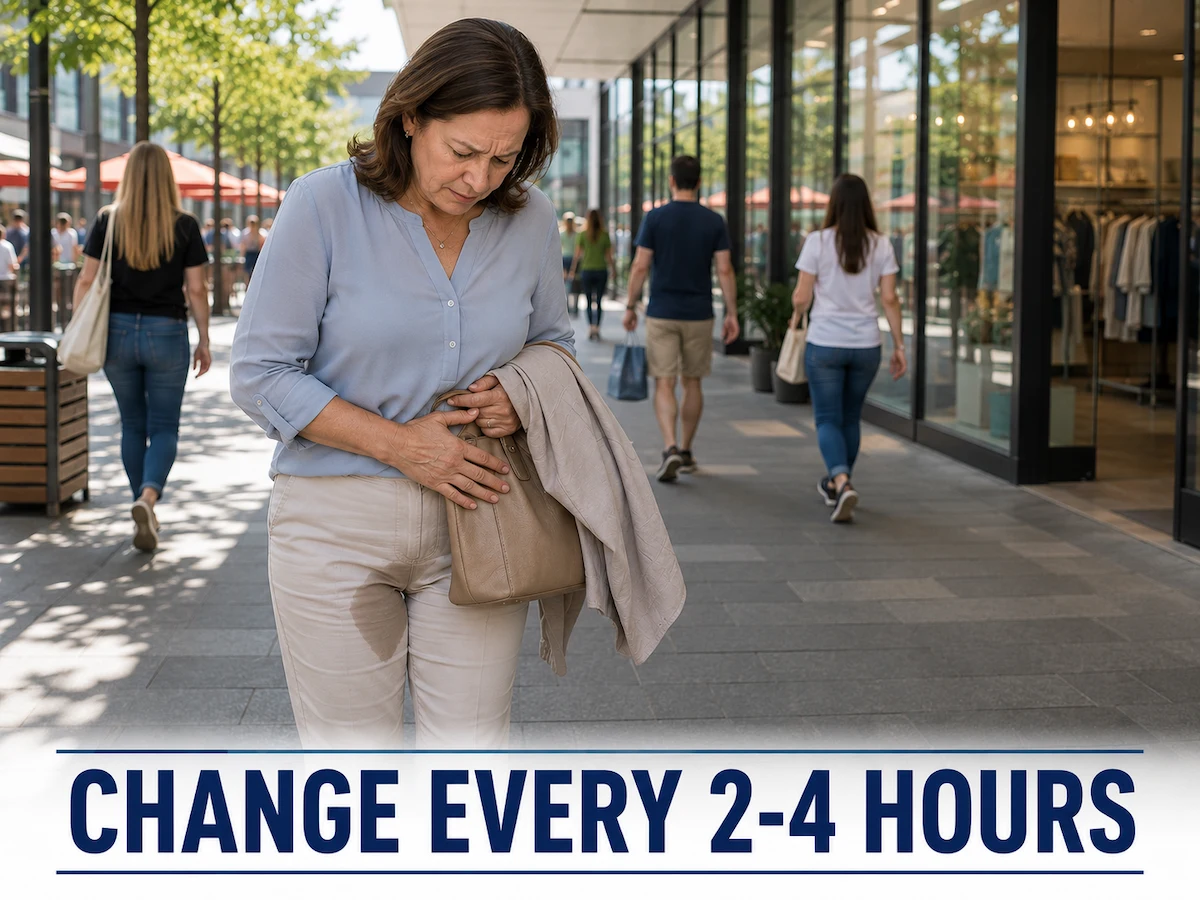
It’s tempting to stretch a product’s wear time, especially when the surface still feels dry. However, for severe incontinence, most products should be changed every 2–4 hours, or sooner after any bowel episode.
The reason is that waiting too long allows moisture to sit against your skin. This creates the right conditions for fungal or bacterial skin infections, irritation, and unpleasant odour to develop.
Additionally, the longer urine or faeces stays in contact with your body, the faster it breaks down your skin’s natural barrier. Sticking to a consistent changing routine protects your skin, keeps odour under control and helps each product do what it’s designed to do.
Not Asking a Healthcare Professional for Help
Incontinence products help you manage day-to-day life, but they don’t treat what’s causing the problem in the first place. So if you notice sudden bladder problems, blood when you pass urine, or a frequent urge to urinate, make an appointment with your doctor as soon as possible.
Repeated urinary tract infections (UTIs), for example, may be a sign that something is affecting the way your bladder or urethra works. An overactive bladder is another possible cause, where the bladder muscles contract suddenly and create a strong urge to urinate.
We also advise seeing your doctor if pads or other products aren’t controlling severe bowel incontinence or stress incontinence. Doctors can treat or better manage many of these conditions with the right care.

Find the Right Incontinence Products for Your Needs
There’s no single best product for severe incontinence, and now you understand why we think that’s completely fine. What works for one person won’t always suit another. Your right solution will depend on your bladder and bowel symptoms, mobility, and the level of absorbency you need each day.
That’s why a lot of adults (both women and men) find that combining a few incontinence products works better than relying on just one. Something as simple as pairing pull-up pants with booster pads, or adding bed pads at night, can protect you against leaks.
And if your symptoms ever change or get worse, don’t wait too long to talk to a healthcare professional. They can identify the cause, recommend the most suitable treatment, and help you find products that better match your needs.
For more practical tips and advice on managing bladder and bowel health, visit Oz Continence.
Frequently Asked Questions
Below are some of the most common questions people ask about managing severe continence issues. If you don’t find your answer below, a healthcare professional can help point you in the right direction.
What Are the Best Products for Severe Incontinence During the Night?
A high-absorbency tab-style brief paired with a waterproof bed pad gives you the best chance of staying dry through the night for overnight safety. Adding a booster pad inside the brief provides extra protection against leaks, especially if you pass more urine while you sleep.
Are Pull Up Pants or Adult Diapers Better for Severe Incontinence?
It depends on your mobility and daily routine. Pull-ons, for instance, work well if you can still get to the toilet independently and want something that feels like regular underwear. Adult diapers, however, offer higher absorbency and are easier for carers to change. So they tend to suit people with limited movement or those who need extra overnight leak protection.
How Do I Know if I Need Continence Pads Instead of Disposable Pads?
Both are intended for different situations. Disposable pads sit inside your regular underwear and work well for lighter, daytime leaks.
On the other hand, continence pads are specifically designed for incontinence and usually offer higher absorbency, a better fit, and built-in odour control. If standard pads aren’t keeping up, continence pads will likely be the better option.
Can an Overactive Bladder Become Severe Incontinence?
Yes, it can. Overactive bladder causes your bladder muscles to contract without warning, and if left untreated, those contractions can get worse over time.
Women are more commonly affected than men. Stress incontinence can develop alongside it too. If you notice your symptoms getting worse, talk to your doctor sooner rather than later.
