
Incontinence products leak mainly due to poor fit, wrong absorbency level, or a mismatch between the pad type and your incontinence type. In many cases, adjusting one or more of these factors is enough to reduce or stop urine loss.
At Oz Continence, we’ve seen people switch brands, spend more money, and still end up frustrated about leakage. If that’s been your experience, too, don’t lose confidence. Sometimes, a small difference in design can change how a solution performs for your needs.
In this guide, you’ll find out exactly:
- Why accidents happen
- How to choose absorbent products suited to your body
- Which lifestyle changes and treatment approaches actually help
Let’s get into it.
The Real Reasons Why Incontinence Products Leak
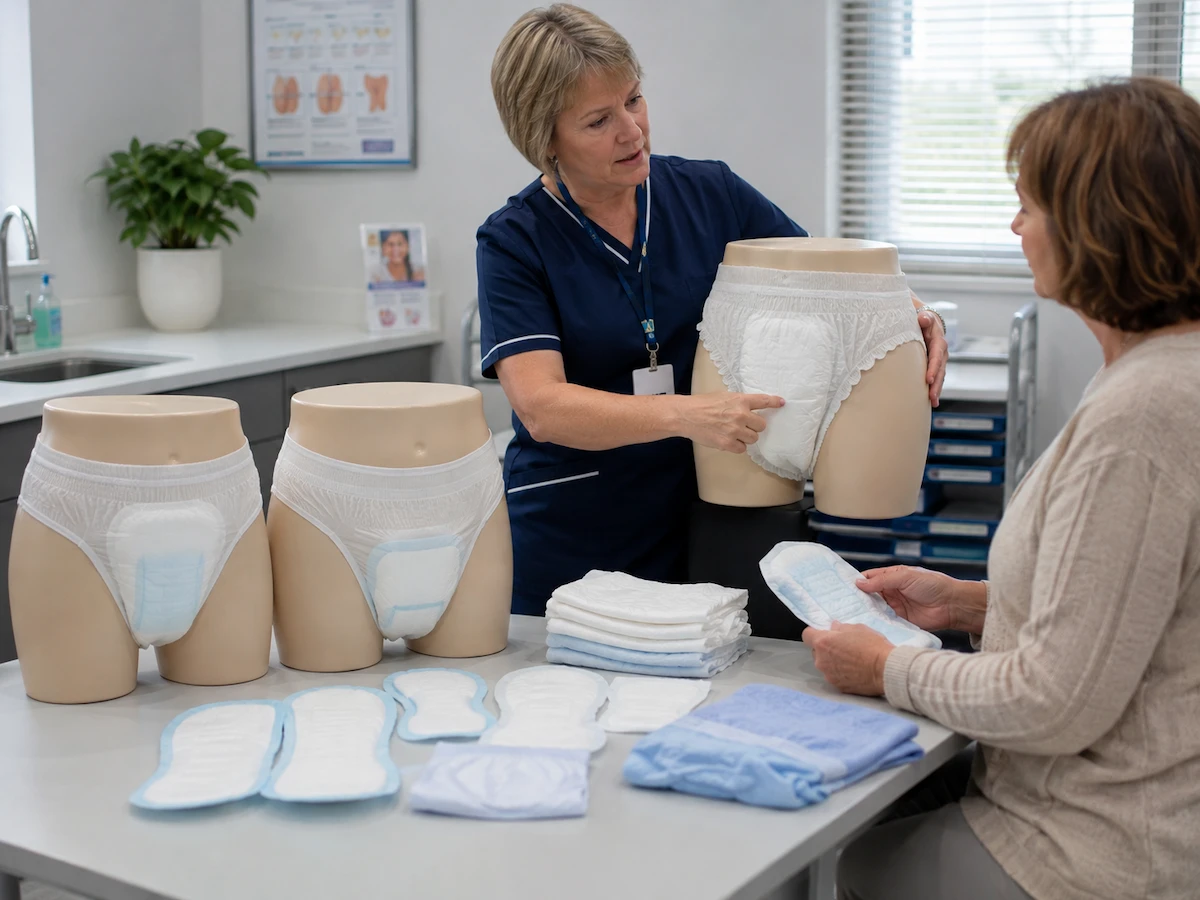
Most people blame the product when an accident happens. But fit, absorbency, and wearing habits are almost always the real culprits. A poorly fitted pad can fail even at full capacity, and an overfilled one will leak regardless of how well it fits.
The following two things drive urine overflow more than anything else:
The Fit Problem Nobody Talks About
Getting the right fit sounds simple, but it’s the most common reason why protective garments fail (even a slight gap can let leaks through). For example, products sitting too loose around the legs leave small openings where urine escapes, while being too tight can rub against the skin and cause discomfort.
To find the suitable fit, consider your body shape and daily routine. As you sit, bend, and walk, a poor fit becomes more noticeable and increases the chance of leaks.
Generally, a pad designed for a slimmer frame will behave very differently on a fuller body, even at the same absorbency level. That’s why you should try a different size or cut, rather than a different brand entirely (solves the issue for a lot of people).
Wrong Product for Your Incontinence Type
Even a well-fitting product can leak if it can’t match your level of urine loss. In practice, light liners work well for minor drips. But if you wear them during heavy leaks, they’ll reach capacity within the hour (in short, manufacturers don’t build light pads for that job).
In this case, incontinence underwear suits moderate to heavier bladder control issues far better than a standard liner in those situations. This option has a large absorbent core, the coverage is wider, and the fit stays more secure through movement.
Stress Incontinence vs. Urge Incontinence: Picking the Right Product Counts
Did you know there are different types of urinary incontinence, and each one behaves differently in the body? Well, most people don’t, and that’s exactly why so many end up with the wrong solution.
For instance, stress and urge urinary incontinence have different causes and leakage patterns, so each type benefits from a different product and management approach.
Here’s a side-by-side look at how stress incontinence and urge incontinence compare across different aspects:
| Stress Incontinence |
Urge Incontinence |
|
|
What causes it |
Coughing, sneezing, lifting, physical activity |
Sudden strong urge to urinate |
|
How leaks happen |
Pressure forces urine past the urethra |
Bladder contracts before you reach the toilet |
|
Who it affects |
Common in women post-childbirth, men with prostate issues |
Both men and women across all ages |
|
Pelvic floor muscles |
Weakness reduces urethral support |
Weakness worsens urgency and control |
|
Symptoms |
Small, sudden leaks during movement |
Larger leaks with little warning |
|
Best product match |
Discreet pads, close-fitting absorbent pants |
Adult diapers, fuller coverage pants |
From this table, you can easily understand which type of incontinence you’re dealing with and shop for the right protection.
Simply put, stress-related leaks need targeted front coverage, while urge-related episodes need capacity for heavier, less predictable pee accidents. And if your symptoms overlap, a continence nurse can help you identify the suitable fit before you spend money on the wrong product.
How to Choose Incontinence Pads That Actually Hold
You can choose incontinence pads based on your leak volume, daily activity level, and the absorbency rating on the packaging. Together, these factors help you find the right solution and reduce trial and error.
Start with these two factors, and you’ll have a clearer idea of how to prevent leaks with incontinence products:
Absorbency Levels and What They Mean for You
Absorbency ratings on protective products run from light through to extra heavy, and each level handles a different leak volume. As we’ve mentioned, light liners suit occasional minor drips, while moderate incontinence calls for a mid-range absorbent pad with a larger core.
A specific breakdown of three main absorbency levels:
|
Absorbency Level |
Leak Volume |
Best Suited For |
|
Light |
Up to 100ml |
Occasional minor drips during sneezing or coughing |
|
Moderate |
100ml to 200ml |
Regular leaks during movement or physical activity |
|
Heavy |
200ml to 350ml |
Frequent leaks throughout the day |
|
Extra Heavy |
350ml and above |
Continuous or near-continuous leakage |
Avoid choosing an absorbency level that’s too low, even if your most leaks are minor. Your pad needs to cope with your heaviest leak instead of your average one.
Daily Activity and Your Product Choice
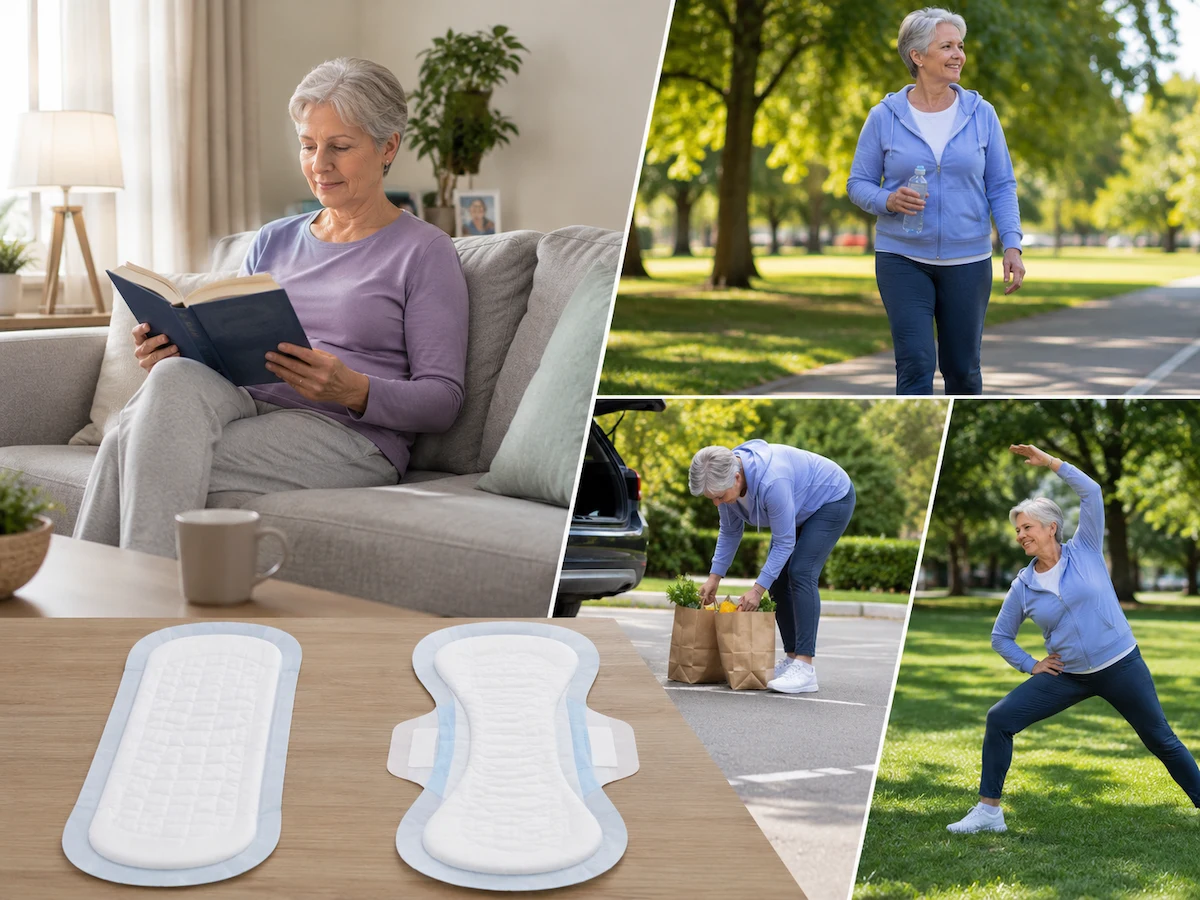
Your activity level through the day affects which product stays secure and which one doesn’t. A pad with standard adhesive backing works fine for low-movement days, but walking, bending, and light exercise days can’t cope with usual pads.
Use this checklist to match your activity level to the proper solution:
Low Activity (desk work, reading, light housework)
- Regular disposable pads with adhesive backing work fine
- Standard anatomical cuts suit most body shapes at this level
- Change every 3-4 hours regardless of leak volume
Moderate Activity (walking, shopping, light stretching)
- Extra-length anatomical pads reduce shifting during movement
- Close-fitting absorbent pants offer more security than flat liners
- Check placement after sitting or standing for extended periods
High Activity (exercise, running, lifting)
- Close-fitting absorbent underwear holds position through movement
- All-in-one pants prevent bunching better than adhesive-backed pads
- Avoid loose-fitting protection during any high-impact physical activity
Overnight (sleeping, lying down for extended periods)
- Extra heavy all-in-one pants with full back coverage prevent leakage
- Wider rear panels protect during position changes through the night
- Change immediately upon waking to protect skin from moisture exposure
Bottom Line: Close-fitting absorbent pants hold their position through movement far better than flat disposable pads. They stretch with the body, keep the absorbent core centred, and prevent leakage without feeling uncomfortable.
On top of that, pulling on a snug pair of absorbent underwear before heading out removes the worry of mid-day shifting entirely.

Shape and Coverage: Why One Size Does Not Fit All
Incontinence pads come in different shapes because men’s and women’s bodies require different coverage and fit.
Specifically, anatomical cuts designed for women follow the body’s natural contours, while broader rectangular designs work better for men. That way, the right shape allows the pad to sit closer to your body and be comfortable during everyday movement.
Look at these common pad shapes and their coverage measurements:
|
Shape Type |
Typical Length | Coverage Area |
Best For |
|
Mini Liner |
15cm to 20cm | Front only |
Very light drips, daily backup protection |
|
Regular Anatomical |
25cm to 30cm | Front to centre |
Light to moderate leaks in women |
|
Extra Length |
33cm to 40cm | Front to back |
Moderate leaks, sitting and lying positions |
|
Rectangular/Male |
25cm to 30cm | Pouch shaped |
Light to moderate leaks in men |
|
All-in-One Pant |
Full brief coverage | Complete 360° |
Heavy to extra heavy leaks, active wear |
Generally, wider back panels and extended rear coverage prevent leakage during sitting and lying down, which standard disposable pads often miss. And for active days, a closer-fitting absorbent pant holds position better than a loose liner. They pull moisture away from the skin, which lowers irritation risk over time.
Ultimately, trying a few different sizes before settling on one saves money and prevents the same leak problems from repeating.
Wearing Incontinence Products the Right Way
A well-designed product still relies on correct placement to work effectively. That’s why wearing it properly is just as important as choosing the correct one. Sometimes, small adjustments to how you wear it can improve comfort, fit, and leak protection.
Let’s have a look at the two major application mistakes that you may face.
Placement Tips That Stop Leaks Before They Start
Typically, centring the pad carefully so it sits flush against the body is the starting point. If you don’t centre the pad properly, urine may reach the edges instead of being absorbed into the middle of the pad.
Run through this placement checklist every time you change your garment:
- Check the front and back labels so the pad faces the right way
- Open the product fully and smooth out any folds in the absorbent core
- Position the centre of the pad directly against the body before pulling up
- Leg elastics should sit flush against the skin without digging in or gaping
- Run a finger along each leg opening to confirm the seal sits evenly
- Check front and back panels sit flat against the body with no bunching
- Confirm the absorbent core still sits centred after pulling on pants or underwear
- Do a quick movement check: bend forward and sit down, to test the fit holds
Worth Noting: Leg elastics need to sit snugly against the skin without digging in, as that contact creates a seal around the edges. Otherwise, leaks may escape through the gaps before the core absorbs anything.
How Often Should You Change Your Product?
Replace your incontinence product every 2 to 4 hours in general, and always immediately once it feels saturated. Typically, waiting too long to change is a primary cause of leaking and skin irritation.
Here’s a general guide to change frequency based on leak volume:
|
Leak Volume |
Product Type |
Recommended Change Frequency |
|
Light |
Mini liners, regular pads |
Every 2 to 3 hours |
|
Moderate |
Anatomical pads, close-fitting pants |
Every 3 to 4 hours |
|
Heavy |
All-in-one pants, adult diapers |
Every 3 to 4 hours or sooner |
|
Extra Heavy |
Maximum capacity all-in-one pants |
Every 2 to 3 hours or when saturated |
|
Overnight |
Extra heavy overnight pants |
Upon waking, immediately |
We’ve seen people stretch changes to six or seven hours and then wonder why skin irritation and bladder odour develop. To prevent this, you can set up a routine to keep the pad within its capacity and protect the skin surface from prolonged moisture exposure.

How to Prevent Leaks with Incontinence Products: Simple Daily Habits
Daily habits influence how often accidents occur, even when you’re wearing the right incontinence product. Reducing bladder irritation, strengthening your pelvic floor muscles, and maintaining a healthy weight all help lower the amount of leakage your products need to manage.
Three habits stand out as the most reliable starting points for better bladder control:
- Cut Back on Bladder Irritants: Caffeine, alcohol, and fizzy drinks all irritate the bladder lining and increase urgency. That’s why you should switch to water or herbal tea throughout the day, while keeping fluid intake steady. As a result, you get fewer sudden urge episodes without dehydrating yourself. Drinking enough fluids actually helps here too, since concentrated urine irritates the bladder wall just as much as caffeine does.
- Do Pelvic Floor Muscle Exercises: Strengthening these muscles reduces leak frequency noticeably within 4 to 12 weeks of consistent daily training. Even 10 minutes a day builds enough support to improve control over time.
- Stay at a Healthy Weight: Being overweight puts constant pressure on the bladder, and that pressure worsens leakage during physical activity. Constipation adds to this too, since a full bowel pushes directly against the bladder, the same mechanism behind constipation and wetting in children. So try adding fibre to your diet and make healthy lifestyle changes to round this out further.
Although these shifts seem small, they reduce how hard your incontinence products have to work every single day. Just start with one and build from there.
Treatment Options That Work Alongside Your Products
Honestly, pairing the correct treatment with your incontinence products gives you far better leak control than using protective wear alone. Based on what our continence specialists consistently recommend, pelvic floor muscle training is often the first treatment for many types of incontinence.
However, there are many other approaches available besides muscle training. After diagnosing your specific health conditions, your GP can recommend bladder training, prescribe medication, or refer you to a specialist.
A snapshot of the main treatment options and what each one targets:
|
Treatment |
What It Does |
Best For |
| Strengthens muscles controlling the urethra and bladder |
Stress and urge incontinence |
|
| Gradually extends time between toilet visits |
Urge incontinence |
|
|
Prescription Medication |
Reduces bladder overactivity and urgency |
Urge incontinence |
|
Dietary Adjustments |
Removes irritants that worsen symptoms |
Both types |
|
Weight Management |
Reduces pressure on the bladder |
Stress incontinence |
Each of these affects urinary incontinence differently, so combining two approaches often works better than relying on one alone.
For example, bladder training teaches the bladder to hold urine for longer periods, which reduces episodes of urgency. And a doctor can prescribe medication that works alongside this by calming overactive bladder muscles.
Now that you know the everyday options, there are a few more treatment paths worth discussing with your doctor.
Other Treatment Options Worth Knowing About
You can seek other treatment options when first-line approaches haven’t delivered enough improvement. Your GP has probably seen this exact situation dozens of times, so don’t hold back from contacting them.
Typically, surgical options like sling procedures treat stress incontinence by supporting the urethra directly. A small mesh or tissue sling sits underneath the urethra and stops urine from leaking under pressure. It’s a well-established procedure with a strong track record, though it carries the same risks any surgical approach does.
However, nerve stimulation therapy takes a different route. It sends mild electrical signals to the nerves controlling bladder function rather than targeting the urethra or pelvic floor muscles. This works particularly well for urge incontinence that hasn’t responded to medication or bladder training. Some people even notice improvement within a few weeks of starting treatment.
For men dealing with prostate-related leakage, other options exist that target the prostate directly and reduce its effect on urinary control. A few common treatments are:
- Medication to reduce prostate enlargement
- Minimally invasive procedures
- Surgery to relieve the blockage affecting urinary control
These other products and procedures vary depending on how severe the condition is, so make sure to see your GP for a proper assessment first.

Ready to Stop the Leaks for Good?
Leaks are frustrating, but they’re rarely unsolvable. When you wear absorbent protection correctly and change it regularly, it handles most situations well.
Managing incontinence doesn’t have to take over your life. According to reports, around 7.2 million Australians deal with bladder control issues every day and go on to live comfortably with the right support in place. You deserve that same peace.
Four practical steps sum up everything covered in this guide:
- Match your product to your specific leak type
- Check fit and placement every time you change
- Build pelvic floor exercise into your daily routine
- Talk to your GP about treatment options that suit you
Oz Continence can help you find the correct starting point. Browse our advice guides, product information, and practical tips to find the right path forward for your situation.
Your Questions About Urinary Incontinence, Answered
These five questions come up regularly when people start looking into better leak protection and incontinence management.
1. Can Incontinence Products Cause Skin Irritation if Worn Too Long?
Yes, and it happens more frequently. When a saturated pad sits against the skin too long, the trapped moisture breaks down the skin barrier and leads to redness, rashes, and sometimes infection. So you should change protection every 3-4 hours, even when leaks feel minor. This habit keeps the skin surface healthy and lowers the risk significantly.
2. Are Incontinence Pads and Period Pads the Same Thing?
No, they aren’t, and using one in place of the other causes problems. In practice, manufacturers don’t build period pads to handle the volume or speed of urine leaks. Incontinence pads use a different absorbent core designed to lock away urine quickly and control odour.
That’s why using regular underwear with a period pad as a substitute leaves most people wet within the hour.
3. What Are the Best Products for Someone Who Is Very Physically Active?
Disposable pads with standard adhesive backing tend to shift during exercise. By contrast, close-fitting absorbent pants work better for active people since they move with the body and keep protection secured without bunching. As different types suit different activity levels, trying a few different sizes during low-intensity exercise first helps you find the right fit.
4. Can Wearing the Wrong Incontinence Products Make Leaks Worse?
Yes, and many products aren’t designed with your specific overflow pattern in mind. For instance, wearing a liner designed for light drips when you leak urine heavily makes life uncomfortable quickly. And for men, options for female anatomy leave the penis area poorly covered, which causes leaks regardless of fit. To prevent these issues, try a few different types until you find one suited to your body.
5. Does Exercise Make Urinary Incontinence Worse?
Not if you manage it correctly. High-impact activities put pressure on the bladder and can trigger leaks in people with weak pelvic floor muscles. But stopping exercise entirely isn’t the answer. Instead, try strengthening those muscles through targeted training to treat the underlying weakness over time.
Additionally, wearing close-fitting absorbent pants during workouts keeps you protected from urinary incontinence. Drinking enough fluids also stops urine from becoming too concentrated, which makes the urge to use the toilet more frequent.
