
When selecting incontinence pads for adults, consider absorbency, fit, comfort, and skin protection. The decision isn’t always as simple as picking the first option you see. Absorbency terms differ across brands, and sizing systems vary widely. As a result, the wrong choice leads to leaks, skin irritation, and wasted money.
To help you with the myriad of options, our guides at Oz Continence are written with everyday adults managing incontinence in mind. This article will cover:
- Different types of adult incontinence pads
- Finding the correct fit and sizing
- Protecting your skin while using pads
- Avoiding common mistakes with incontinence pads
Without further ado, let’s find out how to choose incontinence pads for adults.
What Exactly Are Incontinence Pads?
Incontinence pads are absorbent personal care products worn inside normal underwear to catch bladder leakage before it reaches your clothing. They’re designed specifically for urinary incontinence, rather than general moisture.
A standard absorbent pad sits flat inside your underwear and locks urine away from the skin quickly. It works alongside your regular underwear rather than replacing it, so you keep your own clothing and go about your day. That’s often all the protection you need for light bladder leakage.
That said, not every pad handles the same volume. Some protect clothing against the occasional drip, while others manage much heavier output. Which is why knowing which type suits your situation is the necessary first step for yourself or the person in your care.
How Are Incontinence Pads Different from Regular Pads?
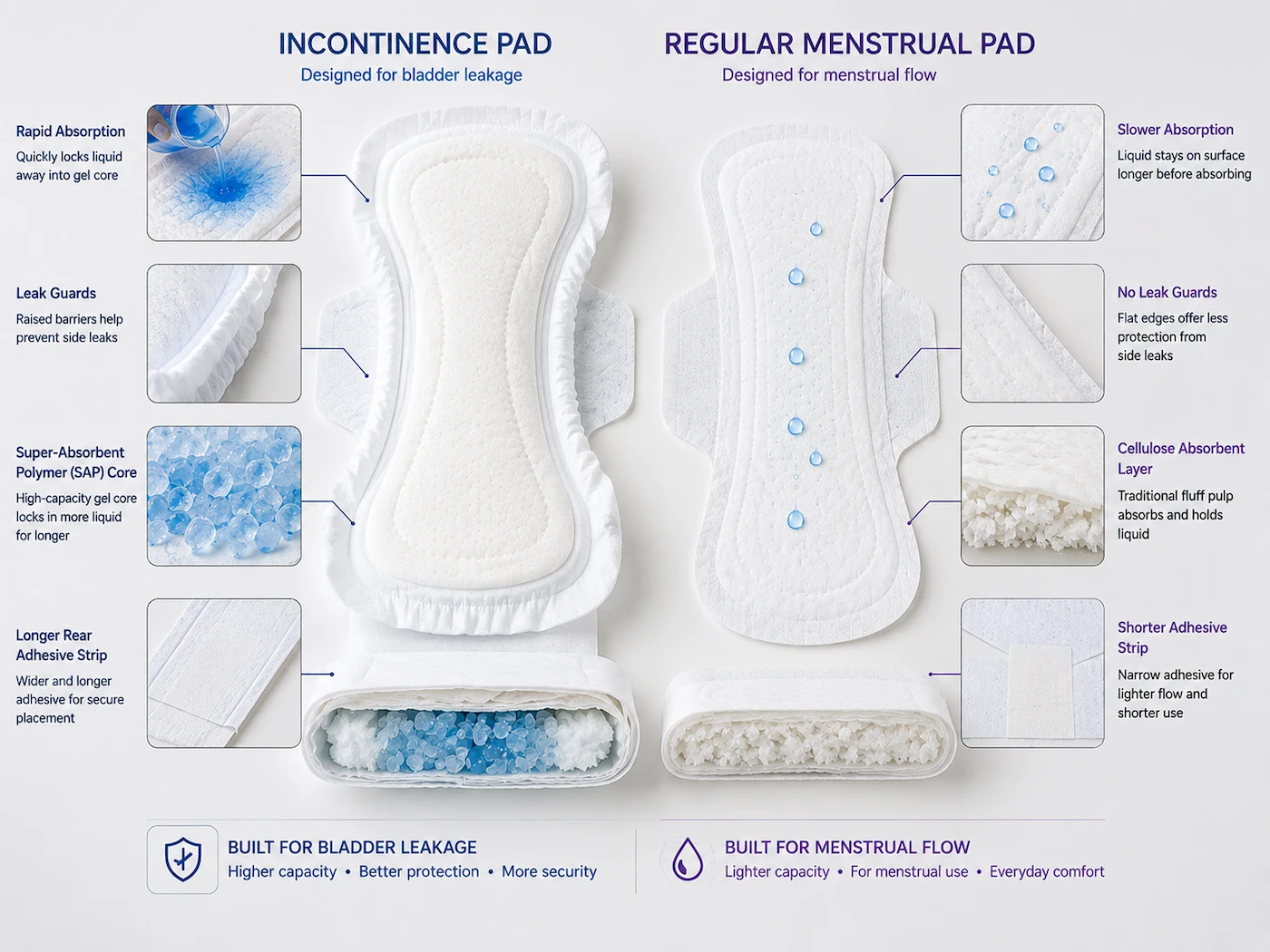
Incontinence pads use super absorbent polymers (SAP) that lock urine into gel. Menstrual pads, by contrast, rely on cellulose layers that absorb and hold fluid without that locking.
That means regular pads aren’t built to absorb urine at all, and using them for bladder leaks leads to faster saturation and higher skin irritation risk.
Here’s what sets incontinence-specific pads apart from products in regular underwear:
- Absorption Speed: Incontinence pads pull urine away from the skin within seconds, well before moisture spreads. On the other hand, menstrual pads absorb slowly, so they leave skin wet and uncomfortable much longer.
- Leakage Guard Design: Special pads have shaped side barriers along the pad’s edges that stop urine from escaping toward your underwear. Flat-edged regular pads have no such guards, so leaks at the sides are way more common.
- Odour-Neutralising Technology: Standard sanitary products don’t include this, so odour builds up quickly with any bladder leakage. Conversely, a neutralising layer inside an incontinence pad breaks down odour-causing compounds as they absorb into the core.
- Super-Absorbent Polymer Core: Tiny polymer granules inside an incontinence pad swell into gel on contact with urine, locking it firmly in place. They can absorb up to 300 times their own weight in fluid, and stop absorbed fluid from being released back onto the skin under pressure.
- Adhesive Strip Placement: The adhesive strip on incontinence pads sits further back than on menstrual products, lined up with the female anatomy for bladder leaks. That positioning keeps the pad centred and reduces shifting during movement.
Ordinary pads simply aren’t designed for a heavy job like incontinence. And the gap in performance shows up within the first wear through wetness, odour, and discomfort for the wearer.
What Are the Different Types of Continence Products?
Continence products include disposable adult diapers, protective pants, booster pads, and more. Picking the wrong one can affect how well the product works for your body and routine.
Below is a breakdown of three common continence pad types and what each one does best.
1. Disposable Pads and Liners
Disposable pads and liners are thin, absorbent products worn inside your regular underwear to catch bladder leaks throughout the day. They’re one of the most widely used continence pad options in Australia, and you’ll find them at most supermarkets and pharmacies.
Their capacity ranges from around 20mL for light liners up to 670mL for guards, so there’s a broad range to work with. That said, trial and error can lead to unnecessary expenses, so starting with a sample pack can save you both money and frustration down the track.
2. Pad and Pant Systems
A flat pad with a waterproof backing is secured to the body using stretch pants or your own underwear. There are no adhesive tabs or wings to struggle with, which makes them easier to manage for people with limited dexterity.
The pad stays in place through movement, and the stretch pants provide a secure fit without adding bulk. For moderate to heavy incontinence, this system gives reliable, all-day protection without the need to switch to full protective underwear.
3. Booster Pads and Guards
Booster pads sit inside pull-ups or briefs to add absorbency without replacing the main garment entirely. Unlike other incontinence products, they don’t have a moisture-proof backing, so any overflow passes straight through into the host garment below.
Their absorbency levels usually vary from 90mL to 680mL across different products, which makes them suitable for extended wear between changes. Think of someone on a long overnight hospital stay who needs extra urine protection without a full garment swap. That’s exactly where a booster pad earns its place.
How Do Absorbency Levels Work in Continence Pads?
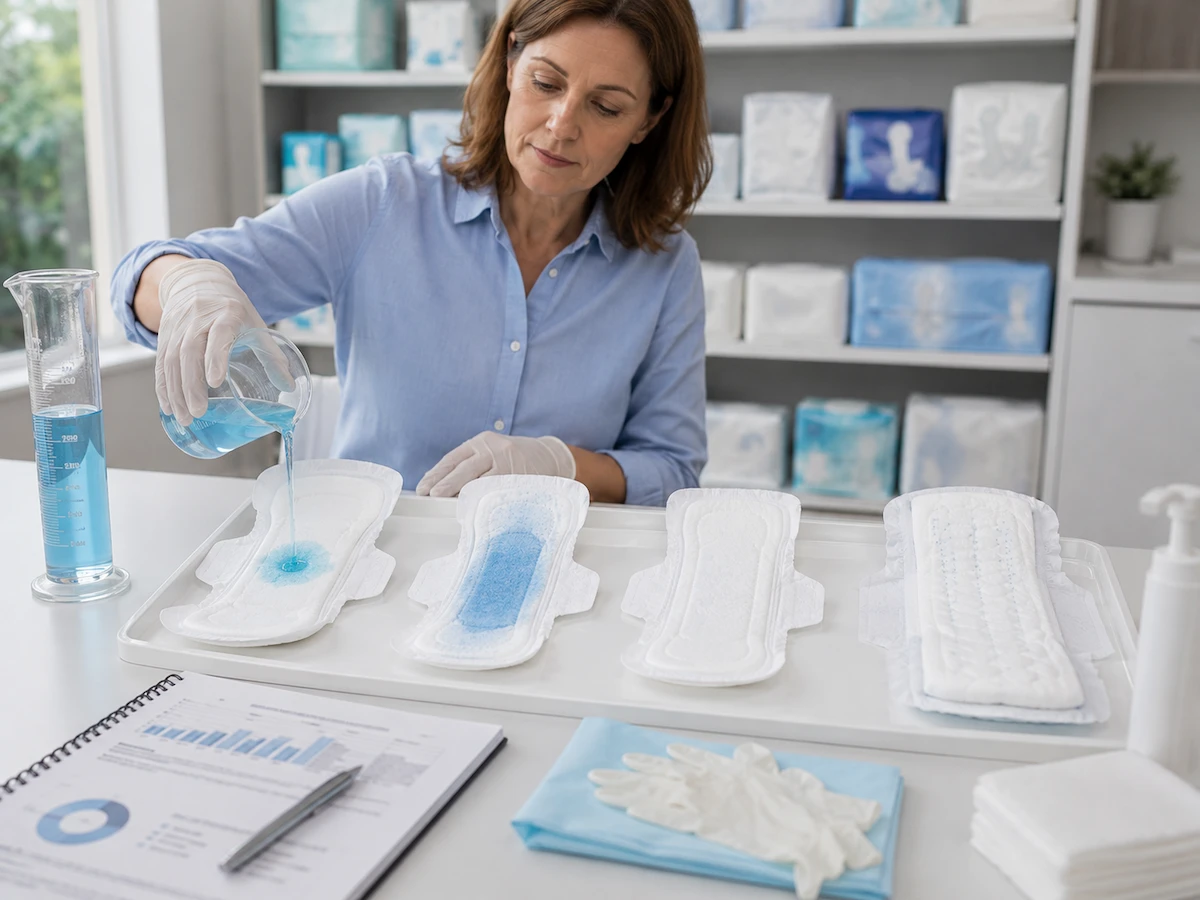
Absorbency levels tell you how much urine a continence pad can hold before it needs changing. Each level matches a specific leakage pattern, including an occasional drip or overnight bladder protection.
So where do most people start? This table will help you compare the features to find the best option for your needs.
|
Product Type |
Absorbency Range (mL) | Leakage Type |
Best For |
|
Guards and Shields |
20–670mL | Light to moderate leakage |
Active adults, self-managed changes |
|
Booster Pads |
90–680mL | Light to moderate leakage |
Those needing extra capacity inside pull-ups |
|
Pad and Pant System |
450–2,210mL | Moderate to heavy leakage |
Poor dexterity, caregiver-assisted changes |
|
Pull-Up Pants |
520–1,530mL | Moderate to heavy leakage |
Active adults, good dexterity |
|
All-In-One Nappy Style |
810–2,800mL | Heavy leakage, extended wear |
Bed-bound users, maximum security needs |
|
Belted All-In-One |
620–3,180mL | Moderate to heavy leakage |
Toilet training, high-capacity needs |
Source: Independence Australia
Based on our experience with incontinence patients, most of them find that starting at moderate absorbency gives a reliable baseline. Once you have experience with it, making adjustments is much easier than guessing from the beginning.
What Factors Help You Choose the Right Incontinence Product?
To choose the correct incontinence product, consider absorbency, fit, comfort, skin protection, and lifestyle needs.
We’ve worked alongside continence health professionals long enough to know that the first product someone tries is rarely the right one. Several key factors go into finding the appropriate incontinence product, and most of them are fairly easy to assess. This is how you can decide before you buy.
Your Leakage Volume and Frequency
Tracking your urinary leakage patterns over 3-5 days is the most reliable way to determine what level of absorbency your bladder needs (which is worth knowing before you commit to a full box). For instance, light stress incontinence during a sneeze is a very different situation from urgency incontinence that hits with little warning.
So begin with knowing which type of leakage you’re dealing with. In this case, moderate absorbency makes a good starting point while you figure out the usual urine output.
Getting the Right Pad Size and Length
Accurate size is just as important as absorbency when it comes to avoiding pad leaks. Most pads are measured in inches, and starting at around 11 inches suits the majority of moderate leakage situations.
Some brands size by waist or hip measurement rather than pad length, so it’s worth checking the packaging before assuming. Long pads might cover more surface area, but the correct pad for your body is the one that stays flat without shifting.
Skin Sensitivity and Material Breathability
Breathable, non-woven top sheets allow air to circulate against sensitive skin, which directly lowers the risk of Incontinence-Associated Dermatitis (IAD). On the other hand, plastic-backed pads trap heat and more moisture against the skin, and that build-up causes irritation. Soft material on the top sheet keeps the surface feeling dry between changes.
Worth Checking: Make sure any barrier cream you use doesn’t affect the pad’s ability to absorb properly. Some creams can reduce moisture absorption, so choose compatible products.
Mobility and Daily Routine Needs
A person’s daily routine impacts which incontinence products are suitable for their situation. For example, pull-up styles work well with people who manage changes independently, while tab-style pads suit caregiver-assisted routines where lying down is easier.
What’s more, limited dexterity makes standard adhesive pads harder to position. Pad and pant systems remove that difficulty entirely. In short, your lifestyle, including how often you can realistically get to a toilet, determines the right absorbency volume for your day.
Do Men and Women Need Different Incontinence Products?

Men and women may need separate incontinence products due to anatomical differences and varying patterns of leakage. To give you an example, men often benefit from products that manage front-focused flow, while women may need pads meant for wider coverage.
These are the differences between incontinence pads made for male and female bodies:
|
Feature |
Male-Specific Products | Female-Specific Products |
Unisex Products |
|
Shape |
Shaped for male anatomy, raised front ridge | Contoured, wider at the centre |
Flat, rectangular |
|
Absorbency Focus |
Front-targeted for urinary leakage | Centred for bladder leaks |
Even distribution |
|
Adhesive Strip |
Positioned for male underwear | Aligned for female pants and underwear |
Standard placement |
|
Best For |
Light to moderate urinary incontinence | Light to heavy leakage in women |
General use, shared care settings |
|
Available As |
Guards, shields | Pads, liners, wings |
Pads, pull-ups |
Unisex pads are widely available besides the two options, but they often compromise on anatomical fit. In general, gender-specific products tend to stay in place more reliably, absorb in the correct area, and cause less discomfort through the day.
What Should You Look for in a Nighttime Continence Pad?
When choosing a nighttime continence pad, look for high absorbency, secure fit, leak protection, and skin-friendly materials. During sleep, you can’t monitor leaks or adjust your protection, and the pad has to do all the work on its own.
Selecting the appropriate continence pad for night wear, especially for heavy leakage, is a separate decision from your daytime choice. Here are four features worth prioritising in a nighttime pad:
- High Overnight Absorbency: Overnight pads need at least 500 mL absorbency capacity to handle extended wear without a middle-of-the-night change. Anything below that risks saturation before morning, which leads to leaks, disrupted sleep, and skin irritation by the time you wake up.
- Wetness-Wicking Top Layer: Prolonged skin exposure to urine raises the risk of IAD significantly. To prevent this, a wicking layer pulls moisture away from the skin within seconds of contact, and keeps the surface dry through the night.
- Secure Fit Without Bulk: The fit has to do the heavy lifting overnight, since you’ll shift position repeatedly during sleep. A pad that bunches or moves loses its protective coverage. That’s why a close, flat fit is non-negotiable.
- Skin-Safe Materials for Long Wear: Soft material against the skin reduces friction during extended wear. Plus, breathable outer layers prevent heat and moisture from building up overnight. For anyone with sensitive skin, checking the top sheet material before buying is worth the extra step.
Buying overnight pads with all four of these features gives your skin the best chance of staying dry and irritation-free.
The incontinence patients we’ve spoken to often mention Ontex’s Nefertiti overnight pad. It offers a back that is 30% wider for focused protection and up to 12 hours of use. When comparing overnight pads, look for similar design features that provide extended coverage and targeted protection.
Can You Use Incontinence Pads for an Active Lifestyle?
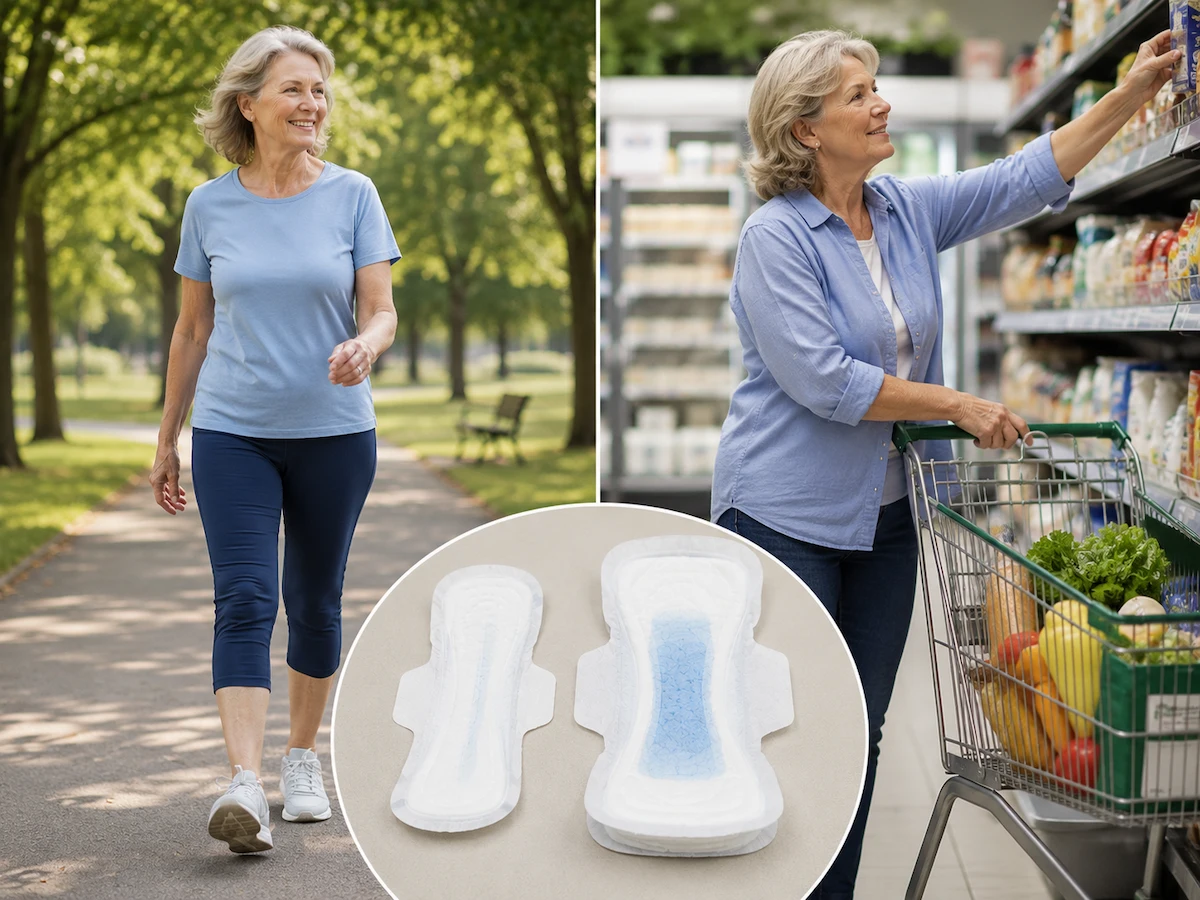
Slim-profile pads sit flat under clothing without visible bulk, which allows a confident wear during work, errands, and social outings. Incontinence doesn’t have to slow your lifestyle down, and suitable pads are built with movement in mind. In fact, most people are surprised by how little they notice a well-fitted pad through an active day.
Take a look at how the two main pad styles hold up for an active elderly person.
1. Slim-Profile Pads for Daytime Discretion
A discreet fit is why slim-profile pads suit active adults so well. They lie flat against the body without adding any noticeable thickness under clothing. This keeps confidence high during work, social outings, and everyday errands.
Light to moderate absorbency usually handles stress incontinence driven by sneezing, coughing, or sudden movement reliably. For leaks that happen here and there through the day, a slim pad worn inside regular underwear covers the situation.
2. Contoured Fit for Exercise and Movement
Contoured pads are made to follow the body’s natural curves, which stops the shifting and bunching that flat pads cause during physical activity. The adhesive strip on these pads holds firm through repetitive movement. This way, the pad stays centred when you’re walking, stretching, or at a gym class.
For example, someone heading out for a morning walk needs a pad that stays securely in place through continuous movement, rather than one that shifts after the first kilometre. As a rule of thumb, urge incontinence during exercise requires at least moderate absorbency to prevent leaks, so a liner alone is rarely sufficient.
What Mistakes Do People Make When Choosing Incontinence Pads?
Common mistakes include choosing the wrong absorbency, poor fit, and not considering daily routines.
Here are six of the most important factors to get right when choosing and using pads.
- Using Menstrual Pads Instead: As we mentioned earlier, regular sanitary pads aren’t built to absorb urine quickly or lock it away from the skin. They saturate fast, spread moisture outward, and leave skin wet sooner than any quality incontinence pad would.
- Choosing the Wrong Absorbency: Too little absorbency causes leaks before the pad is due for a change. Meanwhile, too much means the skin sits against an oversized product longer than it should. Both create discomfort and raise irritation risk.
- Skipping a Trial Before Buying in Bulk: First-time buyers spend an average of $130 on trial and error until they find the ideal incontinence product. You can look for sample packs that let you test fit and absorbency levels ahead of purchasing a full box.
- Stacking Two Pads Together: Most incontinence pads have a leak-proof backing that stops fluid from passing through to a second pad below. Stacking them traps urine between layers, raises skin irritation risk, and increases the chance of urinary tract infections with extended wear.
- Wearing a Pad Too Long: Even a pad that isn’t fully saturated should be changed every four to six hours. Leaving it on longer keeps moisture against the skin, and that prolonged exposure is one of the leading causes of IAD.
- Ignoring Signs the Pad Doesn’t Fit: Bunching, edge leaks, and skin redness after wear are all signals that the current pad isn’t the right size or style. Switching to a longer one or a different product type usually resolves these issues quickly.
Besides buying the wrong product, we see many elders using a decent one incorrectly (and of course, both mistakes lead to discomfort, skin problems, and wasted money). Finding the best option takes a little patience, but avoiding the errors discussed above gets you there faster.
Does NDIS Cover Incontinence Products in Australia?
If your incontinence is directly related to a disability, the National Disability Insurance Scheme (NDIS) may fund your continence products. This applies to eligible participants under 65, and the funding covers a broad range of absorbent products.
You need to provide solid evidence for the type of product you require. A detailed assessment from a Nurse Continence Specialist documents exactly which products suit your situation.
This report can then guide purchase decisions, help you access funding if eligible, and ensure your continence plan meets your daily needs. In fact, funding for continence aids can be harder to secure without the report.
If you’re not sure whether your situation qualifies, the National Continence Helpline on 1800 33 00 66 is the best place to start. It’s a free service that helps every person understand product options and connects callers with local suppliers across Australia.

You Now Have Everything You Need to Choose Right
Choosing the appropriate continence pad isn’t something you need to figure out alone, and it doesn’t have to take a dozen tries to get there. You can start with the ideal absorbency level, a proper fit, and materials that suit your skin. It gives you a solid foundation from the very first purchase.
From there, focus on adjusting based on what your bladder tells you through daily life. Most people find their confidence grows quickly once the suitable pad is in place. With the right approach, managing incontinence becomes simpler, more comfortable, and less stressful every day.
At Oz Continence, we’re here to help you work through the options without any pressure. Check our other articles for practical guidance on managing incontinence across different situations.
Frequently Asked Questions About Choosing Incontinence Pads
Now we’ll discuss some questions we hear most often about finding the ideal continence products.
How Often Should You Change an Incontinence Pad?
You should change your pad every four to six hours, even if they don’t feel fully saturated. Leaving a pad on too long keeps urine against the skin, which raises irritation risk considerably. In case of overnight wear, choose a pad with enough absorbency to last through the night without a mid-sleep change.
Are Disposable Pads Better Than Washable Ones?
It depends entirely on your routine and individual needs. Disposable pads offer convenience and consistent protection without laundering. Meanwhile, washable options suit people looking for a more cost-effective and environmentally friendly solution.
Trying both types helps you determine which fits your lifestyle better, and many people use a combination of the two.
What’s the Difference Between a Continence Pad and Pull-Ups?
A continence pad sits inside your regular underwear and suits lighter leakage, while pull-ups replace underwear entirely and handle moderate to heavy protection needs. In general, pull-ups are a better fit for people who need more coverage or find pads shift during movement.
When Should You See a Professional About Incontinence?
If your current pads aren’t keeping up with your leakage, or if you’re going through products more often than expected, it will be worth speaking with a continence nurse or GP. A professional assessment helps determine the right incontinence product for your situation. It will also open up funding options through NDIS or other government schemes.
