
Incontinence pants help elderly adults manage bladder and bowel leaks comfortably, without sacrificing dignity or independence. They protect skin, reduce anxiety around accidents, and keep older Australians active and socially connected. For families supporting a parent or partner through this, knowing which products work best is half the battle.
The team at Oz Continence has spoken with hundreds of older Australians about what daily incontinence management looks like. This guide pulls that experience together. We’ll cover:
- How incontinence pants work
- What they do for skin health and emotional wellbeing
- How to choose the right fit
- Which Australian funding options can reduce the cost
There’s a lot of useful information ahead. Let’s get into it.
What Are Incontinence Pants and How Do They Work?
Incontinence pants are pull-up absorbent garments worn just like regular underwear.
They come with a built-in absorbent core that captures and locks away leaks. So naturally, they’re a popular choice for older adults who want reliable coverage without the bulk of a pad. Plus, they’re soft enough for all-day wear and don’t look out of place under clothing.
These pants are designed quite differently from standard underwear on the inside. An elasticated waistband keeps them secure at the waist, and the leg cuffs fit closely around the thighs to contain leaks throughout the day. What’s more, that snug fit holds up well across different positions and activities (something standard underwear simply can’t offer).
That said, incontinence pants aren’t one-size-fits-all. For instance, disposable pull-ups suit heavier leaks and travel well. Washable options, in contrast, tend to work better for lighter urinary or faecal incontinence managed at home.
Each type has its own strengths, and we’ll look at both in detail ahead.
What Are the Real Benefits of Incontinence Pants for the Elderly?
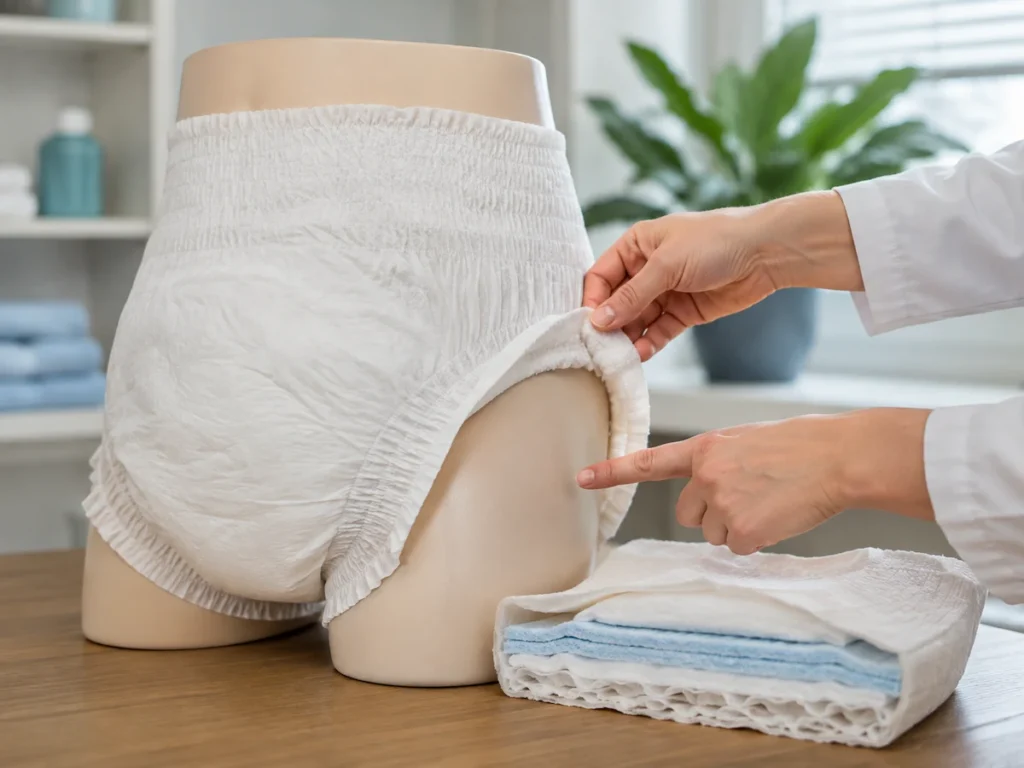
The right pair of incontinence pants can provide reliable protection, so you can get on with your day without a second thought. That combination of comfort, security, and discretion can genuinely change your daily life.
Here are the main benefits worth knowing about.
Do They Feel Like Normal Underwear?
Most people are surprised by how much modern incontinence underwear feels like real underwear. The material is soft and stretchy, so it moves with your body. Especially if you prefer discreet pants, they’ll sit flat under clothing without any visible bulk or rustling.
How Do Leg Cuffs Keep Leaks Contained?
While working with continence patients, we’ve noticed that many people don’t think about leg cuffs until they need them. They’re reinforced, water-resistant barriers that fit closely around the upper thighs. So when a leak happens, the cuffs hold it in rather than letting it reach your clothing.
That snug fit works well across different positions and activities, and allows users to move freely without worrying about accidents. It’s a small feature that makes daily changes easier and improves comfort during movements.
Can You Change Them Without a Carer’s Help?
Pull-up pants are built with independence in mind. The sides tear away cleanly, so you don’t need to undress fully to change them. That’s particularly useful for mobile older adults who’d rather handle personal care privately.
The same design removes some of the physical effort involved in assisted changes. Faster removal and easier handling can make personal care feel less stressful for both people involved.
Are Wetness Indicators Worth the Attention?
Knowing when to change an incontinence product isn’t always obvious, especially for people who have reduced sensation or difficulty communicating discomfort. Wetness indicators help by changing colour as the absorbent core fills.
For loved ones and carers, these indicators show when a product needs changing, reducing the need to check manually. They also help prevent skin issues like redness, irritation, rashes, and moisture-related skin breakdown that can come from wearing a saturated product for too long.
Disposable or Washable: Which One Suits Elderly Adults?
Many families wrestle with this question, and honestly, there’s no single right choice. It entirely depends on the person wearing them, their daily routine, and how much support they need.
To give you a general idea, the table below breaks down how disposable incontinence pants and washable incontinence pants compare:
| Feature | Disposable Underwear | Washable Pants |
| Convenience | Ready to use, no washing needed | Requires laundering after each use |
| Absorbency Level | Light to heavy options available | Typically light to moderate only |
| Cost Over Time | Higher ongoing spend | Lower long-term cost |
| Best For | Travel, hospital stays, heavy incontinence | Home use, light incontinence |
| Skin Comfort | Breathable, soft outer materials | Natural cotton-feel fabrics |
| Ease of Disposal | Tear sides, roll up, bin | Machine washable, air dry |
Frankly, disposable incontinence underwear works well for overnight use or when access to laundry isn’t practical. On the other hand, reusable incontinence underwear suits those managing lighter leaks at home and looking to reduce costs.
Helpful Insight: Some families find a mix of both disposable products and washable incontinence pants covers all situations better.
How Do Incontinence Pants Protect Elderly Skin?
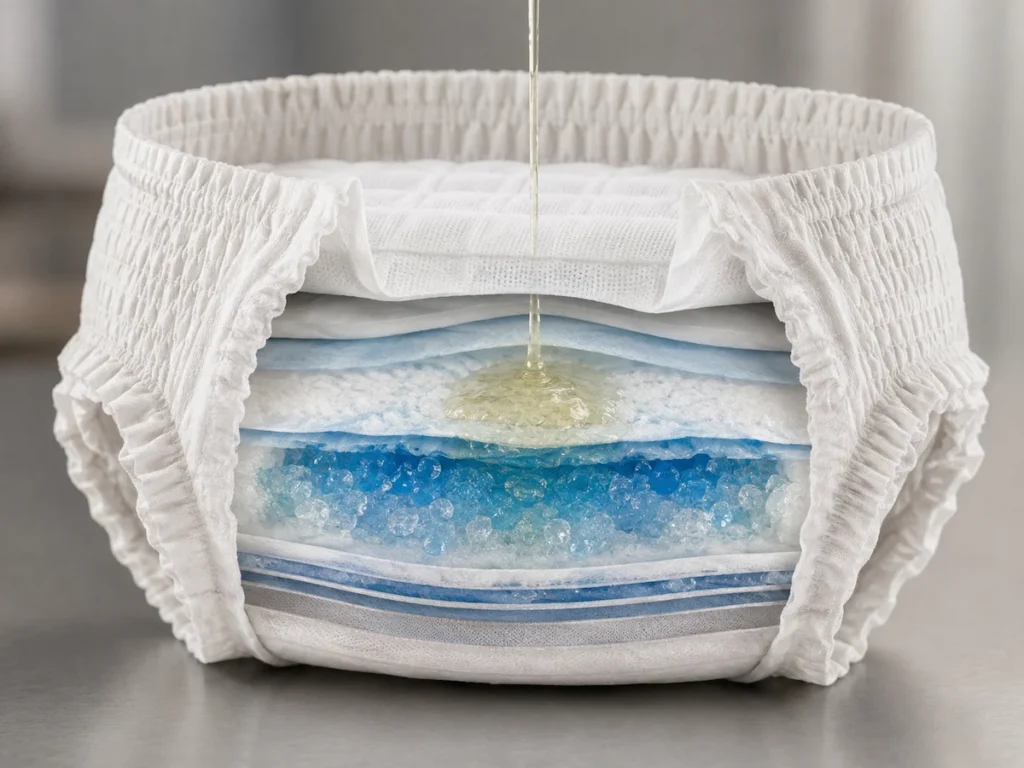
Incontinence pants protect elderly skin by drawing moisture away from the surface and limiting contact between sensitive skin and urine. For older adults, that speed is important because prolonged exposure to moisture is one of the most common causes of skin discomfort in elderly Australians with incontinence.
Take a closer look at some ways well-designed incontinence pants help prevent irritation.
Why Moisture Against Skin Is a Real Risk
Across the many conversations we’ve had with older Australians and their families, skin health comes up time and again. One condition linked to continence care is Incontinence Associated Dermatitis, or IAD.
Extended contact between urine and skin can lead to this type of skin inflammation. The longer it is ignored, the harder it becomes to restore the skin barrier and prevent further irritation.
In general, elderly skin is thinner and more fragile, so it breaks down under moisture much more quickly than younger skin. Thankfully, frequent, timely changes using the right absorbent product reduce IAD risk significantly.
What Breathable Materials Do
Good breathable materials support skin health by reducing moisture build-up and irritation. They allow air to circulate around the skin during extended wear, which reduces heat build-up at the surface. That lowers the risk of rashes, chafing, and skin irritation over time.
Not to mention, most modern incontinence pants use soft, non-woven, skin-friendly materials specifically chosen for sensitive skin. So even when pants are designed for heavy protection, they don’t have to feel stifling against the body.
How Odour Control Works Inside the Product
Unpleasant smells are one of the major concerns people raise around incontinence, and modern odour control technology is built just for that. Inside the absorbent core, specialised superabsorbent polymer (SAP) locks urine into a gel-like substance, which contains odour at the source.
That process also targets the bacteria that break down urine compounds and produce bad smells. The result is that well-designed incontinence pants stay fresher for longer.
Can Incontinence Pants Help Elderly Adults Stay Independent?
Yes, for many older adults, being able to manage their own personal care without calling for help every time is one of the most important parts of feeling like themselves. Managing incontinence day in, day out is already a challenge. And suitable incontinence pants can make it that much easier to handle alone.
For example, pull-up pants are designed to go on and come off just like regular underwear. That simple feature lets older adults handle toileting privately, without needing a carer nearby. Plus, tear-away sides make removal even simpler for those with limited mobility.
Reliable incontinence protection also opens the door to something many older adults gradually give up: going out. With dependable incontinence underwear in place, the fear around bladder leaks eases by a lot (and that confidence is life-changing for many older adults).
Bottom Line: Staying connected to friends, community, and daily routines is what supports an elder’s quality of life.
Do Incontinence Pants Support Emotional Wellbeing?

Did you know, 57% of Australians who experience incontinence say it makes them not want to leave the house? Beyond the physical side, incontinence affects confidence, social connection, and overall wellbeing in ways that often go unspoken.
This is how suitable incontinence pants can support emotional health across daily life:
- Reduced Fear of Accidents: Wearing dependable incontinence pants gives older adults the confidence to go out without constantly worrying about bladder leaks. That security alone encourages them to spend more time outside the home.
- Less Social Withdrawal: Reliable underwear means elderly adults feel comfortable staying connected with family, friends, and community. Many people who experience incontinence pull back from social life, and good protection helps reverse that.
- Preserved Sense of Dignity: Maintaining dignity day to day has a real impact on an elder’s self-worth. As a great option for them, discreet pants sit flat under clothing with no visible bulk. This way they can feel confident wearing them in any setting.
- Better Sleep Quality: Overnight protection reduces anxiety around nighttime leaks. Uninterrupted rest overnight supports both physical recovery and emotional resilience the following day.
- Caregiver Stress Relief: Fewer accidents result in less disruption to both the wearer’s daily routine and the carer’s schedule. Not to mention, well-fitted incontinence pants reduce the physical and emotional load on carers.
The emotional benefits of managing incontinence are just as real as the physical ones. When older adults feel secure and comfortable, they’re way more likely to stay engaged with the people and activities that are important to them.
Choosing Incontinence Pants: What Should You Look For?
Choosing incontinence pants comes down to three things: how much protection is needed, what size fits correctly, and how much the person’s mobility and daily routine should influence the decision.
These three factors are worth looking at closely before purchasing any incontinence products.
1. Does the Absorbency Level Match the Need?
Absorbency level is the first thing to get right when choosing incontinence pants. While supporting people with continence concerns across Australia, we’ve found that trial and error plays a major role here.
To put you into perspective, light absorbency suits occasional bladder leaks. But high absorbency and maximum absorbency options are better for heavy incontinence or overnight use.
And for unpredictable leaks, moderate absorbency is generally a safe starting point.
2. How Important Is Getting the Right Size?
Size affects how well incontinence pants actually work (and it’s one area where people often go wrong). Pants that are too large leave gaps around the leg cuffs, so urine escapes before the absorbent core can catch it. Whereas the ones that are too small dig into the skin and cause discomfort over time.
Most brands publish waist and hip measurement guides. We suggest checking those before purchasing to achieve a snug, leak-free fit.
3. Changes to Mobility and Lifestyle With Age
Lifestyle impacts which incontinence products will work day to day, and it’s worth thinking through carefully. For example, active older adults may prefer pull-up incontinence pants because they fit like regular underwear, move with the body, and support daily activities.
Meanwhile, disposable incontinence pants with maximum comfort and higher absorbency are generally the right ones for those with limited mobility or who spend time in bed. Reusable products, however, suit home-based routines where laundry is manageable.
Support Options for Elderly Australians With Incontinence

Around 7.2 million Australians aged 15 and over live with incontinence, yet many aren’t aware of the financial support accessible. Fortunately, several programmes exist specifically to help with the cost of managing incontinence.
Below are four practical support options available to eligible Australians.
- The Continence Aids Payment Scheme (CAPS): This Australian Government scheme pays up to $739.40 per person for 2026–27 to help cover the cost of continence products. To qualify, you need permanent and severe urinary or bowel incontinence confirmed by a registered health professional.
- Continence Health Australia Resources: Australia’s national peak body for continence health offers free, confidential guidance through its helpline on 1800 33 00 66. Nurse Continence Specialists are available Monday to Friday and can help with product advice, referrals, and bowel control support.
- Support at Home Programme: This programme replaced the Home Care Packages system and includes continence support as part of its funding. From October 2026, continence care will be fully government-funded and free of co-contributions for eligible older Australians.
- GP and Continence Nurse Referrals: Your GP is a practical solution and a good first step for anyone dealing with health issues related to urinary or faecal incontinence. A referral to a continence nurse will get you a proper assessment and guidance on the best incontinence products for your specific needs.
Managing incontinence doesn’t have to mean spending a lot out of pocket. These programmes exist to reduce that financial pressure, so your loved one gets access to the other incontinence products and support they need.
Finding the Right Fit for Your Loved One
Incontinence pants have come a long way, and today’s options are genuinely comfortable, discreet, and effective. The right pair supports independence, protects skin, and takes the anxiety out of daily life for older adults and their families.
Start by thinking through absorbency level, size, and lifestyle. From there, it’s worth checking whether your loved one qualifies for financial support through CAPS or the Support at Home programme. That alone can make it easier to access suitable products without paying the full cost yourself.
We’ve covered a lot in this guide, and there’s plenty more to explore on Oz Continence. Head over to our other articles for the latest information on aged care funding changes, updated support programmes, and practical tips for managing incontinence.
Frequently Asked Questions About Incontinence Pants
It’s completely normal to feel uncertain about choosing good incontinence pants, especially when you’re exploring this for the first time. These answers cover some of the most common questions we hear.
Are Incontinence Pants Better Than Pads?
Incontinence pants and pads serve different needs. Usually, pull-up pants offer full coverage and work well for bladder and bowel incontinence, while pads sit inside standard underwear and suit lighter leaks. Pants are often the more practical choice for older adults who want an all-in-one option without managing separate products.
Can Washable Incontinence Underwear Handle Heavy Leaks?
Washable incontinence underwear is good for light to moderate leaks, but it isn’t designed for heavy incontinence. The absorbency level in most reusable styles is lower than disposable options. If your loved one has frequent or large-volume urine loss, disposable pants with higher absorbency are the more reliable choice.
How Do Incontinence Pants Differ From Normal Underwear?
Incontinence pants look and feel much like normal underwear on the outside, but the inside is quite different. They contain a built-in absorbent layer that draws urine away from the skin and locks it in. Soft, skin-friendly materials keep them comfortable against the body throughout the day.
Do Incontinence Pants Work for Bowel Incontinence?
Yes, many incontinence pants are designed to manage both bladder and bowel incontinence. For faecal incontinence specifically, look for pants with a higher absorbency level, close-fitting leg cuffs, and strong odour control.
Your GP or continence nurse can point you toward the right incontinence products for your specific situation.
