
The debate around incontinence pads for seniors vs diapers often comes down to many factors, such as leak severity, mobility, and daily routine. Since both products handle bladder leaks differently, you can’t always swap one for the other and expect the same result.
To start with, pads are slim liners that sit inside regular underwear, while adult diapers wrap around the body like pull-up pants and replace underwear altogether. And there’s more to know about each one before you can confidently pick the right fit.
This guide breaks down the defining differences between incontinence pads and adult diapers, covering comfort, absorbency, skin safety, and cost. By the end, you’ll know exactly which product suits your needs or those of someone you care for.
Incontinence Pads vs Diapers: What’s the Real Difference?
Incontinence pads sit inside regular underwear and catch light to moderate leaks before they reach clothing. Adult diapers, by contrast, wrap fully around the body and fasten at the waist, much like a nappy. Both products share one common goal, and that’s keeping you dry and comfortable throughout the day.
As the body ages, bladder and bowel health shifts too, and the products needed to manage it shift right along with it. You can read more about that on the Australian Government’s page on bladder and bowel health changes.
Generally, pads are designed for those who still have reasonable bladder control but experience occasional leaks. Adult diapers, in turn, suit those dealing with heavier, less predictable leakage throughout the day. That’s the simplest equation for choosing any of them depending on the needs.
Leak severity is only part of the decision. The right choice among these two options also comes down to an individual’s lifestyle. For instance, an active senior who moves independently has very different needs from someone who relies on caregivers for daily assistance. That gap is exactly where these two incontinence products part ways.
Incontinence Products Explained: What You’re Actually Choosing Between
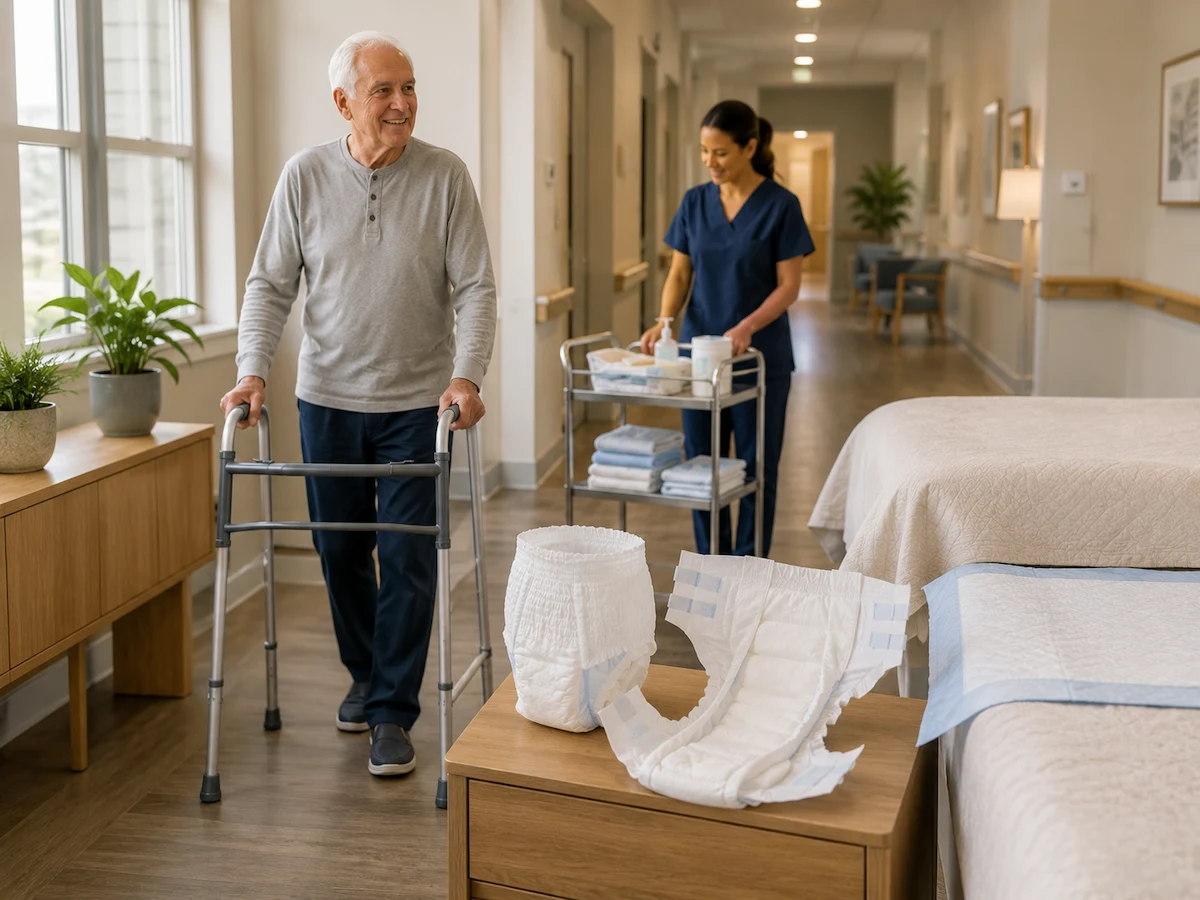
After dealing with incontinence product choices every day, we’ve seen how people get confused between pads and adult diapers. If they get the absorbency right, they barely make the right call for comfort. Or, if they choose the fit perfectly, they mess up with skin irritation.
So, it’s worth understanding what each product actually is before making any decision.
What Are Incontinence Pads for Seniors?
An incontinence pad is an adhesive-backed liner that attaches inside underwear to catch light to moderate leaks. It sits flat against the body and adds no bulk under clothing whatsoever. And honestly, that’s exactly what makes it such a popular discreet option for active seniors.
One thing worth knowing about pads is that they’re designed to work with your existing underwear, not replace it. That means you keep your usual style and comfort, with just an extra layer of protection added in. In addition, pads come in a range of absorbency levels, including light protection for the occasional drip and moderate coverage for more frequent leaks.
Regardless of how mild or frequent your symptoms are, there’s likely a pad style that fits your daily routine without anyone noticing.
Adult Diapers: A Closer Look
Adult diapers are full-coverage garments that fasten at the waist and wrap around the body like pull-up pants. Unlike pads, they don’t rely on your existing underwear for support at all. That makes them a far more suitable pick for heavier bladder leaks, bowel leaks, and overnight wear.
On top of that, seniors recovering from surgery or those with limited mobility tend to find adult briefs considerably more reliable than pads. Caregivers also prefer them in those situations, since they’re quicker to change. At the end of the day, they offer round-the-clock protection without constant adjustments.
How the Two Products Make Your Life Easy
Once you see how each product handles moisture differently, picking the right one gets a lot easier. Both use an absorbent polymer core that locks urine away from the skin and keeps the surface feeling dry. The difference, though, is in how they each fit around your body.
As we already mentioned, pads rely on your existing underwear for support and stay in place with an adhesive strip. Adult diapers, in contrast, are fully self-supporting and designed with breathable outer covers to cut down on heat build-up. That breathability, in particular, plays a bigger role in skin health.
Comfort Day to Day: Which One Feels Better to Wear?
If you wear something every single day, comfort comes first. For elderly Australians managing incontinence, that comfort gap between pads and adult diapers is unavoidable. It’s because each product sits, fits, and feels completely different against the skin.
As people age, their bodies change in ways that affect how incontinence products feel when worn for long stretches. You can find out more about those changes on the Australian Government’s page on incontinence in older Australians.
Take a senior who’s still out walking, grocery shopping, or catching up with friends. A slim pad worn inside regular underwear keeps life feeling normal and preserves dignity without anyone knowing it’s there. Pads are thinner and lighter, so they sit discreetly under everyday clothes without adding any bulk.
On the other hand, adult diapers feel bulkier against the skin and are more visible under fitted clothing. However, they give full coverage that a pad simply can’t match for heavier leaks.
Ultimately, those with limited mobility or who spend long periods in bed or on furniture find that added confidence far outweighs any discomfort from the extra bulk. It all comes down to what your day actually looks like.
Skin Irritation: What You Need to Watch For
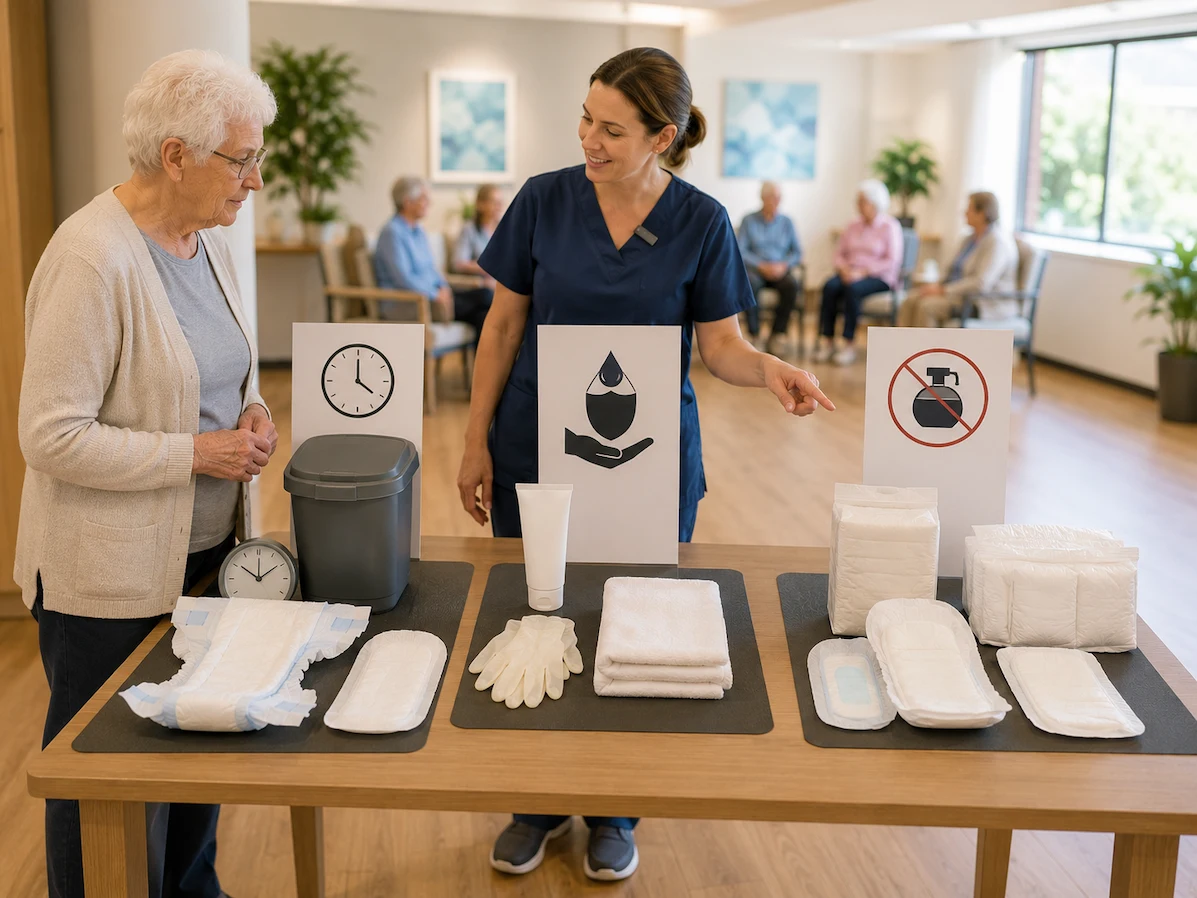
Seniors face a higher skin irritation risk because ageing skin is thinner and slower to heal. And when incontinence products aren’t changed on time or don’t fit properly, that risk climbs even faster.
Here are some informative facts worth knowing to stay ahead of it.
Why Seniors Are More at Risk of Skin Irritation?
Ageing skin loses moisture faster and breaks down more quickly when it stays damp for too long. A published systematic review on skin irritation risk confirms that older adults are significantly more prone to incontinence-associated dermatitis. It’s a condition where prolonged moisture exposure damages the skin’s outer protective barrier, leaving it raw, red, and vulnerable to infection.
Seniors with diabetes or poor circulation face an even steeper risk on top of that. Those conditions slow the skin’s recovery from moisture damage, and even brief dampness can leave a lasting mark. It’s one of those things that’s easy to overlook until it becomes a sign of something more serious.
Do Incontinence Pads Cause Less Irritation Than Diapers?
That question gets asked a lot, and the answer isn’t as simple as people expect.
Pads cover a smaller surface area, so less skin stays in contact with moisture at any given time. That does give them a slight edge in terms of everyday irritation for women and men with lighter leaks.
But diapers wrap around a larger area of skin, because they’re designed to cover the full perineal region. So, it can trap heat and moisture if the outer cover isn’t breathable enough. The material of the diaper’s inner lining and how frequently it’s swapped out both affect irritation outcomes considerably.
So it’s less about which product type wins and more about whether it fits well and gets changed regularly.
Tips to Protect Skin While Using Either Product
A few small habits at each change can keep skin healthy and cut irritation risk right down. The following three are worth building into your routine straight away:
- Change Promptly, Don’t Wait: Swap out a saturated pad or diaper as soon as possible. Leaving it on too long is the single biggest driver of skin breakdown in elderly users.
- Use a Barrier Cream: A simple zinc-based or dimethicone barrier cream at each change protects skin from direct moisture contact. It’s a small step with a big payoff for sensitive skin.
- Go Fragrance-Free Always: Fragranced incontinence products irritate skin far more than unscented ones. Hypoallergenic, fragrance-free options are a much safer pick for anyone with sensitive or ageing skin.
Sticking to these three habits consistently does more for skin health than any single product switch ever could. And if irritation persists despite using good products and maintaining proper hygiene, you should see a continence nurse or GP sooner rather than later.
Absorbency Levels: Light Leaks vs Heavy Flow
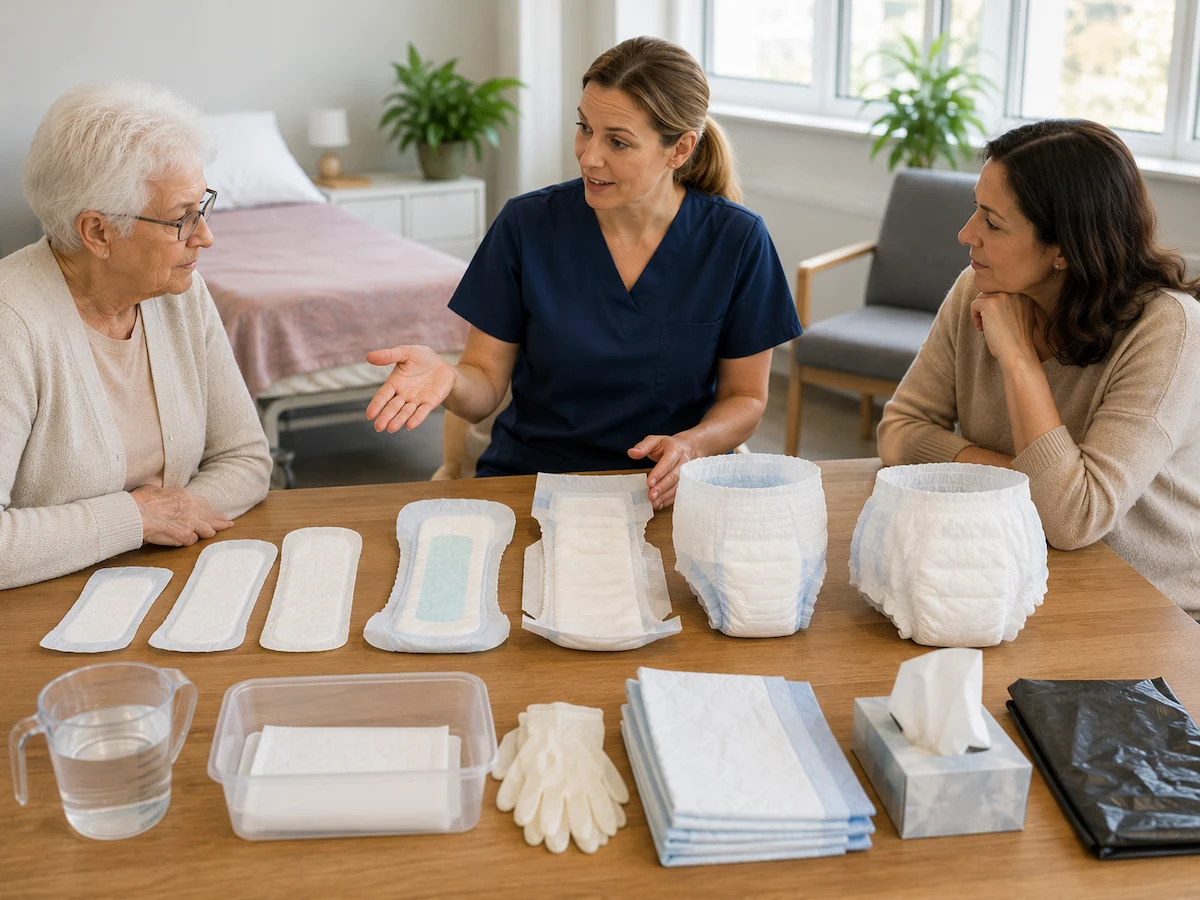
Incontinence pads suit light to moderate leaks, while adult diapers handle moderate to heavy flow. Getting that absorbency match right is just as important as picking the right product style.
Now, we’ll break down how the two compare across different leak levels:
|
Absorbency Level |
Best Suited For |
Typical Product |
|
Light (up to 100ml) |
Occasional drips, stress leaks |
Incontinence pads |
|
Moderate (100–300ml) |
Frequent leaks, overactive bladder | Pads or adult briefs |
|
Heavy (300–500ml) |
Unpredictable leakage, bowels |
Adult diapers |
|
Maximum absorbency (500ml+) |
Overnight wear, bed protection |
Adult diapers |
Note that these ranges are a general guide, not an exact science. Your actual leak volume can vary depending on fluid intake, medication, and activity levels. All we want to say is, reassess your product choice every few months to stay on the right track.
Picking the wrong absorbency level has consequences worth knowing about. When you wear a product that’s too light for your level of leakage, urine can soak through onto bedding, furniture, or clothing. On the other hand, if the absorbency is too heavy, you’ll end up wearing unnecessary bulk all day for no reason at all.
Actionable Tip: If you’re also looking to build better bowel and bladder habits that reduce leak volume over time, seek advice for healthier bowel guidance at Oz Continence.
Right Product, Right Situation: A Practical Match-Up
Now that absorbency and comfort are clear, it’s time to look at real-life situations for each product. The truth is, the right product depends entirely on your daily routine, your mobility, and how your body behaves throughout the day.
Here’s how each product lines up across common situations seniors and caregivers face every day:
- Still Active and Independent: Active seniors who walk, drive, or socialise regularly find incontinence pads the far more discreet option. Pads sit flat inside regular underwear, stay hidden under any clothing style, and don’t slow anyone down. If you’re worried about incontinence limiting your lifestyle, a well-fitted pad will often be all it takes to stay confident and mobile.
- Limited Mobility or Bed-Bound: Some seniors spend most of their day in a chair or on a bed. Caregivers tend to prefer adult diapers in those cases. They cover more surface area, protect bedding from leaks, and are faster to change without disrupting the senior’s comfort.
- Recovering From Surgery: Adult briefs are a practical choice for men and women recovering from prostate or bladder surgery. They offer maximum absorbency without requiring frequent trips to the toilet.
- Bowel Incontinence Alongside Bladder Leaks: Pads aren’t designed to handle bowel leaks at all. Full-coverage adult diapers are the only suitable option here. They contain both urine and bowel leaks securely and protect furniture and bedding from accidents.
Look, no single product suits every person or every situation. That’s completely fine, because the range of incontinence products today means there’s always a dignified, well-fitted option for every senior.

Cost Comparison: Which One Is Easier on the Budget?
When a product is part of your daily routine, the cost becomes higher than you’d ever plan for.
Incontinence pads are generally cheaper per unit, ranging from around $0.30 to $1.50 each depending on absorbency level and brand. Adult diapers, by contrast, sit closer to $1.50 to $4.00 per unit, though heavier leakers may need fewer changes throughout the day.
Here’s where it gets interesting for elderly Australians. The Australian Government’s CAPS funding scheme provides eligible people with a yearly payment to help cover the cost of continence products. That’s money back in your pocket, and it applies to both pads and adult diapers depending on your situation.
Buying in bulk also cuts costs considerably for both product types. Caregivers managing incontinence for a loved one often find that a monthly bulk order saves more money than buying smaller packs weekly. And if aged care funding covers your continence needs, the out-of-pocket difference between pads and diapers becomes far less of a worry.
Quick Buying Guide: What to Check Before You Choose
A few quick checks before buying save you from returning the wrong product twice over. And trust us, most people skip these steps and end up with something that leaks, chafes, or just doesn’t fit their routine.
Follow these six checks, and you’ll land on the right product far faster:
- Match absorbency to your actual daily leak volume
- Check sizing for a snug waist and leg fit
- Pick breathable outer covers over plasticky ones
- Separate your daytime and overnight product needs
- Choose style based on who does the changing
- Confirm discreet packaging before placing your order
First, we’ll understand absorbency. Buying the highest absorbency available sounds safe, but it often means wearing unnecessary bulk all day. Absorbency ratings are measured in millilitres, so a light pad rated at 100ml suits occasional drips. But a diaper rated at 500ml suits heavy or unpredictable leakage for sure. So match the product to your average day.
Next up is fit. Gaps around the waist or leg openings are the most common reason leaks escape onto clothing or bedding. Every brand sizes differently; that’s why we recommend always checking the specific sizing chart before ordering. A product designed for a snug, close fit will outperform a loose one every time.
Outer cover material is worth paying attention to as well. Breathable covers allow air to circulate against the skin, which cuts down on heat build-up and lowers irritation risk. Products with stiff or plasticky covers trap moisture against the skin far longer. That’s a problem seniors shouldn’t avoid after wearing these products for hours.
Believe it or not, separating daytime and overnight needs is something a lot of buyers overlook. Using a light daytime pad through the night is one of the most common reasons bedding gets soaked by morning. That’s why a dedicated overnight adult diaper keeps both the senior and the bedding dry until morning.
Now, the hilarious part. We wouldn’t call it “style” because it sounds like a fashion choice, but the shape of the product genuinely contributes to how well it performs. For example, pull-up pants work well for seniors who manage changes independently.
On the flip side, tape-up adult diapers suit caregivers best simply because they’re quicker to change. Also, they’re far easier for seniors with limited mobility.
Finally, confirm discreet packaging before placing your order. Many seniors feel uncomfortable receiving incontinence product deliveries in branded boxes. Several reputable Australian suppliers ship in plain, unmarked boxes as standard. So you should check upfront before buying.
Getting these six checks right saves both money and frustration. Once you’ve found a product that ticks every box, sticking with it consistently is the smartest move for long-term comfort and skin health.
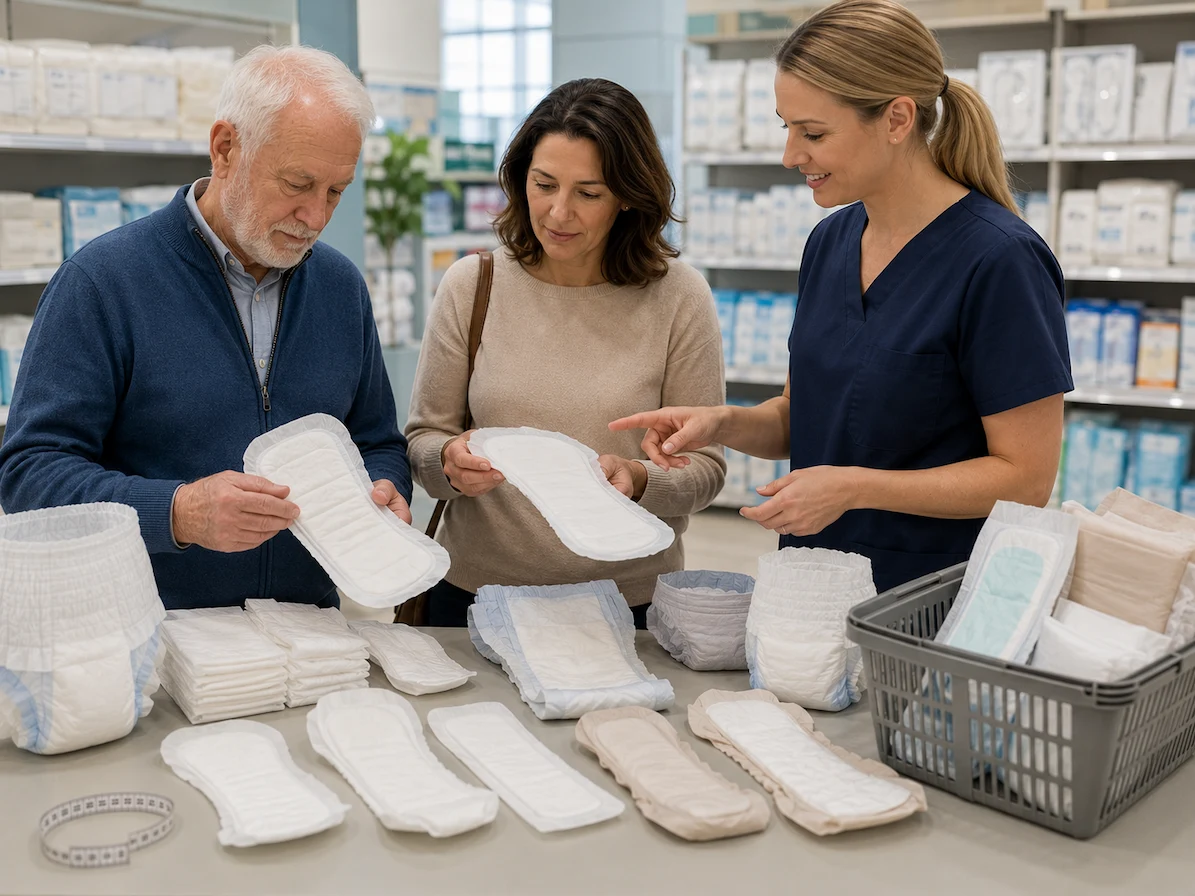
Time to Find the Right Product for Your Loved One
The right incontinence product gives seniors true confidence, daily comfort, and the freedom to stay active. Finding that fit takes some trial, and that’s completely fine. Every senior’s body, routine, and leak pattern is different, so there’s no single answer that works for everyone straight away.
If you’re a caregiver supporting an elderly loved one, My Aged Care has a practical guide on caring for someone with incontinence that’s worth a read. It covers product selection, changing routines, and how to protect your loved one’s dignity throughout the process.
At Oz Continence, we’ve supported over 5,000 patients with trusted, plain-English guidance on bladder and bowel health. Our 95% patient satisfaction rate reflects how much that guidance has helped.
If you’d like a hand choosing between incontinence pads and adult diapers for your situation, we’re here to support you every step of the way.
Frequently Asked Questions About Incontinence Pads and Adult Diapers
Sorting through conflicting advice online is exhausting, so here are straight answers to the questions we hear most often.
1. Can regular feminine pads be used for incontinence?
Regular feminine pads aren’t designed to handle urine, so they absorb far less than dedicated incontinence pads. They also lack the odour control and moisture-locking polymer core that incontinence products rely on. For anything beyond the lightest drip, a proper incontinence pad is always the better pick.
2. How often should incontinence products be changed?
Most incontinence pads and adult diapers should be changed every three to four hours during the day. Leaving a saturated product on longer raises skin irritation risk considerably, especially for elderly users.
Overnight products are designed for longer wear, but a morning change is still important.
3. Are incontinence products covered under Australian aged care funding?
Yes, eligible Australians can access financial support through the CAPS funding scheme to help cover continence product costs. Seniors receiving a Home Care Package may also have continence aids included in their care plan.
We recommend checking your eligibility on the Services Australia website before buying out of pocket.
4. Do adult diapers work for both men and women?
Yes, most adult diapers and incontinence pants are designed to suit both men and women comfortably. Some brands do offer gender-specific styles with absorbency zones placed differently for a better fit. Either way, the right product comes down to sizing, absorbency level, and personal comfort above everything else.
